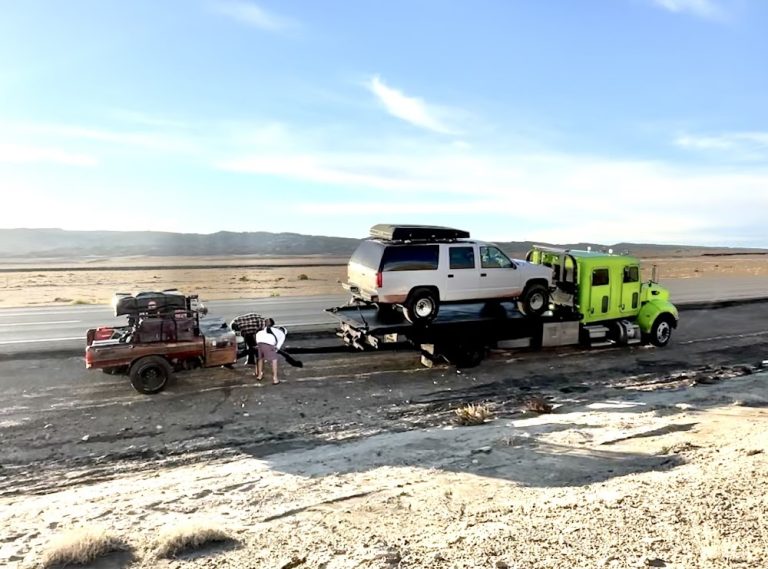
When an insurance or motor club roadside program can’t find anyone to send, drivers can usually call a Local towing service directly, pay for the help, and ask the program about reimbursement afterward. The key is to document the program’s response before you hang up and keep an itemized receipt for whatever service you end up using.
This happens more often than many drivers expect, especially on long rural highways where tow operators are few and far apart. A breakdown near a small travel stop like Green River, Utah, can leave a driver on hold while a dispatch center searches for a contracted provider who may be hours away or unwilling to take the call. Knowing how these programs work, and what your options are, makes that moment much less stressful.
Why Can’t a Roadside Program Always Send Someone?
Most insurance-based roadside programs don’t own tow trucks. They run dispatch centers that pass calls to independent companies under contract. Progressive, for example, states that its roadside assistance services are provided by Agero, a third-party network. When you call, a dispatcher looks for a nearby contracted roadside assistance provider who is available and willing to accept the job.
That system works well in metro areas with many participating companies. It can break down in rural areas for a few predictable reasons:
• Thin coverage. There may be few or no contracted companies within a reasonable distance of your location.
• Declined jobs. Independent operators can turn down dispatched calls, especially long-distance ones.
• Timing. Late-night, holiday, and bad-weather calls compete for the same small pool of trucks.
• Location confusion. A vague GPS pin on a remote highway can send the search to the wrong area.
None of this means the program failed you on purpose. It means the network has gaps, and rural highways are where those gaps usually show up.
What Should You Ask Before You Hang Up?
If you are stopped on a freeway shoulder or anywhere near moving traffic, safety comes first. In Utah, the Department of Transportation advises motorists with a stalled vehicle on the freeway to call 911 and stay buckled inside. Once you are safe, use the call with your roadside program to set up any later reimbursement.
Before ending the call, ask:
- Is there a reference or case number for this call? Write it down along with the date, time, and the representative’s name.
- Have you confirmed that no provider can come, or is the search still open? A dispatch request that nobody has accepted is different from a confirmed “no one is available.”
- Can I arrange my own service, and will you consider reimbursement? Ask the program to note your file if they agree.
- What will you reimburse? Some programs pay back only what they would have paid a contracted company for the same job.
- What documents do you need, and is there a deadline? Requirements and deadlines vary from program to program.
How Do You Work With a Local Towing Company Directly?
Calling a local towing company yourself is often the fastest way to get help when a program’s search comes up empty. The company is paid by you rather than through a contract, so the conversation is direct: you describe the problem, they tell you what they can do and roughly what it will involve.
To make that call productive, have these ready:
• Exact location: highway, direction of travel, mile marker or nearest exit, and which side of the road you are on.
• Vehicle details: year, make, model, color, and anything attached, such as a trailer.
• The problem: dead battery, flat tire, empty tank, lockout, or a vehicle that won’t move.
• Your destination, if you need a tow: a specific repair shop, lodging, or the nearest safe place.
Then confirm a few things before work begins:
• What the service includes. Many roadside assistance services, such as jump starts, tire changes, fuel delivery, and lockouts, can be handled where the vehicle stopped. Others will require a tow.
• The expected cost and how it is calculated, such as a service call, mileage, or after-hours rates.
• Accepted payment methods.
• An itemized receipt. Ask for it up front so it is ready when the job is done.
What Documentation Helps With Reimbursement?
Reimbursement is never guaranteed, and every program sets its own rules. Good records give your request the best chance.
Insurers and motor clubs that publish reimbursement instructions consistently ask for an itemized receipt. NJM Insurance, for example, asks policyholders to submit an itemized receipt online or by mail along with their policy number. Some motor clubs require the receipt on the service company’s letterhead and won’t accept a card statement alone. Several also set short submission windows, some as brief as 30 days from the date of service.
A strong reimbursement file usually includes:
• An itemized receipt showing the company name, date, location, service performed, mileage, and amount paid
• The reference number from your roadside program call
• The time you called and how long you waited before arranging your own help
• Your policy or membership number
• Photos of the vehicle and location, if it was safe to take them
Submit everything as soon as you can. Waiting until you are home from a long trip can push you past a deadline you didn’t know existed.
How Can You Prepare Before a Rural Road Trip?
Many drivers assume the road side assistance on their insurance policy works the same everywhere. A few minutes of preparation can show where the gaps are before you are standing in one:
• Read your coverage. Check how far a covered tow will go, how many calls you get per policy period, and whether services like fuel delivery or lockouts are included.
• Find the reimbursement rules now. Save the program’s reimbursement instructions, mailing address or upload page, and any deadline.
• Save a backup number. Look up a local company along the remote parts of your route, especially stretches with long gaps between towns, and save the number before you lose signal.
• Note mile markers as you drive. In rural areas, a mile marker and direction of travel are often more reliable than a phone’s location pin.
• Keep a charger and water in the vehicle. Waits can stretch longer on remote roads, even when help is on the way.
A roadside program is a useful safety net, but it is only one of your options. When it can’t reach you, a direct call to a nearby company, paired with good records, usually gets you moving without giving up your chance at reimbursement.
About Desert Hill Towing
Based at 865 E Main St in Green River, Utah, Desert Hill Towing is a family-owned company that handles towing and roadside calls around the clock. Their work includes jump starts, flat tires, lockouts, fuel delivery, and light- and medium-duty towing for local drivers and travelers passing through. They can be reached at (435) 820-0059, and visitors can look up their Green River location on Google Maps.