Key point:
• Planning an equipment haul means confirming weight, dimensions, permits, and tie-down requirements before a transport vehicle is scheduled.
• Federal rules require at least four tie-downs for machinery over 10,000 pounds, with aggregate working load limits matching cargo weight.
• Readers in Dayton, OH can use a short pre-haul checklist to reduce delays, damage, and compliance issues.
A successful equipment haul starts with accurate weight and dimension data, a trailer matched to that load, and a securement plan that meets federal cargo rules before the machine ever leaves the yard. Skipping any of these steps is one of the most common reasons heavy loads get delayed, damaged, or flagged during a roadside inspection.
Planning ahead matters because heavy machinery is expensive to move and unforgiving of mistakes. Equipment hauling involves more than hooking up a trailer; it requires matching the right truck and trailer configuration to the equipment’s weight, height, and width, then securing the load according to federal standards. A rushed haul increases the risk of shifting cargo, trailer overload, or a citation during transport.
Know the Weight and Dimensions Before You Book
Every haul plan begins with hard numbers, not estimates. Underestimating weight or height is one of the fastest ways to end up with the wrong trailer on the day of pickup.
• Confirm gross operating weight from the equipment’s data plate or manufacturer specs, not a rounded guess.
• Measure overall length, width, and height with attachments in their transport position.
• Note the equipment’s center of gravity, since uneven weight distribution affects trailer selection and tie-down placement.
These figures determine whether a flatbed, lowboy, or specialized trailer is required, and whether the load will need oversize permits for the route through Dayton, OH.
Understand Load Securement Rules
Federal cargo securement standards apply to any wheeled or tracked equipment weighing more than 10,000 pounds. These rules are not optional guidance; they are enforced during roadside inspections.
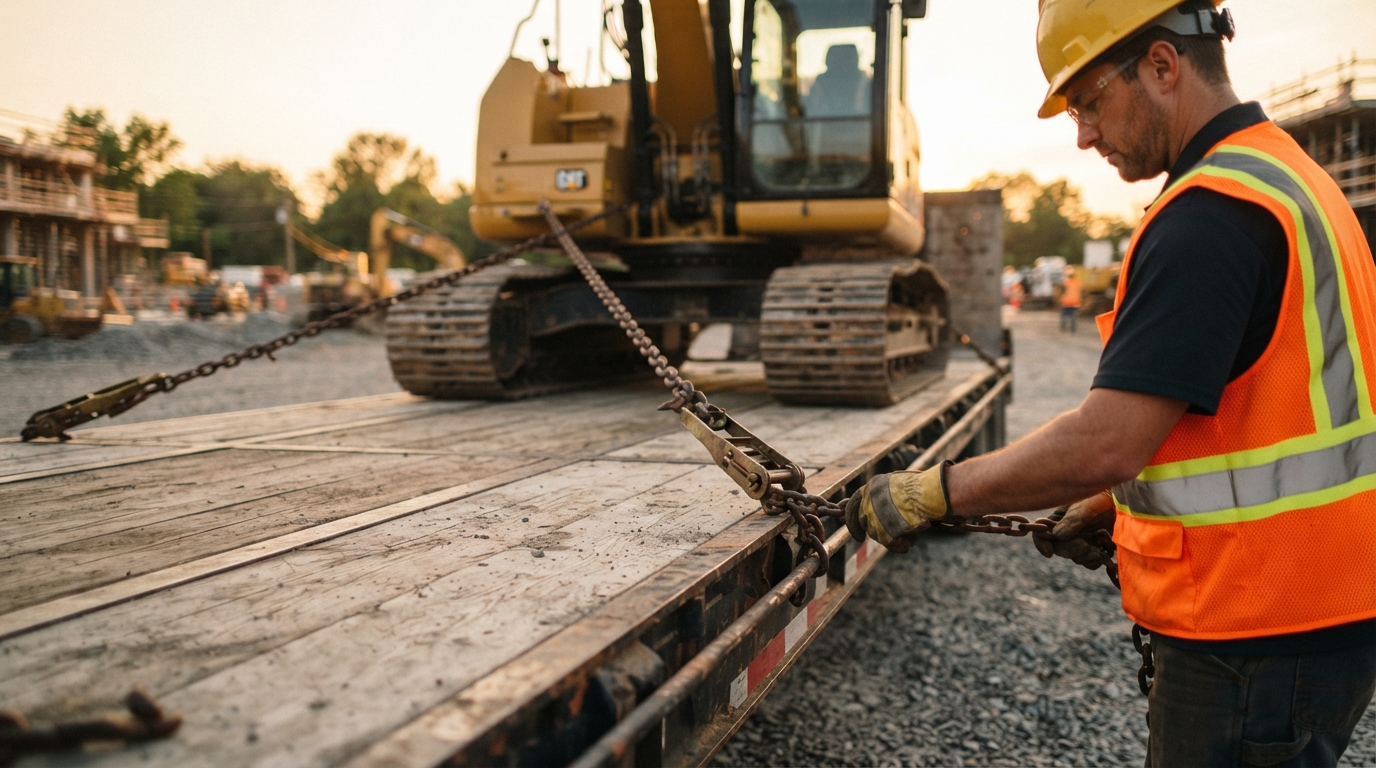
• A minimum of four tie-downs is required for qualifying equipment, positioned at or near the front and rear of the load.
• Heavy equipment or machinery with crawler tracks or wheels must be restrained against movement in the lateral, forward, rearward, and vertical direction using a minimum of four tiedowns.
• Accessory equipment, such as hydraulic shovels, must be completely lowered and secured to the vehicle.
• The combined working load limit of all tie-downs generally must equal at least half the equipment’s weight, according to FMCSA cargo securement rules .
Reviewing these requirements before loading day prevents last-minute scrambling for extra chains, binders, or a different trailer configuration.
Compare Trailer Types for the Job
Choosing the correct trailer affects both safety and cost. The table below outlines common options for moving construction and industrial equipment.
| Trailer Type | Best For | Key Consideration |
| Flatbed | Lighter equipment, shorter loads | Limited deck height clearance |
| Drop deck | Taller machinery needing lower clearance | Slightly reduced deck length |
| Landoll-style | Equipment that self-loads via tilt deck | Reduces need for separate loading ramps |
| Detachable lowboy | Very heavy or oversized machinery | Required for most loads over legal height limits |
Matching equipment specs to trailer capacity avoids overloading a deck rated below the machine’s actual weight, which is a frequent cause of trailer damage and compliance violations.
Build a Pre-Haul Checklist
A short written checklist keeps the loading process consistent regardless of who is on site that day.
1. Verify the loading and unloading surface is level, firm, and clear of debris, ice, or standing water.
2. Lower all attachments, booms, and blades before the equipment is driven onto the trailer.
3. Position a spotter during loading and unloading to guide alignment with ramps.
4. Inspect tie-down points, chains, and binders for wear before use.
5. Recheck securement after the first few miles, since loads can settle during initial transport.
Following a documented process reduces the chance of a missed step causing delays once the load is already on the road and headed toward its destination in Dayton, OH.
Frequently Asked Questions
How many tie-downs does heavy equipment need for transport? Equipment weighing more than 10,000 pounds generally requires a minimum of four tie-downs positioned to prevent lateral, forward, rearward, and vertical movement, consistent with federal cargo securement standards.
What information should be ready before scheduling a haul? Accurate weight, height, width, length, and center-of-gravity data help determine the correct trailer type and whether oversize permits apply to the planned route.
Do attachments need to be removed before transport? Attachments typically do not need removal, but they must be lowered and locked in place so they cannot shift or extend beyond legal width during transport.
Why does trailer selection matter for equipment moves? A trailer rated below the equipment’s actual weight or deck length can lead to overload conditions, instability, and potential compliance issues during a roadside check.
Planning Resources for Dayton, OH Equipment Moves
Based in West Chester, OH, Quality Towing and Equipment Moving serves customers throughout Dayton, OH.
Equipment owners preparing for a haul can Learn More to find scheduling details and current service information.