
Quick summary:
• Hands-on science centers, museums, and outdoor spaces offer structured and unstructured play that keeps children engaged for hours.
• A mix of indoor exhibits and outdoor time balances energy levels and learning styles throughout a full day.
• Planning a daily schedule around active and quiet activities helps prevent the mid-afternoon slump common with young children.
Parents searching for ways to fill a full day with productive, engaging play often look for a mix of hands-on learning and physical movement. Activities For Kids that combine exploration with structured play tend to hold attention longer than passive entertainment like screen time.
A well-rounded day typically includes at least one hands-on learning stop, some outdoor or physical activity, and downtime for creative, unstructured play. This structure matters especially for families in Louisville, KY, where indoor options can offset unpredictable weather during summer and winter months. Rotating between mentally stimulating and physically active tasks keeps children from losing interest partway through the day.
Building a Balanced Daily Schedule
Children’s attention spans shift throughout the day, so pacing matters as much as the activity itself.
• Morning: hands-on learning environments such as science exhibits or interactive museum displays, when focus is typically highest.
• Midday: active or outdoor play to burn off energy after a period of sitting or concentrated learning.
• Afternoon: creative, low-pressure activities like drawing, building, or simple craft projects that do not require constant supervision.
This rotation mirrors guidance from early childhood development research, which links varied daily structure to better sustained attention in young children. According to the National Institute of Child Health and Human Development, structured play combined with free play supports cognitive and social development in early childhood.
Indoor Options for Unpredictable Weather
Louisville, KY experiences hot, humid summers and cold winter stretches, both of which push families toward indoor venues for a significant part of the year.
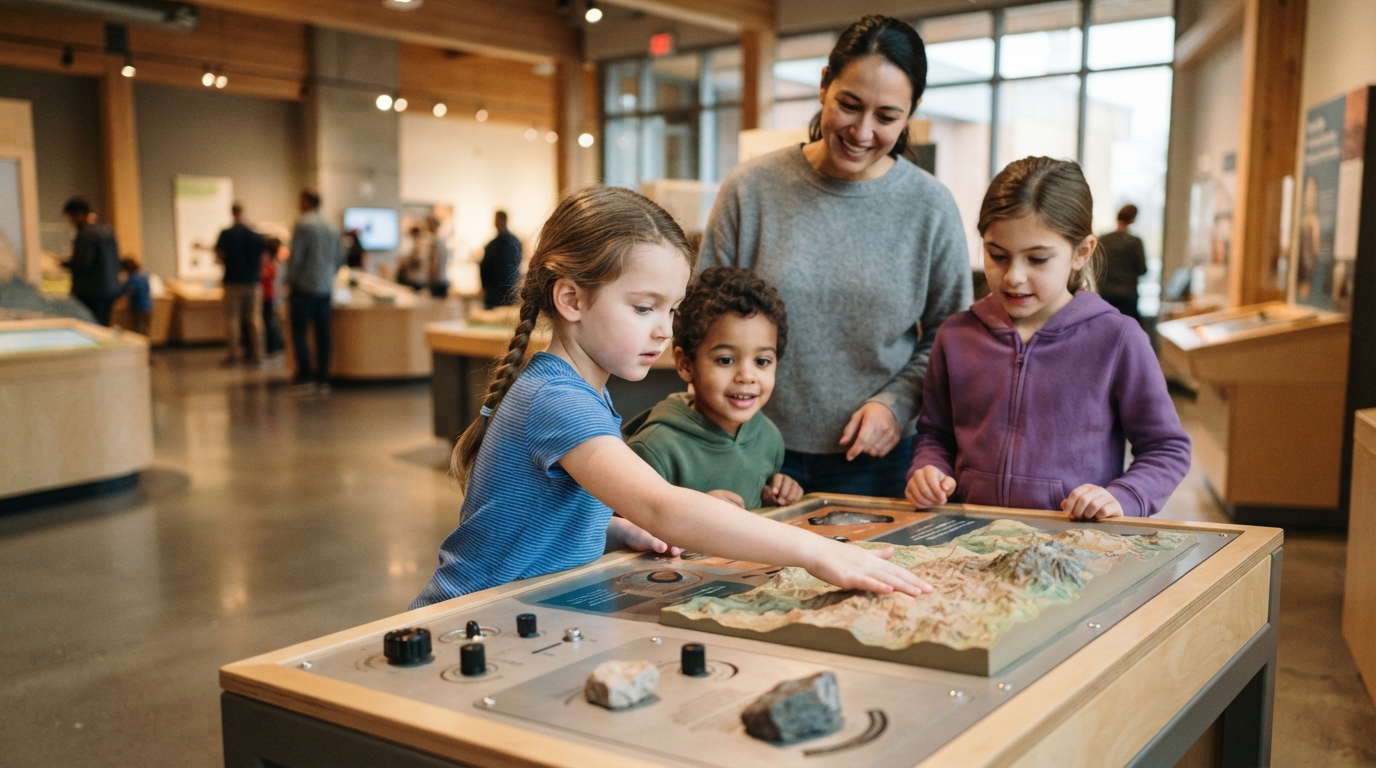
Science centers and children’s museums are commonly chosen because they combine movement with learning rather than requiring kids to sit still. Interactive exhibits on physics, biology, or engineering let children test ideas through touch rather than just observation. Many facilities also rotate temporary exhibits, which gives repeat visitors something new to explore on subsequent trips.
Indoor trampoline parks, climbing gyms, and public libraries with children’s programming round out the list of weather-proof options. Libraries in particular often run free story times and craft sessions that require no advance cost. Comparing a few common indoor options helps with planning:
| Activity Type | Typical Duration | Energy Level | Best For |
| Science center exhibits | 2-4 hours | Moderate | Curious, hands-on learners |
| Trampoline or climbing gym | 1-2 hours | High | Burning off excess energy |
| Library story time | 30-60 minutes | Low | Younger children, quiet reset |
| Children’s museum visit | 2-3 hours | Moderate | Mixed-age groups |
Outdoor and Creative Play for Balance
Time outside remains one of the simplest ways to round out a day built around indoor learning.
Local parks, nature trails, and splash pads give children room to run, climb, and interact with natural materials in a way indoor spaces cannot replicate. Even 30 to 45 minutes outside between indoor stops can reset attention and mood. Simple creative tasks, such as sidewalk chalk drawing or a nature scavenger hunt, extend outdoor time without requiring special equipment.
Based in USA, Kentucky Science Center serves families across Louisville, KY looking for hands-on exhibits that fit into this kind of rotating daily plan. (Kentucky Science Center) Facilities like this typically list interactive science exhibits, educational programming, and family-oriented events as their core offerings on public business listings.
How long should a single activity last for young children? Most children stay engaged with a single structured activity for 20 to 45 minutes before needing a change in pace or setting.
What is the best way to handle a rainy day with kids? Indoor venues such as science centers, museums, and libraries provide movement and learning without depending on outdoor weather conditions.
Should screen time be part of the daily rotation? Screen time can fill short gaps, but child development guidance generally favors hands-on and physical activities as the primary focus of a structured day.
Are science center exhibits appropriate for a wide age range? Many hands-on exhibits are designed with adjustable complexity, allowing younger children to explore basic concepts while older kids engage with more detailed content.
Current exhibit details and visiting information for Kentucky Science Center are available for families mapping out a day of hands-on activities.