Snapshot:
• Smart decking design balances board layout, railing style, and material choice to fit how a household actually uses outdoor space.
• Composite boards now come in mixed tones, curved profiles, and heat-mitigating finishes that extend usable deck time through the year.
• Louisville, KY homeowners should factor in humidity, freeze-thaw cycles, and local permit requirements before finalizing a layout.
A well-planned deck layout does more than add square footage to a backyard; it organizes movement, shields furniture from weather extremes, and ties the outdoor area visually to the home’s existing architecture. Getting these decisions right from the start prevents costly rework later and keeps a deck functional for years regardless of material choice.
Homeowners researching Decking Design options typically want practical guidance on layout, materials, and railing choices that hold up to seasonal wear while still looking intentional rather than generic. The decisions made early in planning, board direction, color pairing, zoning, and railing material, shape both the finished look and the long-term maintenance burden.
Layout and Zoning Decisions That Shape Daily Use
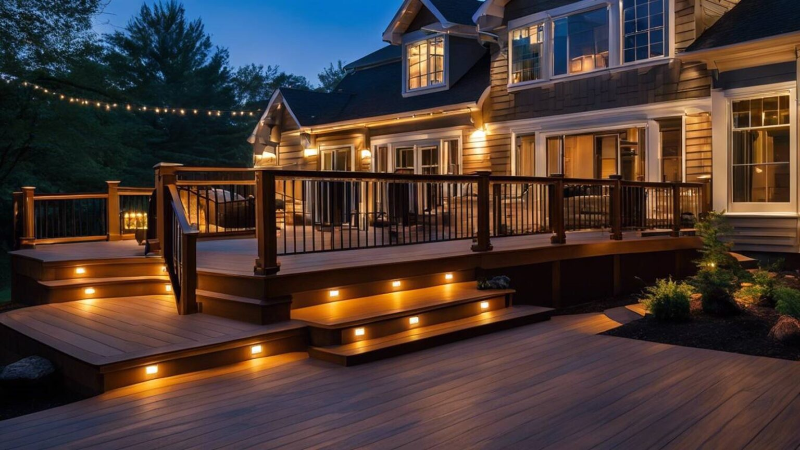
Dividing a deck into distinct functional areas, such as dining, lounging, and grilling zones, makes a single structure feel like several outdoor rooms. Multi-level decks accomplish this naturally by using elevation changes to separate activities without walls or furniture dividers.
Practical zoning choices include:
• Placing a grill or outdoor kitchen section away from main traffic paths to reduce smoke drift toward seating.
• Using a sunken or slightly raised lounge area to signal a change in purpose without blocking sightlines.
• Running board direction perpendicular to the home to visually widen a narrow yard, or parallel to lengthen a shallow one.
Material and Color Choices for Louisville’s Climate
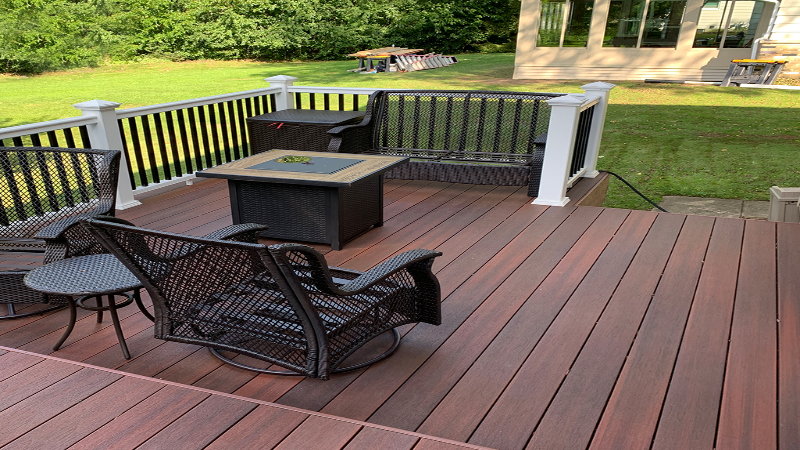
Composite decking has moved well past single-tone boards. Pairing light and dark composite colors creates contrast and depth, and manufacturers now offer boards with heat-mitigating technology that keeps surfaces noticeably cooler than earlier composite products, a relevant factor during Louisville, KY’s humid summer months. Trex decking with SunComfortable technology keeps deck surfaces up to 35 degrees cooler than original Trex boards, with marine-grade composition that resists rot, warp, and water damage in humid environments.
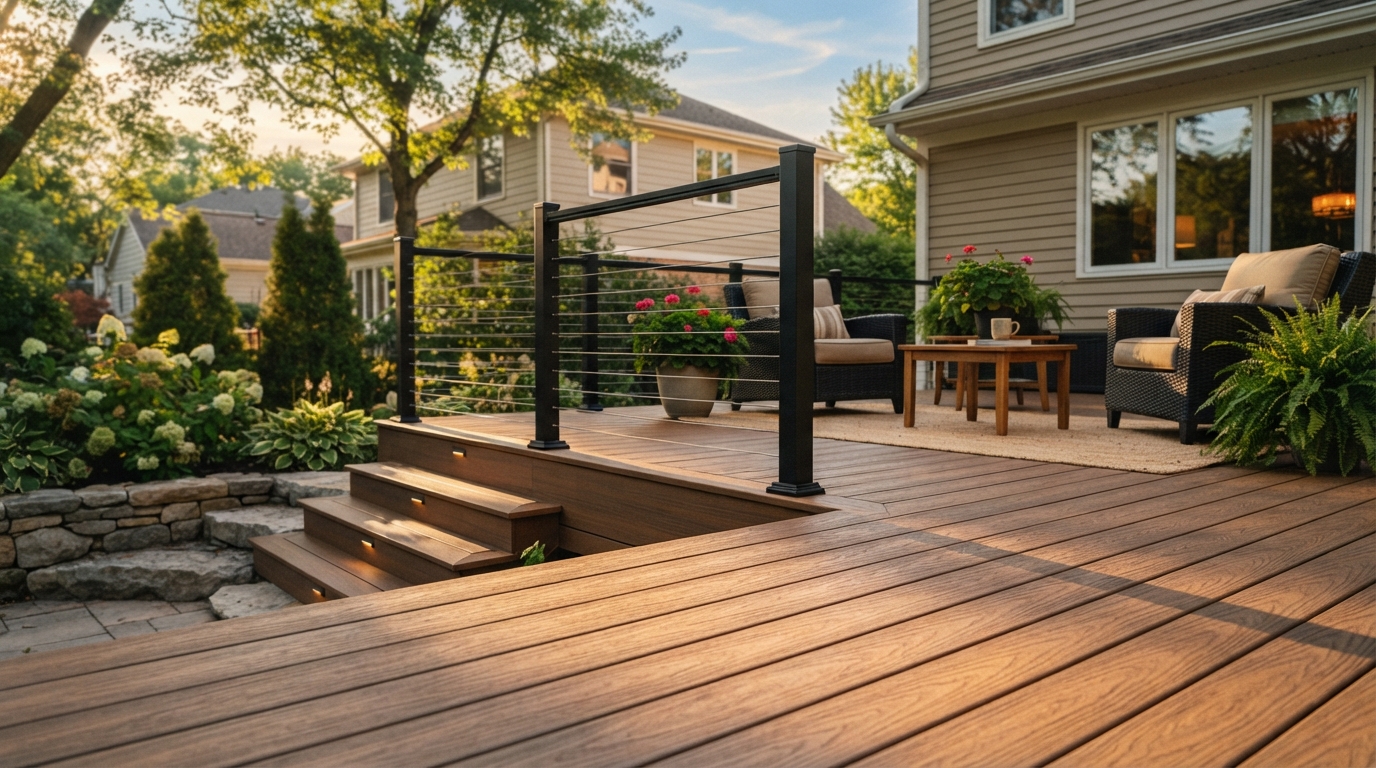
Mixing materials also adds visual interest without sacrificing durability. Pairing composite decking with stone, black metal, and glass is on trend, adding architectural depth to outdoor spaces. Combining warm-toned boards with matte-black railing is one straightforward way to achieve this layered look while keeping maintenance manageable. Warm brown composite decking, matte-black deck railing, natural stone, and structural greenery can bring an unexpected element to a deck.
Curved layouts are another design option worth considering for homes with irregular lot lines or a desire to break from rectangular convention. Composite decking boards and railings can be curved to suit most design needs, though reaching out to an experienced deck builder is recommended for these more complex designs.
Material Comparison for Deck Surfaces
| Material | Maintenance | Typical Lifespan Behavior | Color Flexibility |
| Composite (PVC blend) | Low; periodic washing | Resists fading, mold, and moisture damage | Wide range, including multi-tone boards |
| Pressure-treated wood | High; staining/sealing needed | Prone to warping and splintering over time | Limited to stain tones |
| Aluminum railing accents | Very low | Resists corrosion | Primarily matte black or neutral finishes |
Because joist spacing and board support requirements differ from wood framing, composite systems generally require planning specific to the product line selected. Spacing guidelines vary based on factors like the deck’s design and the weight it needs to support, and many composite decking products can be installed with joists spaced at 16 inches when boards run perpendicular to the framing.
Permits and Practical Planning Steps in Louisville, KY
Before finalizing any layout, confirming local permit requirements prevents delays once construction begins. The Louisville Metro Government publishes permitting guidance for residential construction projects, including structures like decks that exceed certain height or size thresholds.
A short planning checklist helps keep a project on track:
1. Confirm whether the proposed deck height, size, or attachment method requires a permit.
2. Decide on zoning (dining, lounge, grill) before selecting board direction.
3. Choose a composite or PVC product line early, since fastener and support requirements vary between brands.
4. Select railing material based on sightline goals, cable or minimalist aluminum for openness, solid panels for privacy.
Frequently Asked Questions
Does composite decking get too hot to walk on barefoot? Lighter-colored boards reflect more sunlight than darker ones, and some product lines include heat-mitigating technology. Lighter shades of composite decking tend to reflect sunlight better, keeping the surface temperature lower than darker shades.
Can composite boards be curved for custom layouts? Yes, though it typically requires professional expertise. Trex Customcurve allows deck designs to incorporate dramatic, sweeping arcs and wraparounds.
Is composite decking suitable for DIY installation? It is comparable to wood in terms of tools required, though support specifications differ. Most pros and DIYers alike find that installing composite decking is just as manageable as working with wood, and the tools required are nearly identical.
What railing styles pair well with multi-tone composite decking? Matte-black cable or minimalist aluminum railing tends to complement mixed-tone boards by adding contrast without visually crowding the space.
Business Information and Next Steps
Based in USA, Architectural Window & Door serves customers across Louisville, KY.
Additional specifications and material options for composite decking projects are outlined where Learn More About Decking Design is published for reference.