Key point:
- Tuckpointing removes deteriorated mortar from brick joints and replaces it with fresh mortar, protecting your home from water infiltration and structural damage.
- Bloomfield Hills properties face accelerated mortar wear due to Michigan’s freeze-thaw climate, making periodic tuckpointing a practical maintenance priority.
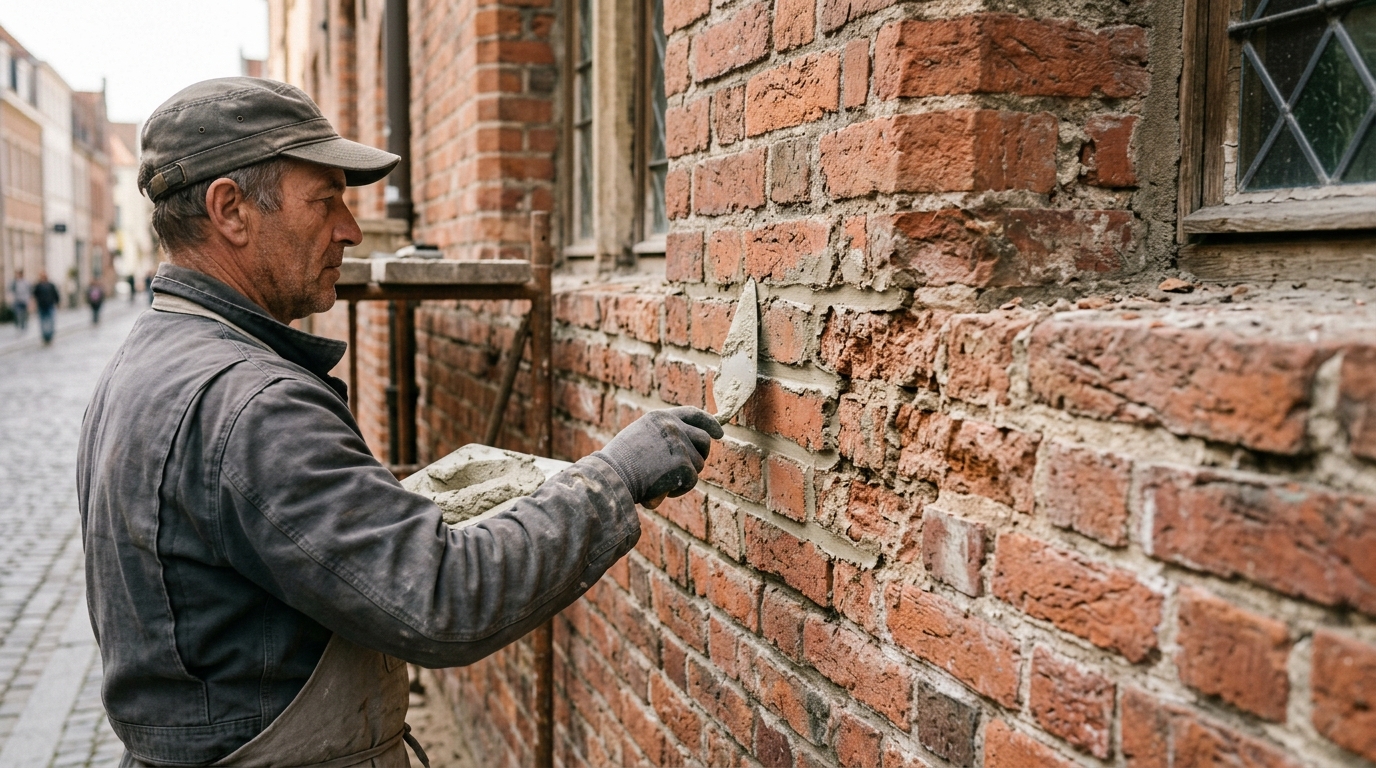
When mortar joints in a brick wall begin to crack, crumble, or recede, the fix is tuckpointing — a skilled masonry repair process that removes failed mortar and replaces it with new material matched to the existing brickwork.
If you are researching tuckpointing in Bloomfield Hills MI, understanding what the process involves — and when it is actually necessary — helps you make a sound decision before damage spreads.
Why Bloomfield Hills Masonry Needs Tuckpointing
Moisture is the single most common cause of brick and mortar damage in southeast Michigan, where freeze-thaw cycling puts masonry through repeated stress every winter. The mechanism is straightforward: rain, snow, and humidity introduce moisture to masonry surfaces. When water enters the mortar and then freezes, it expands, causing cracking, crumbling, and eventual joint failure. This process, known as the freeze-thaw cycle, is especially destructive in regions with harsh winters.
Mortar joints are designed to be the sacrificial element of a masonry wall system. Brick and stone units are durable; mortar absorbs movement, accommodates minor shifts, and allows controlled moisture transfer. That is actually by design — ideally, the mortar deteriorates before the masonry units themselves, allowing damaged joints to be renewed while preserving the original bricks or stones.
Mortar has a finite service life, typically between 25 and 50 years depending on material quality, exposure conditions, and maintenance history. Many Bloomfield Hills homes built in the 1970s through 1990s are now approaching or past that window, making a professional inspection a reasonable first step.
How to Recognize When Tuckpointing Is Needed
Not every aging wall requires immediate work. These are the signs that warrant a closer look:
- Gaps, crumbling, erosion below the brick face, and efflorescence staining are all indicators to act on promptly.
- Mortar that was once hard and compact can become powdery, brittle, or recessed, leading to loosened bricks and reduced structural integrity.
- Common consequences of deferred repair include masonry bows in walls, collapsing walls, steel supports such as shelf angles and lintels rusting and failing, and masonry units spalling during freeze and thaw cycles.
A visual assessment of mortar joint condition every two to three years — and specifically in early spring after freeze-thaw season — catches early deterioration at the stage where repointing is straightforward and contained.
| Condition | Likely Action |
| Hairline cracks, minor recession | Monitor; schedule inspection |
| Crumbling or powdery joints | Tuckpointing recommended |
| Recessed joints with gaps | Tuckpointing urgent |
| Spalling brick faces, shifted structure | Full assessment; possible rebuild |
The Tuckpointing Process Step by Step
The critical distinction is that tuckpointing is not surface patching. Smearing new mortar over old, crumbling joints — sometimes called “face pointing” — is a cosmetic fix that fails within a year or two.
Proper tuckpointing follows a specific sequence:
- Assess the joints. Before any repair work begins, a thorough assessment of the masonry structure is essential. Experienced masons evaluate the condition of mortar joints, checking for cracks, spalling, or gaps that compromise the wall’s stability. This step determines whether partial or full rework is necessary.
- Remove deteriorated mortar. According to the U.S. Department of Veterans Affairs masonry tuckpointing specification, mortar should be cut out to a uniform depth of 3/4 inch using a toothing chisel or pointer’s grinder, taking care not to damage the edges of existing masonry units.
- Clean the joints. Remove dust and debris from the joints by brushing, blowing with air, or rinsing with water. This step is critical for ensuring the new mortar bonds correctly.
- Match and apply new mortar. Matching the mortar’s color, texture, and composition to the existing material is vital for a seamless repair. Install the new wet mortar using a trowel, starting with the horizontal joints.
- Tool the finish. Once the mortar has been applied and the joints filled, tooling and finishing ensures that the repaired mortar matches the existing brickwork and creates a smooth, even surface that enhances both the strength and appearance of the structure.
One important caution: in some cases, issues stem from poor construction practices or inferior materials used during the original build or a previous repair. Using the wrong mortar mix — such as a modern, high-strength Portland cement-based mortar on soft historic brick — can create mismatched hardness. A qualified mason will select a mortar type compatible with your existing masonry.
Choosing a Masonry Contractor in Bloomfield Hills
While DIY tuckpointing is possible for small areas, complex repairs or large projects are best handled by experienced professionals to avoid mistakes and ensure quality. For Bloomfield Hills homeowners, look for a contractor who performs a site inspection before quoting, specifies the mortar type and removal depth in writing, and can demonstrate matched mortar work on comparable projects.
Brickheads Masonry & Concrete Specialists is a local expert for a wide range of services, including custom stonework, brick steps, chimney repair, chimney rebuilds, porch repair and rebuilding, and tuckpointing in Bloomfield Township and Bloomfield Hills.
Frequently Asked Questions
How often does brick mortar need to be replaced? Mortar has a typical service life of 25 to 50 years, depending on material quality, exposure conditions, and maintenance history. Michigan’s freeze-thaw climate can push joints toward the lower end of that range.
Can I tuckpoint just part of a wall? Yes. Tuckpointing does not require full-wall treatment. A professional inspection identifies which sections are failing so work can be scoped accurately and cost-effectively.
What happens if I delay tuckpointing? Tuckpointing is essential for the longevity of a masonry facade. It keeps the building envelope water-tight and mitigates water damage that can result in very costly repairs to the masonry structure. Delaying repairs allows water to penetrate deeper into the wall assembly with each freeze-thaw cycle.
Is tuckpointing the same as repointing? Repairing eroding and cracked mortar joints is called pointing, repointing, or tuckpointing. The terms are used interchangeably in most residential contexts, though technically tuckpointing can also refer to a specific two-color finish technique used on historic brick.
For a professional assessment of your Bloomfield Hills masonry, contact Brickheads Masonry & Concrete Specialists LLC to schedule a free estimate and discuss the scope of work before any repairs begin.