Briefly:
• A garage door that slams, grinds, or refuses to move usually signals a spring, cable, or opener failure that needs prompt attention.
• Ignoring warning signs can turn a minor fix into a full panel or track replacement.
• Homeowners in Placerville, CA can expect a technician to inspect springs, tracks, cables, and opener components before recommending a repair plan.
A garage door that suddenly jams, reverses on its own, or makes a loud bang while opening is showing signs that call for emergency garage door repair rather than a wait-and-see approach. These symptoms typically point to a broken spring, frayed cable, or misaligned track, all of which can worsen quickly and create a safety hazard for anyone nearby. Recognizing the warning signs early helps homeowners avoid being stuck with a door that will not open or close at all.
Warning Signs That Point to an Urgent Problem
Several symptoms separate a routine maintenance issue from a situation requiring same-day attention. A door that will not budge, one that moves unevenly, or one that makes grinding or popping sounds during operation are all red flags.
• Loud bang followed by the door refusing to open (often a broken torsion spring)
• Door reverses immediately after touching the floor
• Visible gaps, bends, or rust on the tracks
• Cables hanging loose or frayed near the bottom brackets
• Opener runs but the door does not move
Any of these conditions can leave a vehicle trapped inside or a home exposed to the outside, which is why prompt diagnosis matters.
Why Fast Diagnosis Matters in Placerville, CA
Placerville, CA sits in a region with seasonal temperature swings and dry summer heat that can affect metal components over time, including spring tension and track alignment. Homeowners who delay repair on a damaged spring or cable risk the door falling unexpectedly, which creates both property damage and injury potential. The Consumer Product Safety Commission has documented garage door related injuries tied to spring and opener malfunctions, underscoring why mechanical failures should not be treated as cosmetic issues.
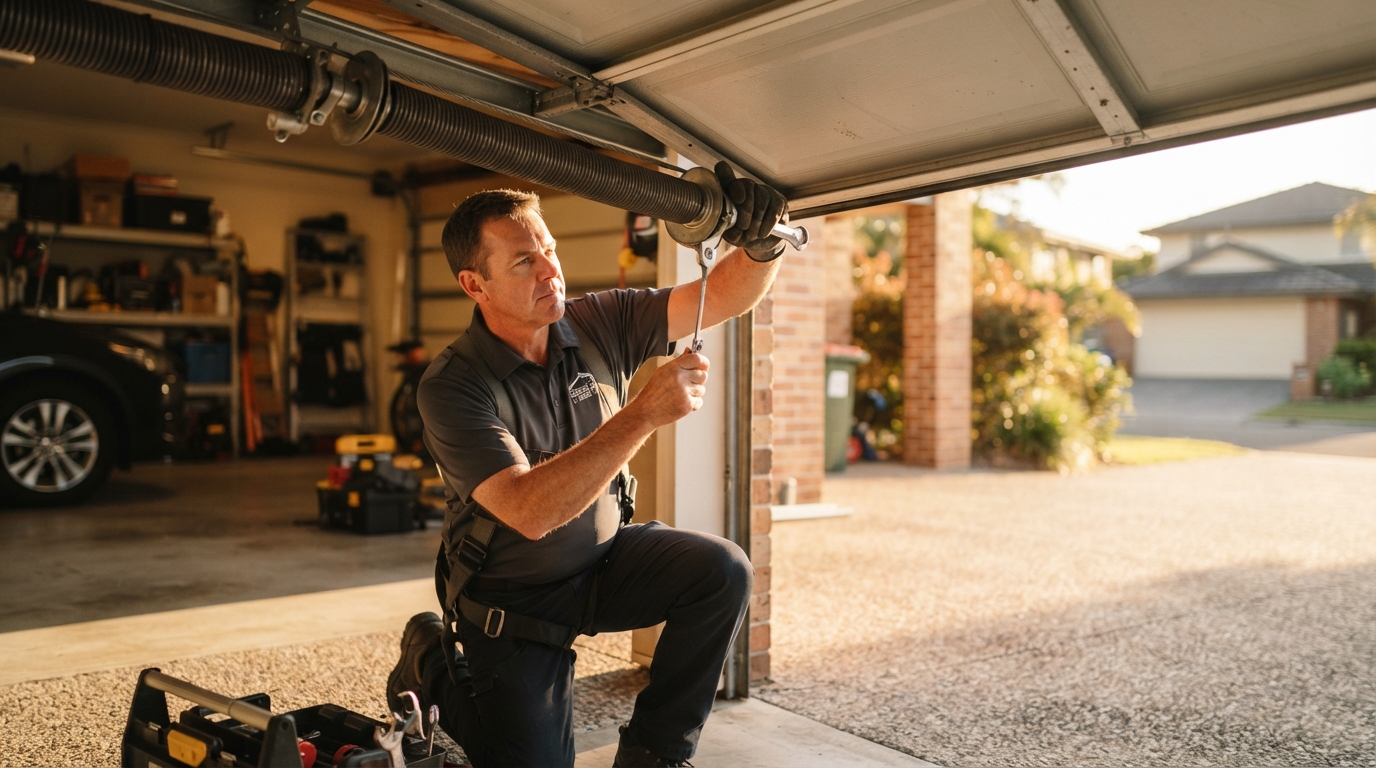
A technician addressing an emergency garage door repair typically checks the spring tension, cable integrity, track alignment, and opener sensors before recommending next steps. This inspection sequence helps identify whether the issue is isolated to one component or part of a broader wear pattern across the system.
What Happens During a Repair Visit
Once a technician arrives, the process generally follows a predictable order designed to restore safe operation without unnecessary part replacement.
1. Visual inspection of springs, cables, rollers, and tracks
2. Testing of the opener’s force settings and safety reversal sensors
3. Identification of the specific failed component
4. Replacement or adjustment of the damaged part
5. Functional test to confirm smooth, balanced operation
This structured approach reduces the chance of a repeat failure and confirms the door meets standard safety thresholds before the technician leaves.
Comparing Common Repair Scenarios
| Issue | Typical Cause | Urgency Level |
| Door wont open, loud bang heard | Broken torsion spring | Immediate |
| Door reverses before closing | Misaligned safety sensors | Same-day |
| Grinding noise, slow movement | Worn rollers or track debris | Within a few days |
| Door off-track or bent panel | Impact damage or cable failure | Immediate |
Not every issue demands a same-hour response, but spring failures and off-track doors generally fall into the urgent category because they affect the door’s structural balance.
Frequently Asked Questions
Is it safe to operate a garage door with a broken spring? No. A broken spring removes the tension that balances the door’s weight, which can cause the door to fall suddenly or strain the opener motor.
Can a homeowner in Placerville, CA replace a torsion spring without a technician? Torsion springs are under high tension and carry real injury risk, so professional handling is the standard recommendation for this type of repair.
How quickly should a grinding or squealing noise be addressed? Unusual noises often indicate worn rollers or debris in the track, and while not always an emergency, they should be inspected within a few days to prevent further wear.
What should be done if the door opener runs but the door does not move? This usually points to a disconnected trolley or broken cable, and the door should not be forced manually until a technician examines the mechanism.
Business Information and Next Steps
Based in Diamond Springs, CA, Sierra Nevada Overhead Door Company serves customers across Placerville, CA.