In brief:
- Roof leaks are traced using a sequence of interior checks, exterior visual inspection, and targeted moisture testing rather than guesswork.
- Common entry points include flashing, penetrations, aging shingles, and clogged gutters.
- Fast diagnosis combined with prompt repair limits water damage to decking, insulation, and interior structures.
A roof leak often appears far from where water actually enters, so a thorough inspection is more effective than simply checking a ceiling stain. An experienced Roofing Contractor in Dundee, OH carefully examines the roof structure, starting inside the property and working outward, to identify the leak’s source before recommending the right repairs.
Skipping this step is one of the most common reasons leak repairs fail. Patching the spot directly above a ceiling stain often misses the actual entry point, since water can travel several feet along rafters or decking before dripping down.
Starting the Diagnosis From the Inside Out
Professional leak tracing typically begins inside the structure, not on the roof surface.
- Attic and ceiling inspection: Technicians look for water stains, discoloration, or sagging drywall, then trace the path upward toward the roof deck.
- Insulation checks: Wet or compressed insulation often marks the general area where water has been entering over time.
- Interior moisture readings: Some contractors use handheld moisture meters to confirm dampness in decking or framing before climbing onto the roof.
This interior-first approach narrows the search area significantly. According to the National Roof Certification and Inspection Association, tracing an odor or stain back to its source is often necessary because water travels before it becomes visible indoors.
Exterior Inspection and Common Leak Points
Once the general area is narrowed down, the exterior inspection confirms the exact failure point.
| Leak Source | What Inspectors Look For | Typical Risk Level |
|---|---|---|
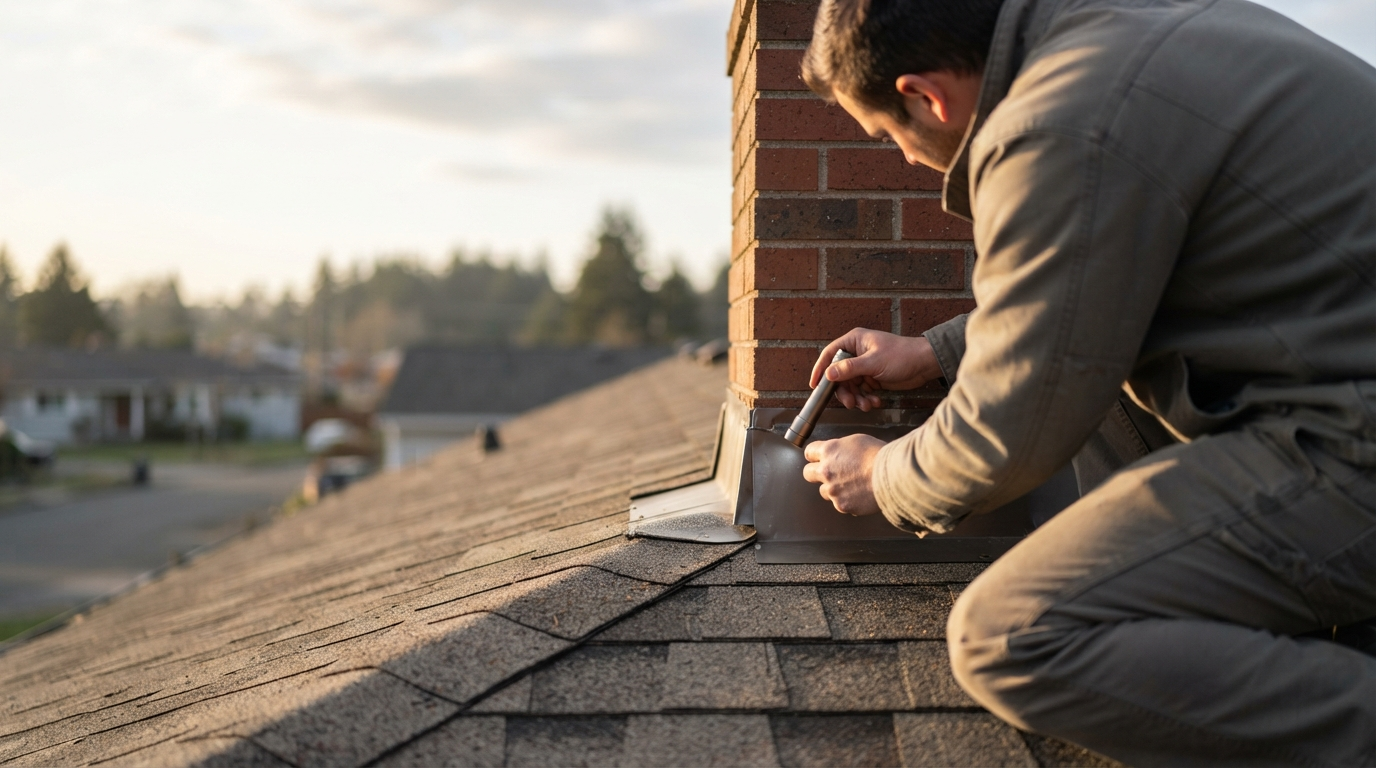
| Flashing around chimneys, vents, skylights | Rust, gaps, lifted or cracked seals | High |
| Shingle damage | Missing, cracked, or curling shingles | Moderate to High |
| Clogged gutters and drainage | Standing water, granule buildup, backup | Moderate |
| Roof penetrations | Pipe boots, vent seals, fastener corrosion | High |
Industry guidance from the NRCA identifies flashing, drainage systems, and roof penetrations as the areas most vulnerable to wear and leaks. Each of these points requires a close visual check, since small gaps are easy to miss from the ground.
A full exterior inspection generally covers:
- Flashing condition around all roof penetrations and wall intersections.
- Shingle or metal panel integrity, including edges and seams.
- Gutter and downspout function, checking for blockages or improper slope.
- Overall roof surface for sagging, warping, or soft spots that suggest decking damage.
Sagging or warped sections deserve particular attention, since they often signal that decking has already absorbed water and begun to weaken structurally.
Confirming the Source Before Repair
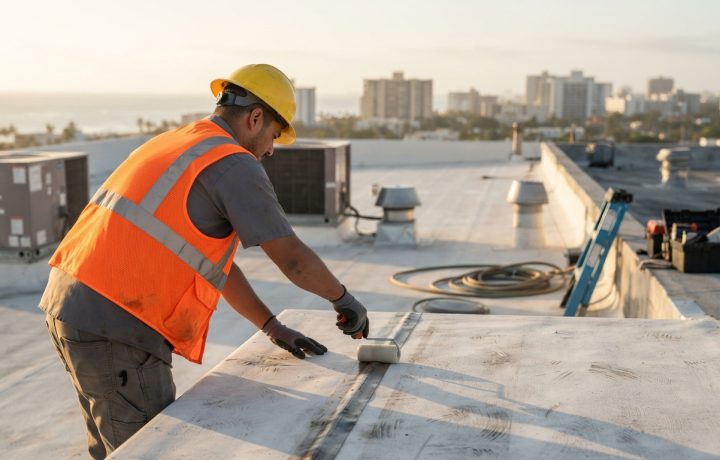
Visual inspection alone does not always reveal a leak’s exact origin, particularly on low-slope or flat sections where water can migrate before surfacing. Many contractors supplement visual checks with infrared scanning or moisture meters to map saturated areas without removing roofing material. This step matters because repairing the wrong spot wastes time and leaves the actual leak active, allowing damage to continue spreading unseen.
Confirming the source also supports accurate repair decisions. A small flashing gap might only need resealing, while compromised decking under a sagging section may call for partial reroofing rather than a surface patch.
Repair Options and Preventing Further Damage
Once the source is confirmed, the repair approach depends on severity:
- Minor flashing or sealant repairs: Resealing or replacing flashing around vents, chimneys, and skylights.
- Shingle replacement: Swapping damaged or missing shingles section by section.
- Decking repair: Replacing water-damaged plywood or boards beneath the roofing material.
- Full reroofing: Recommended when multiple leak points or widespread wear point to a roof nearing the end of its service life.
Preventing recurring leaks also depends on routine maintenance between inspections, such as clearing gutters, trimming overhanging branches, and addressing minor shingle wear before it worsens. Catching small issues early is consistently less costly than repairing water damage to insulation, drywall, or framing after a leak has gone unnoticed.
Frequently Asked Questions
How quickly should a roof leak be repaired after it is found? Repairs should begin as soon as the source is confirmed, since continued exposure allows water to spread into insulation and framing, increasing both repair scope and cost.
Can a leak be fixed without a full roof inspection? A targeted patch may stop visible dripping temporarily, but without confirming the true entry point, the same leak often returns or appears in a different spot.
What is the difference between a roof repair and a reroof? Repair addresses isolated damage, such as a section of flashing or a few shingles, while reroofing replaces the entire roofing system when wear or damage is widespread.
Do flat roofs leak differently than sloped roofs? Flat and low-slope roofs allow water to pool and travel farther before showing interior signs, which is why moisture mapping tools are used more often on these systems.
Next Steps for Addressing a Roof Leak
Y&W Roofing LTD is a Dundee, Ohio-based roofing contractor offering roof replacement, reroofing, metal and asphalt shingle roofing, and repair services for residential and commercial properties in the surrounding region. Homeowners noticing ceiling stains, missing shingles, or recurring moisture issues can benefit from a professional inspection that identifies the actual source before damage spreads further. For details on services and coverage areas, Visit Website to learn more or request a quote.