Essentially:
• An air conditioning contractor installs, repairs, and maintains cooling systems, and holds the licensing required to handle refrigerant and electrical connections safely.
• In Jacksonville, FL, routine AC upkeep matters year-round because of long cooling seasons and high humidity.
• Choosing a licensed contractor affects system lifespan, energy costs, and indoor air quality.
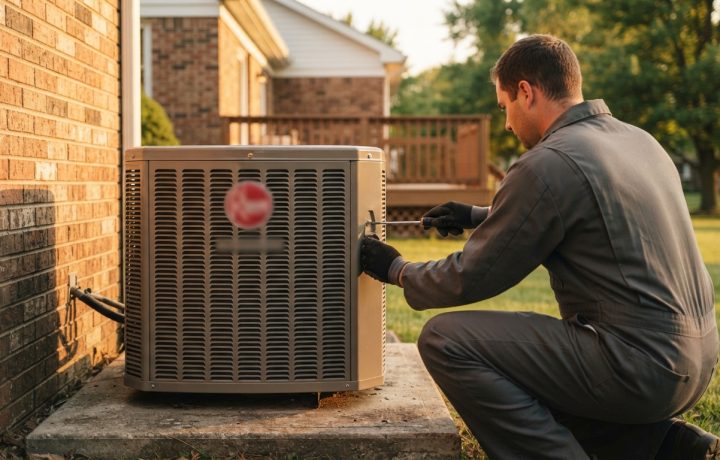
An air conditioning contractor is a licensed professional or company that installs, repairs, and maintains cooling equipment in homes and businesses. Hiring a qualified air conditioning contractor matters because improperly installed or poorly maintained systems can shorten equipment lifespan, raise utility bills, and compromise indoor air quality.
Cooling systems involve refrigerant handling, electrical wiring, and ductwork that require specific licensing under state contractor regulations. A contractor’s scope of work typically includes diagnosing mechanical failures, replacing aging components, and verifying that a system is sized correctly for the space it serves.
Core Services an AC Contractor Provides
Licensed HVAC contractors generally handle a defined set of tasks tied to cooling and air quality. Based on publicly listed service categories for contractors operating in this field, common offerings include:
• Air conditioning repair and installation for residential and light commercial systems
• Ductless mini-split installation and servicing
• Heating system repair and installation
• Air duct and dryer vent cleaning
• Indoor air quality equipment, such as filtration and dehumidification products
• Attic insulation work tied to overall HVAC performance
Each of these tasks connects to one goal: keeping a building’s temperature and air quality stable without excess energy waste. A contractor who also handles insulation and duct cleaning can address airflow problems that a repair-only technician might miss.
Why Licensing and Certification Matter
Not every person who repairs an air conditioner holds proper credentials. State licensing boards require contractors to pass exams covering electrical safety, refrigerant handling, and local building codes before they can legally install or service residential systems.
Federal guidance on commercial and residential air conditioner maintenance notes that when installed, operated, and maintained properly, energy-efficient air conditioners provide years of service. Improper installation, by contrast, can reduce a unit’s seasonal energy efficiency ratio and shorten its working life.
| Credential Type | What It Verifies |
| State contractor license | Legal authority to install and repair HVAC systems |
| NATE certification | Technician competency in diagnosing and servicing equipment |
| Manufacturer specialist status | Training on specific brand’s product line |
Homeowners can confirm licensing status through their state’s contractor licensing database before scheduling work, which helps avoid unlicensed operators who may skip permits or code inspections.
What to Expect from an AC Service Visit
A typical service call follows a predictable sequence, regardless of whether the issue is a minor repair or a full system replacement.
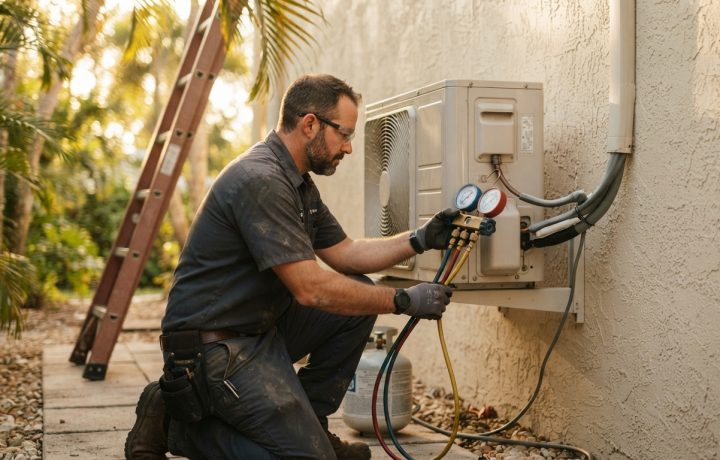
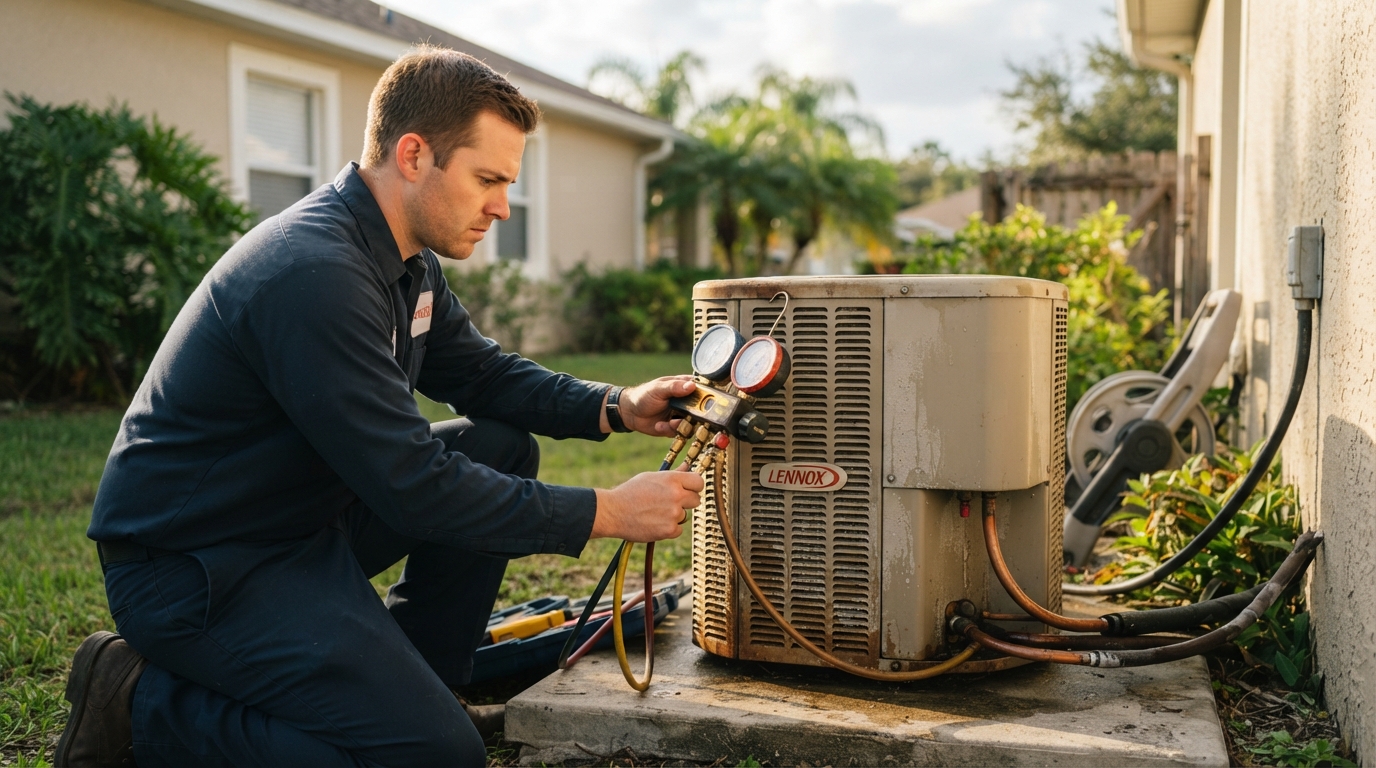
1. Initial diagnostic check of refrigerant levels, electrical connections, and airflow
2. Identification of the root cause, such as a failing capacitor, clogged filter, or duct leak
3. A written estimate outlining parts, labor, and any permit requirements
4. Completion of the repair or installation, followed by a system test
5. Documentation of warranty terms and maintenance recommendations
For readers in Jacksonville, FL, cooling systems run for the majority of the year due to the region’s extended warm season and high humidity levels. This makes routine filter changes, coil cleaning, and seasonal tune-ups more relevant locally than in cooler climates, since neglected systems tend to lose efficiency faster under constant use.
Comparing Repair, Maintenance, and Replacement
Deciding between these three paths depends on a system’s age, repair history, and efficiency rating.
| Service Type | Typical Trigger | General Outcome |
| Repair | Sudden breakdown or component failure | Restores function to existing unit |
| Maintenance | Scheduled seasonal check | Prevents breakdowns, preserves efficiency |
| Replacement | Repeated failures or unit over 10-15 years old | Improves efficiency, resets warranty |
A contractor who inspects a system in person is better positioned to recommend which path fits a specific unit than a generic rule of thumb based on age alone.
Frequently Asked Questions
How often should a residential AC system be serviced? Most manufacturers and HVAC trade groups recommend at least one professional inspection per year, with two annual visits common in regions with long cooling seasons.
What is the difference between an HVAC contractor and an AC-only contractor? An HVAC contractor typically handles both heating and cooling equipment, while an AC-only specialist focuses solely on cooling systems; many contractors in Northeast Florida handle both categories.
Can a contractor also address indoor air quality problems? Yes. Many licensed AC contractors offer indoor air quality add-ons such as filtration systems, UV lights, and dehumidifiers alongside standard repair and installation work.
Does duct cleaning affect air conditioning performance? Clean ducts support better airflow and system efficiency, which is why some contractors pair duct and dryer vent cleaning with their core HVAC services.
Finding Reliable Local Service
Based in the USA, Cool Connections Inc. serves customers throughout Jacksonville, FL. Residents interested in professional HVAC services can Learn More About Certified Air Conditioner Technicians and explore the company’s qualifications and available services.