Summary:
• Leaky fixtures, clogged drains, and running toilets are among the most frequent household plumbing issues, and many stem from worn seals, mineral buildup, or aging pipe materials.
• Minor leaks and simple clogs can sometimes be addressed with basic tools, but recurring leaks, slab leaks, or sewer backups typically call for professional plumbing repair.
• Older homes in coastal Florida areas face added wear from humidity and hard water, making routine inspection a practical preventive step.
Most common plumbing problems, including dripping faucets, slow drains, and running toilets, trace back to worn washers, trapped debris, or mineral scale buildup inside pipes and fixtures. Addressing them correctly usually means identifying the root cause rather than just treating the symptom, since a quick patch on a leaking joint or a chemical drain pour can mask a bigger issue that resurfaces within weeks.
Homeowners searching for lasting solutions often turn to professional plumbing repair when a problem repeats after a do-it-yourself fix or when water pressure, odor, or staining suggests damage beyond a single fixture. A licensed technician can isolate whether an issue is contained to one appliance or linked to a larger section of the home’s supply or drain lines.
Dripping Faucets and Running Toilets
A dripping faucet is almost always caused by a worn washer, O-ring, or cartridge that no longer seals properly under water pressure. Replacing the part is usually straightforward, but repeated failures in the same fixture can point to high water pressure or sediment damaging the seal faster than normal.
Running toilets are typically traced to a flapper that no longer forms a tight seal against the flush valve. According to EPA WaterSense guidance, replacing a worn flapper is a quick, low-cost repair that stops ongoing water waste. Left unaddressed, a running toilet can waste a significant amount of water every day, which shows up as an unexplained spike on a utility bill.
Clogged Drains and Slow-Moving Pipes
Clogs form gradually as grease, soap residue, hair, and mineral deposits build up along pipe walls, narrowing the passage until water backs up. Common signs include:
• Water draining slower than usual in sinks, tubs, or showers
• Gurgling sounds coming from drains or toilets
• Recurring clogs in the same fixture despite clearing attempts
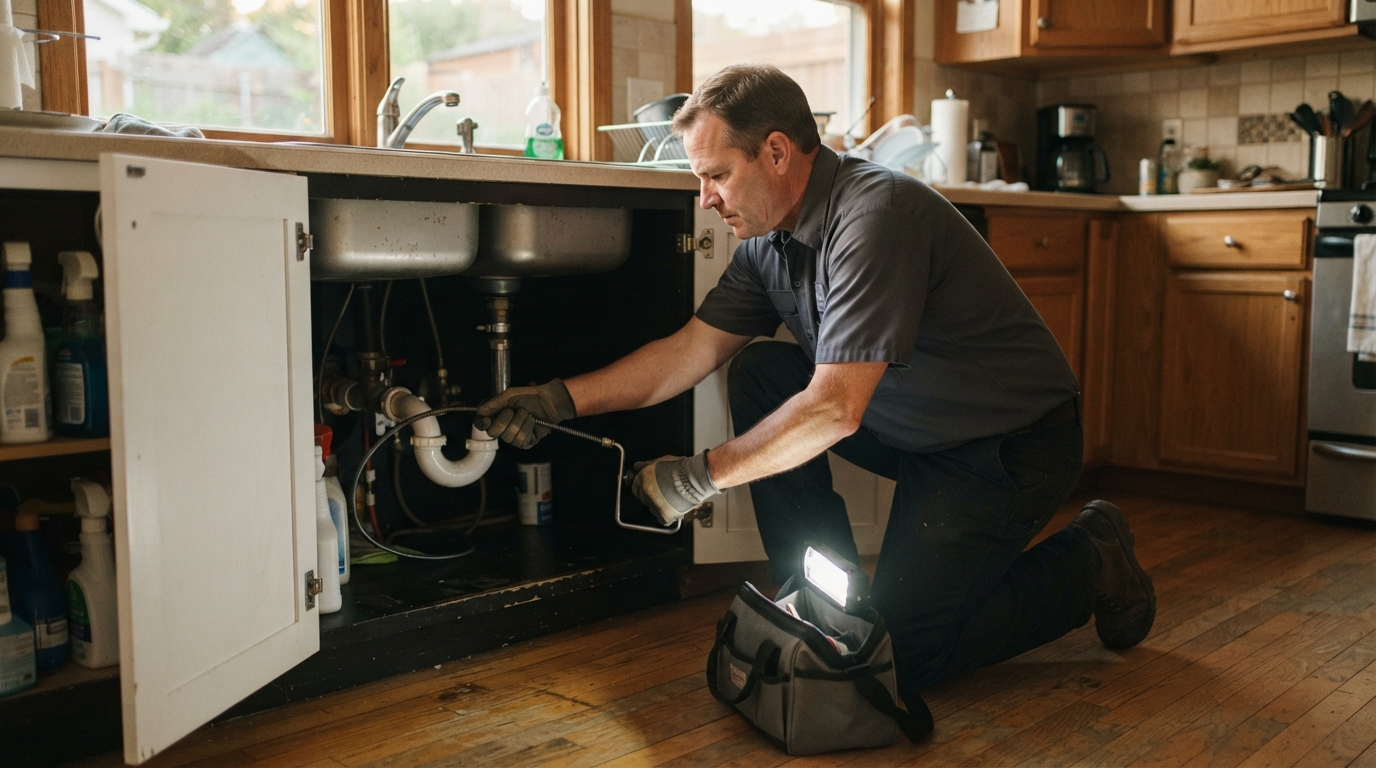
Simple blockages near the drain opening can sometimes be cleared with a plunger or a drain snake. Clogs that return repeatedly, affect multiple fixtures at once, or produce sewage odors often indicate a deeper obstruction in the main line that requires professional clearing equipment.
Leaks, Low Pressure, and Pipe Damage
Not all leaks are visible. Some develop behind walls, under slabs, or inside crawl spaces, where the only clue is a damp spot, a musty smell, or an unexplained rise in water usage. The table below outlines how typical leak types differ in detection and repair complexity.
| Leak Type | Common Cause | Typical Fix Approach |
| Visible fixture leak | Worn seal or loose connection | Tighten or replace part |
| Slab leak | Pipe corrosion or shifting under foundation | Leak detection, then targeted pipe repair |
| Pinhole pipe leak | Corrosion or mineral buildup over time | Section replacement or repiping |
| Low water pressure | Sediment buildup or hidden leak | Pipe cleaning or leak repair |
Low water pressure throughout a home, rather than at a single fixture, often signals sediment accumulation or a leak somewhere in the supply line. Humidity and mineral-heavy water common in Naples, FL can accelerate corrosion inside older galvanized or copper piping, making periodic inspection a reasonable precaution for homes built before more corrosion-resistant materials became standard.
When Professional Repair Makes Sense
Some plumbing issues go beyond basic tools and household fixes. Situations that generally call for a licensed plumber include:
1. Recurring leaks that return after a DIY repair
2. Sewer backups or multiple slow drains at once
3. Suspected slab leaks or pipe damage behind walls
4. Gas line concerns of any kind
5. Water heater malfunctions affecting temperature or pressure
Licensed plumbing contractors carry tools for leak detection and sewer line inspection that are not typically available to homeowners, which shortens the time needed to pinpoint a problem accurately.
Frequently Asked Questions
How can I tell if a leak is serious enough to call a plumber? A leak that returns after being patched, causes visible staining, or coincides with a noticeable jump in the water bill usually warrants a professional inspection rather than repeated DIY attempts.
Why do older homes in Florida experience more plumbing issues? Humidity, hard water, and aging pipe materials common in older housing stock can accelerate corrosion and mineral buildup, increasing the likelihood of leaks and reduced water pressure over time.
Is it normal for a toilet to run occasionally? Occasional running after a flush is typical, but continuous running points to a worn flapper or fill valve that should be replaced to avoid ongoing water waste.
Can chemical drain cleaners damage pipes? Repeated use of harsh chemical cleaners can corrode certain pipe materials over time, which is why mechanical clearing methods are often preferred for recurring clogs.
Based in Fort Myers, FL, First Class Plumbing of Florida, Inc. is a licensed plumbing contractor that extends service to customers throughout Naples, FL.
Scheduling and Service Details
Readers can find current contact details and service-area information for First Class Plumbing of Florida, Inc. to learn more about its plumbing services and coverage areas.
Routine inspection and timely repair of common plumbing fixtures can prevent small issues from developing into costly water damage, particularly in homes exposed to Florida’s humidity and hard water conditions.