
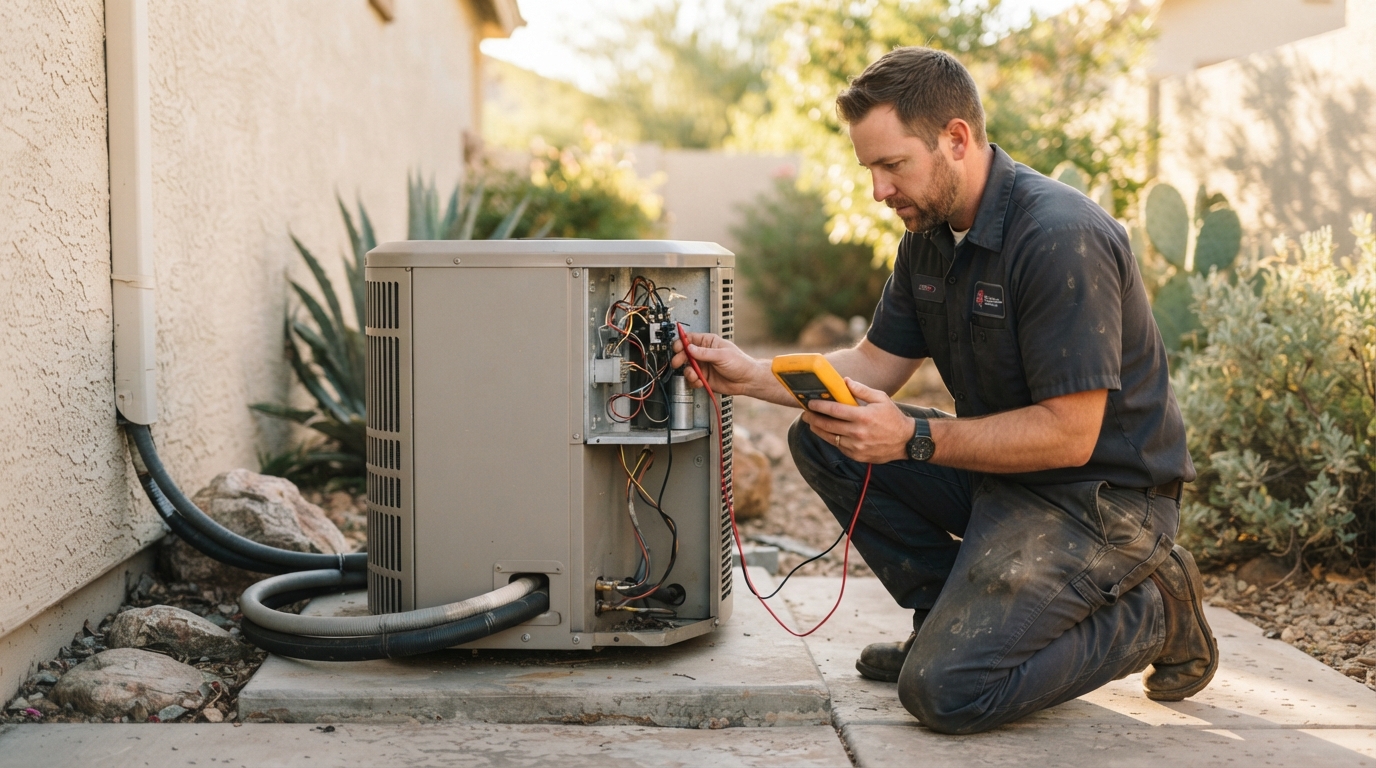
Simply put:
• A standard air conditioning repair visit involves a diagnostic inspection, a clear explanation of findings, and a repair estimate before any work begins.
• Common repair triggers include refrigerant leaks, electrical component failure, clogged drains, and worn compressors.
• Most straightforward repairs are completed same-day, while parts-dependent issues may require a follow-up visit.
A typical Air conditioning repair appointment follows a predictable sequence: diagnosis, explanation, estimate, and repair, usually completed within a single visit for common issues. Homeowners in Temecula, CA who understand this process tend to feel less uncertain when a technician arrives at the door and can ask more informed questions along the way.
Summer heat in the Temecula Valley puts consistent strain on residential cooling systems, and that strain often reveals itself through reduced airflow, warm air from vents, or a system that runs constantly without lowering the temperature. Knowing what happens during a repair visit helps set realistic expectations for cost, timing, and next steps. For a closer look at local AC repair options, visit the Optimal Air HVAC Website.
The Diagnostic Process Step by Step
Technicians generally move through a consistent sequence when evaluating a malfunctioning unit. This structure keeps the visit efficient and reduces the chance of misdiagnosis.
1. Initial system check – The technician reviews thermostat settings, airflow at the vents, and any error codes on the equipment.
2. Component inspection – Refrigerant levels, electrical connections, the condensate drain, and the compressor are examined for visible issues.
3. Problem identification – Findings are matched against common failure patterns to narrow down the root cause.
4. Estimate and explanation – The homeowner receives a plain-language summary of the problem along with repair options before work begins.
This approach mirrors guidance from the U.S. Department of Energy, which notes that regular maintenance such as charging refrigerant and replacing filters is necessary to maintain peak performance. Skipping diagnostics in favor of a quick fix often leads to repeat service calls.
Common Repair Issues in Hot Climates
Certain problems appear more frequently in regions with long, intense cooling seasons like inland Southern California.
• Refrigerant leaks – Low refrigerant reduces cooling capacity and can damage the compressor if ignored.
• Clogged condensate drains – Dust and debris buildup can cause water backup and shutdowns.
• Electrical component wear – Capacitors and relays degrade faster under heavy, repeated cycling.
• Dirty coils and filters – Reduced airflow forces the system to work harder, increasing wear and energy use.
According to federal guidance, if an air conditioner leaks, technicians should locate and repair the leak instead of simply topping it off, since repairing leaks keeps the system operating properly while reducing emissions and energy use. This distinction matters because a temporary refrigerant top-off often masks a larger mechanical problem.
| Repair Type | Typical Cause | Usual Timeline |
| Refrigerant leak repair | Worn seals, corrosion, vibration damage | Same day to 2 days, depending on part availability |
| Electrical component replacement | Capacitor or relay failure from heat cycling | Usually same day |
| Drain line clearing | Dust, algae, or debris buildup | Same day |
| Compressor replacement | Age, long-term low refrigerant, electrical surge | 1 to several days, part-dependent |
Repair Versus Replacement Considerations
Deciding between repair and replacement depends on the age of the unit, repair cost relative to replacement cost, and frequency of past breakdowns. The Environmental Protection Agency advises that if HVAC equipment is more than 10 years old or not keeping a house comfortable, it should be evaluated by a professional HVAC contractor. A technician who documents the system’s condition at each repair visit can help a homeowner track whether ongoing fixes still make financial sense.
Regular filter changes and seasonal inspections reduce the likelihood of major breakdowns between scheduled service calls. Simple upkeep, such as clearing debris from outdoor units and checking airflow monthly, extends the interval between repair visits.
Frequently Asked Questions
How long does a typical repair visit take? Most single-issue repairs, such as capacitor replacement or drain clearing, are completed within one to two hours once the technician arrives.
Why does my air conditioner blow warm air? Warm airflow commonly points to low refrigerant, a failed compressor, or a dirty air filter restricting airflow through the system.
Is it normal to need repairs every summer? Occasional repairs are common in systems over eight to ten years old, but repeated failures within a single season often signal a larger underlying issue worth a full system evaluation.
Can a leak be repaired instead of just refilled? Yes, locating and sealing the leak point is the recommended approach rather than repeatedly adding refrigerant without addressing the source.
Based in Murrieta, CA, Optimal Air Heating & Air Conditioning serves customers throughout Temecula, CA, providing diagnostic, maintenance, and repair services for residential cooling systems.
Finding Local Service Details
Readers planning a repair appointment can Get Directions to Optimal Air Heating & Air Conditioning on Google Maps for published location and contact information.
Understanding the repair process, from diagnosis to final estimate, helps homeowners in the Temecula Valley make clearer decisions about their cooling systems during the hottest months of the year.

