Key takeaway:
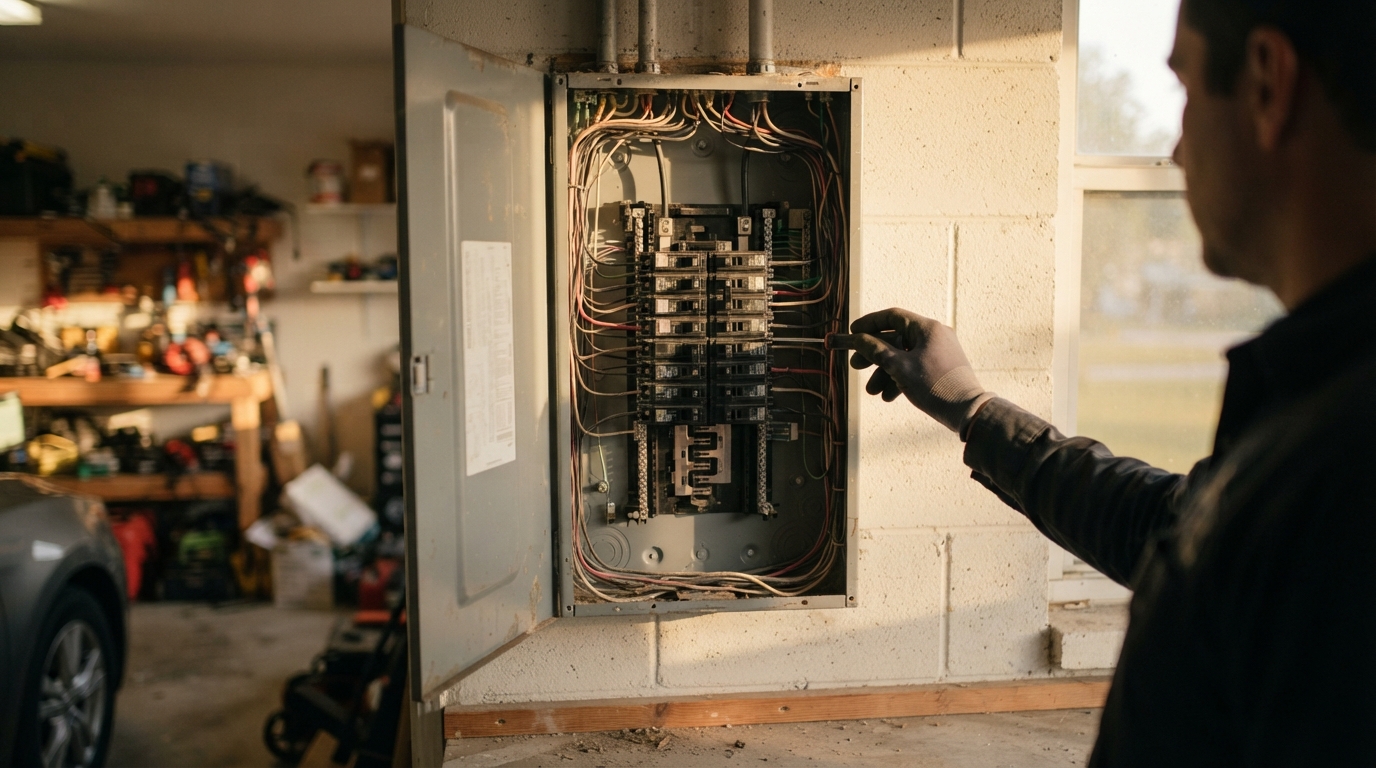
- An electrical panel upgrade replaces outdated or undersized service equipment with a modern panel that safely handles today’s electrical loads.
- Warning signs include frequent breaker trips, flickering lights, warm panel covers, or a home still running on 100-amp service.
- The National Electrical Code requires permits and licensed electrical work before energizing a new panel.
Tampa homeowners seeking help with an Electrical Panel Upgrade in Tampa, FL, are usually trying to solve one practical problem: their current panel can no longer keep up with everyday electrical demand. Older homes across Hillsborough and Pinellas counties were often built with service sizes that predate central air conditioning upgrades, electric vehicle charging, and the growing number of smart appliances found in modern kitchens.
A panel that worked fine decades ago may now struggle under that load, often resulting in tripped breakers, dimming lights, or no open slots left for new circuits. Recognizing these signals early helps avoid a more disruptive emergency repair later.
Signs a Panel May Need Attention
Not every electrical issue means a full panel replacement, but certain patterns point toward aging or undersized equipment. Common indicators include:
- Breakers that trip repeatedly during normal use, such as running a microwave and air fryer together
- Lights that flicker or dim when larger appliances switch on
- A panel cover that feels warm or shows discoloration near the breakers
- Reliance on power strips because there are not enough circuits for current needs
- A home still operating on 100-amp service while planning for EV charging, pool equipment, or a home office
Treat any burning odor or visible scorch marks near the panel as an immediate safety concern, not a routine maintenance item.
Why Code Compliance Matters
Panel work in Florida is governed by the National Electrical Code, the model code published by the National Fire Protection Association and adopted with local amendments by Florida jurisdictions. The code sets specific requirements for how panels must be labeled, grounded, and rated, including rules that the panelboard bus rating must equal or exceed the service rating, so a 200-amp service is paired with a 200-amp-rated bus. These provisions prevent overloaded equipment and reduce fire risk, which is why permits and inspections are standard for any legitimate upgrade.
Because code editions and local amendments vary by county, a licensed electrician familiar with Hillsborough and Pinellas permitting requirements is better positioned to plan a compliant installation than a general contractor without electrical licensing.
What the Upgrade Process Typically Involves
A panel upgrade generally follows a sequence rather than a single quick swap. The steps typically include:
- Load assessment – calculating current and anticipated electrical demand, including planned additions like EV chargers or pool equipment.
- Permitting – filing for the required electrical permit with the local authority having jurisdiction before work begins.
- Installation – de-energize the system, remove the old panel, and mount new service equipment with proper grounding and bonding.
- Inspection – a final inspection confirms the work meets code before the local authority approves the new panel for full use.
| Panel Size | Typical Use Case | Common Limitation |
| 60-100 amp | Older homes, minimal modern load | Struggles with EV chargers, central AC, electric ranges |
| 150 amp | Mid-size homes with moderate appliance use | Limited headroom for future additions |
| 200 amp | Most common modern residential standard | Generally supports EV charging and smart home systems |
| 400 amp | Larger homes or homes with heavy electrical demand | Higher upfront installation cost |
Frequently Asked Questions
How do I know if my panel is outdated rather than just tripping occasionally? A single trip during unusually heavy use is not necessarily a problem, but repeated trips across different circuits, visible rust, or a panel that feels warm are signs worth having a licensed electrician evaluate.
Is a permit always required for a panel upgrade? Increasing service capacity, such as moving from 100-amp to 200-amp service, typically requires a permit because it affects the home’s overall electrical safety and must meet current code.
Can an upgraded panel support future additions like an EV charger? A properly sized panel with adequate headroom can usually accommodate future circuits, which is why load calculations during planning matter rather than only addressing today’s needs.
How long does a typical panel replacement take? Timelines vary by scope and inspection scheduling, so a licensed electrician can provide a more specific estimate after assessing the property.
Planning the Next Step
Homeowners weighing a panel replacement benefit from a documented load assessment and a clear understanding of local permitting steps before work begins. Mr. Electric of Tampa Bay is a licensed electrical contractor serving residential and commercial customers across the Tampa Bay area with panel-related services, safety inspections, and related electrical work. Those exploring options can Read More about how panel evaluations are approached, or reach out directly to discuss scheduling an assessment for a specific property.