At glance:
- Concrete driveways, patios, and walkways each have distinct prep, finishing, and drainage requirements that affect long-term durability.
- Topeka, KS homeowners face freeze-thaw cycles that make proper base work and curing especially important for outdoor concrete.
- Professional grading and jointing reduce the most common failure points: cracking, pooling water, and surface spalling.
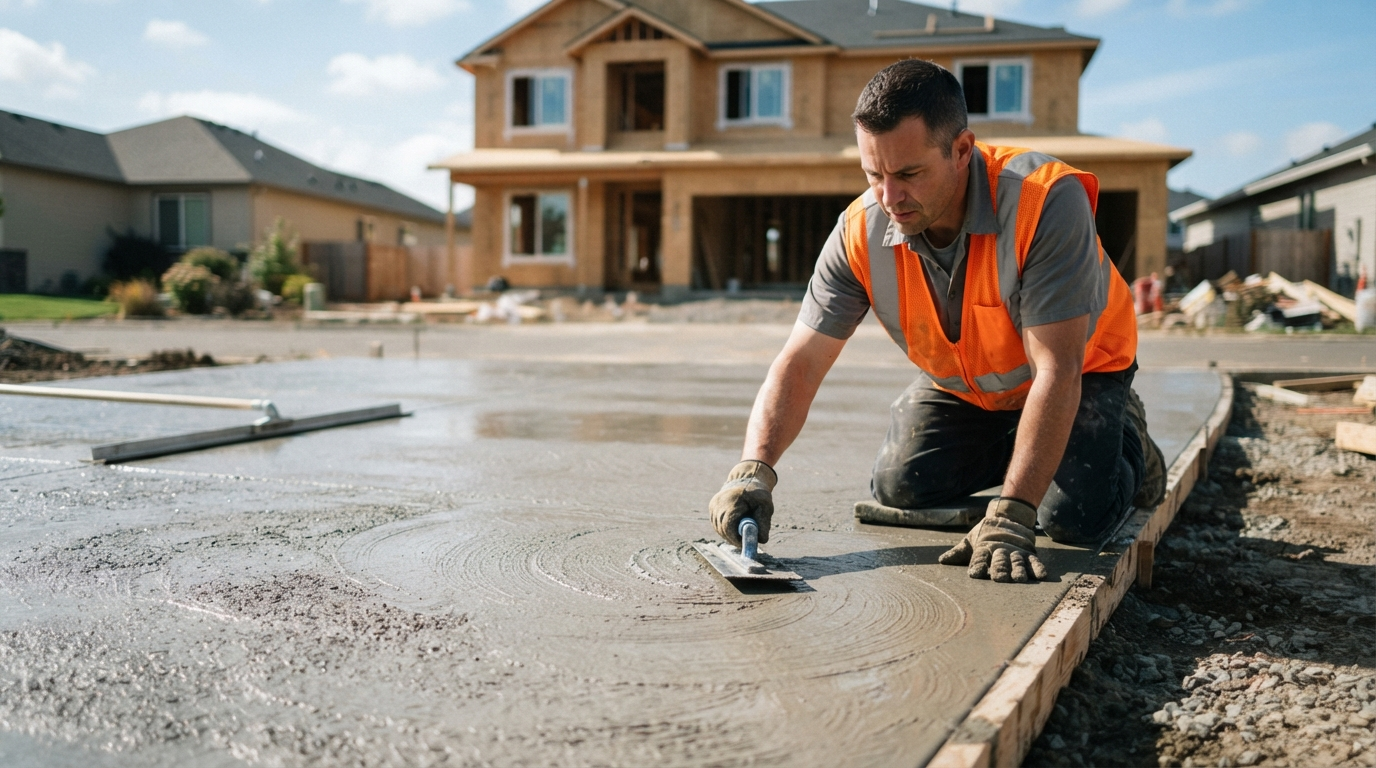
Concrete surfaces around a home age differently depending on exposure, traffic, and installation quality, which is why driveways, patios, and walkways each call for separate planning even when poured by the same crew. Understanding how Concrete Services differ by application helps homeowners set realistic expectations for cost, lifespan, and maintenance before a project begins. This distinction matters most in regions with freeze-thaw cycles, where a slab built for light foot traffic will not hold up under vehicle weight without the right base and thickness.
Outdoor concrete in this part of Kansas experiences repeated freezing and thawing through winter months, a cycle that stresses slabs more than consistent cold or consistent heat would. Proper air entrainment and a compacted gravel base reduce the risk of surface scaling and cracking caused by water expanding inside the concrete pores. Homeowners researching seasonal planning can review EPA guidance on permeable pavements for context on how surface drainage design affects long-term pavement performance.
Driveways: Load Capacity and Base Preparation
A residential driveway carries far more repeated load than a patio or walkway, so its base preparation and slab thickness differ accordingly.
- A compacted gravel base of several inches is typical before the concrete pour to prevent settling under vehicle weight.
- Control joints are spaced to manage natural cracking as the slab expands and contracts with temperature.
- Reinforcement such as rebar or wire mesh adds tensile strength for driveways subject to daily vehicle use.
Thinner slabs or inadequate base compaction are common causes of premature cracking in driveways poured without proper engineering for local soil and climate conditions.
Patios: Finish Options and Drainage Planning
Patios prioritize surface finish and water management over load capacity, since foot traffic and outdoor furniture place far less stress on the slab than vehicles.
- Broom finishes provide slip resistance for pool decks and outdoor dining areas.
- Stamped or textured finishes replicate stone or brick patterns for a decorative surface.
- Proper slope, typically a slight grade away from the home’s foundation, prevents water pooling near the structure.
Drainage planning is one of the most overlooked steps in patio construction, and a poorly sloped slab can direct water toward a foundation instead of away from it.
Walkways and Sidewalks: Accessibility and Safety
Walkways connect spaces and often intersect with municipal right-of-way requirements, particularly for properties near sidewalks or public access points.
| Feature | Driveway | Patio | Walkway |
|---|---|---|---|
| Typical thickness | Several inches, reinforced | Moderate, non-reinforced | Thinner, pedestrian load only |
| Primary concern | Load capacity | Drainage and finish | Accessibility and surface traction |
| Common finish | Broom or exposed aggregate | Stamped or broomed | Broom finish for slip resistance |
ADA-compliant slopes and widths matter for walkways serving public-facing commercial properties or municipal sidewalk replacement projects. Residential and commercial projects across Topeka, KS, and the surrounding region rely on these same base and finish principles regardless of scale.
Maintenance Considerations by Season
Concrete surfaces in this climate benefit from a few routine maintenance steps that extend service life regardless of which structure is involved.
- Seal exposed concrete every few years to reduce moisture penetration during freeze-thaw cycles.
- Clear snow and ice with plastic shovels rather than metal blades to avoid surface damage.
- Avoid deicing salts containing ammonium nitrate or ammonium sulfate, which can accelerate surface deterioration.
- Address hairline cracks early before water infiltration widens them during winter freezing.
A business based in USA, Midland Concrete, serves customers across Topeka, KS, offering a point of reference for how regional contractors describe these installation and maintenance practices.
Frequently Asked Questions
How long does a new concrete driveway need to cure before use? Concrete typically reaches enough strength for light foot traffic within a few days, though full curing for vehicle weight generally takes closer to a month.
Can an existing patio be resurfaced instead of replaced? Resurfacing is possible when the existing slab has no major structural cracking, though an overlay will not correct underlying base or drainage problems.
Why do walkways near sidewalks sometimes require permits? Municipal right-of-way and ADA accessibility rules often apply when a walkway connects to or alters a public sidewalk.
What causes concrete to crack during Kansas winters? Repeated freeze-thaw cycles combined with inadequate base compaction or insufficient air entrainment are the most common causes of winter cracking in this region.
Business Information
Additional background on the company’s residential and commercial work, along with service area details, is available through the Midland Concrete Google Business Profile listing.