Quick take:
• Material choice drives durability, cost, and performance in any metal fabrication project.
• Carbon steel, stainless steel, and aluminum each suit different load, corrosion, and budget needs.
• Matching material specifications to project requirements prevents costly rework and delays.
Choosing the right material for a fabrication project comes down to matching mechanical properties, corrosion resistance, and budget to the actual job requirements, whether that’s a structural beam, a decorative bracket, or a production run of custom parts.
Getting this decision right from the start affects everything downstream, from how a part performs under load to how long it lasts outdoors. Metal Fabrication projects that begin with the wrong raw material often face delays, added cost, or early failure, which is why material selection deserves as much attention as the cutting, bending, or welding steps that follow.
Why Material Selection Shapes Fabrication Outcomes
Every fabricated component starts as raw stock, and the properties of that stock determine what the finished part can actually do.
• Strength and load capacity : Structural beams and columns need materials rated for the stresses they will carry.
• Corrosion resistance : Outdoor or industrial environments call for materials that resist rust and chemical exposure.
• Workability : Some metals bend, cut, and weld more easily than others, which affects turnaround time.
• Cost per project : Material grade and thickness directly influence overall project pricing.
Industry specifications published through organizations such as ASTM International classify steel by its chemical, mechanical, and metallurgical properties, giving fabricators a consistent way to match stock to project demands.
Common Materials Used in Fabrication Projects
Carbon Steel
Carbon steel remains a standard choice for structural and industrial work because of its strength-to-cost ratio. Fabrication shops commonly stock plate, pipe, and structural shapes in carbon steel for beams, columns, and heavy-duty components used in construction and industrial settings.
Stainless Steel
Stainless steel resists corrosion better than standard carbon steel, making it suitable for projects exposed to moisture or chemical contact. It is frequently used alongside carbon steel and aluminum in fabrication inventories that serve both residential and commercial clients.
Aluminum
Aluminum offers a lighter alternative where weight matters without sacrificing workability. It is commonly stocked alongside plate and pipe products for fabrication work that requires lighter structural or decorative components.
Matching Materials to Project Type
| Material | Best Suited For | Key Trait |
| Carbon Steel | Structural beams, columns, heavy plate work | High strength, lower cost |
| Stainless Steel | Moisture or chemical exposure | Corrosion resistance |
| Aluminum | Lightweight components, decorative pieces | Easy to form, lower weight |
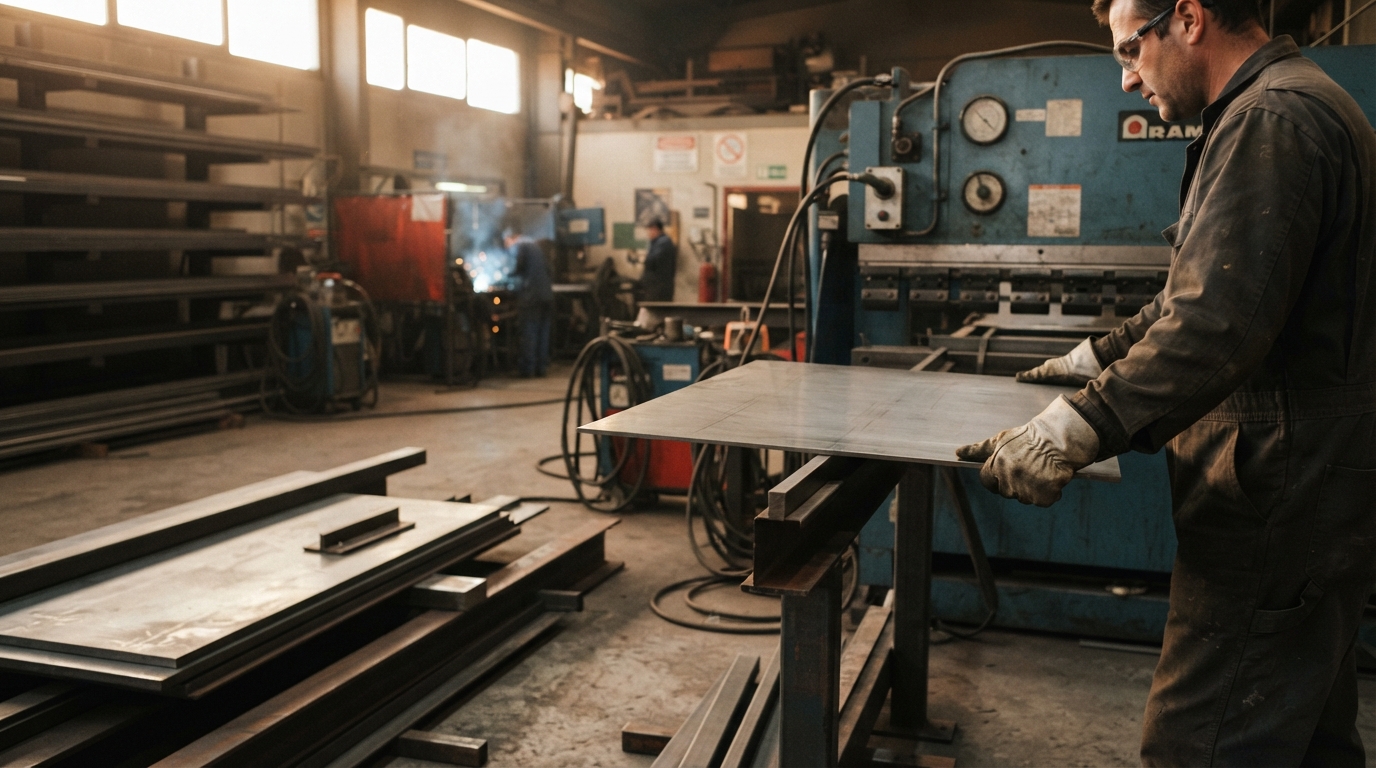
A fabrication shop equipped with cutting, bending, punching, and welding capabilities can process any of these materials to project specifications, whether the job calls for structural components for a commercial build or custom-dimensioned pieces for a home addition.
Residential vs. Industrial Material Needs
Residential projects often call for smaller-scale, precisely dimensioned pieces such as custom steel supports or decorative components. Industrial and commercial projects, by contrast, typically require higher-volume output of beams, columns, or heavy plates processed to strict tolerances for construction schedules.
Frequently Asked Questions
What is the most common material used in structural fabrication? Carbon steel is widely used for structural fabrication because of its combination of strength and cost-effectiveness for beams, columns, and plate work.
Does material choice affect fabrication turnaround time? Yes. Thicker or harder materials generally require more processing time for cutting, bending, or forming compared to thinner or softer stock.
Can the same fabrication shop handle both residential and industrial material needs? Many shops stock a range of materials, including steel, aluminum, and stainless steel, that can be processed for both residential and industrial or commercial projects.
How do I know which material is right for my project? The right material depends on load requirements, environmental exposure, and budget; discussing project specifications with a fabrication team helps narrow down the best fit.
Next Steps for Your Fabrication Project
Selecting the right material is easier with guidance from a team that works with structural steel, stainless, and aluminum stock on a daily basis, Maryland Metals Inc supplies new steel products, custom fabrication, and scrap metal recycling for residential, commercial, and industrial clients across the region. For project specifications, inventory questions, or a fabrication quote, Visit Website to review current capabilities and get in touch with the team.