Takeaway:
• Concrete lifting raises sunken slabs by filling voids beneath them, avoiding full slab replacement.
• Colorado’s expansive clay soils are a leading cause of slab settlement along the Front Range.
• Material choice (cement slurry vs. polyurethane foam) affects cost, cure time, and long-term stability.
Sunken concrete typically results from soil erosion, compaction, or moisture shifts beneath a slab, not a flaw in the concrete itself. Concrete lifting addresses this by pumping material under the slab to fill the void and raise it back toward its original position.
This repair method has existed for decades, but today’s materials and techniques reflect a more refined understanding of soil behavior and slab mechanics. Property owners researching the process often want to know why slabs sink in the first place, how lifting actually works, and which material fits a given situation.
Why Concrete Slabs Sink in Aurora, CO
Soil conditions across the Front Range directly affect slab settlement. Soil movement can exert enough pressure to crack sidewalks, driveways, basement floors, pipelines and even foundations.
Several factors contribute to this locally:
• Expansive clay soil : Expansive soils are found throughout Colorado and contain montmorillonite, a special kind of clay.
• Moisture cycling : Expansive soils shrink when dry and swell when wet, which creates uneven support beneath slabs over time.
• Freeze-thaw cycles : Seasonal temperature swings in Aurora, CO can accelerate voids forming under walkways, patios, and driveway sections.
• Poor compaction : Soil that was not properly compacted before the original pour settles unevenly as it ages.
Because soil surveys provide general information about soils in an area and are available from the Natural Resources Conservation Service, U.S. Department of Agriculture, homeowners can check regional soil data before assuming a settlement issue is purely cosmetic. For broader background on soil behavior, the U.S. Geological Survey maintains research on expansive soil hazards nationwide.
How the Lifting Process Works
Concrete lifting generally follows a consistent sequence regardless of the material used:
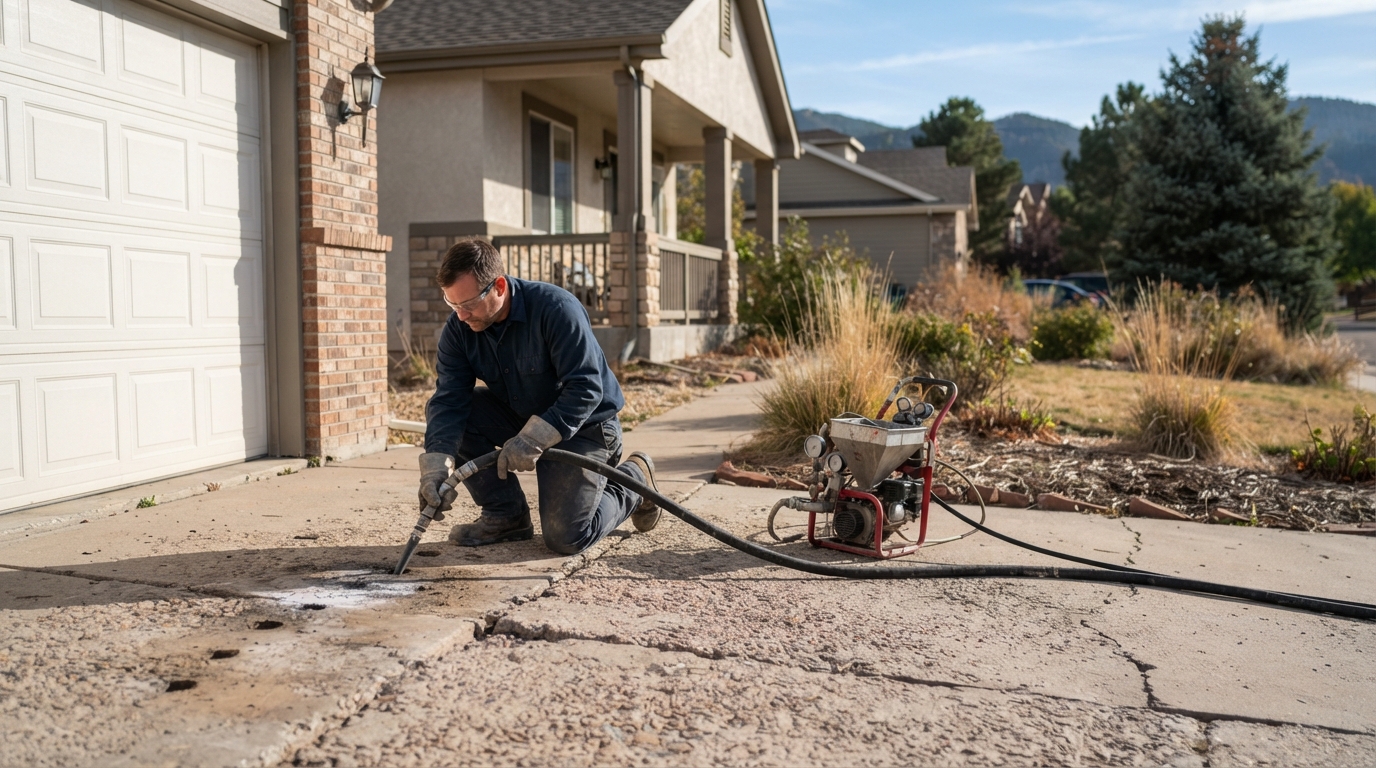
1. Small holes are drilled into the affected slab at strategic points.
2. A pump injects material (cement-based slurry or polyurethane foam) beneath the surface.
3. The material fills voids and gradually raises the slab to near its original grade.
4. Holes are patched, and the surface is cleared for use once cured.
The core difference between methods lies in the filling material, which affects weight, cure time, and cost.
Comparing Common Concrete Lifting Materials
| Factor | Cement-Based Slurry | Polyurethane Foam |
| Material weight | Heavier, denser mixture | About 2-4 pounds per cubic foot |
| Upfront cost | Often less expensive by 25-50% compared to polyurethane foam for the same job | Typically higher initial cost |
| Hole size | Larger drilling holes required | Holes closer to 5/8 inch, which patch almost invisibly |
| Moisture resistance | Can erode over time in wet conditions | Waterproof and won’t erode, dissolve, or compact over time |
Both approaches are recognized as legitimate repair options. Mudjacking and polyurethane foam lifting are both legitimate, proven methods for raising sunken concrete. The right choice often depends on the slab’s use, budget, and how much disruption a property owner can accommodate during the repair window.
Where Concrete Lifting Applies
Concrete lifting is typically limited to specific surface types rather than full structural foundations. Mudjacking and polyurethane foam lifting are primarily used to raise and stabilize exterior flatwork, driveways, walkways, patios, pool decks, and garage floors, and some interior concrete surfaces. Structural foundation repair, by contrast, usually involves different engineering methods such as piering, and is treated as a separate category of work from flatwork leveling.
Based in Commerce City, CO, the mudjacking contractor Crackerjack Mudjacking serves property owners across Aurora, CO who are dealing with sunken flatwork rather than full foundation failure.
Frequently Asked Questions
How long does a concrete lifting repair take? Most residential slab lifting projects are completed in a single visit, though cure time before the surface can bear full weight varies by material.
Does concrete lifting prevent future sinking? Lifting fills the existing void but does not change the underlying soil composition, so continued monitoring is reasonable in areas with active expansive clay.
Is concrete lifting cheaper than replacement? Lifting is generally less expensive than full slab replacement since it reuses the existing concrete rather than demolishing and repouring it.
Can concrete lifting be done in any season? Extreme cold or saturated ground can affect scheduling, since soil conditions influence how well the injected material fills voids.
Final Notes on Addressing Sunken Slabs
Settled concrete is common in the soil conditions found throughout the Front Range, and addressing it early tends to limit further surface damage. Current service details for Crackerjack Mudjacking are available for property owners evaluating a slab-leveling repair.