Key point:
• Discount tires are safe when sourced through proper load ratings, verified tread depth, and professional installation rather than price alone.
• Florida heat, heavy rain, and mixed highway/surface-street driving in Orange City, FL make tread quality and load rating especially important.
• A tire technician can confirm fit, load rating, and tread specifications before installation to avoid handling or safety issues.
Finding a lower price on tires does not require accepting reduced safety. The key is matching tread quality, load rating, and proper installation to the vehicle, rather than choosing a tire based on sticker price alone.
Shopping for Discount Tires Orange City, FL works best when buyers understand what separates a genuine value from a tire that cuts corners on construction or fit. Budget pricing and safety are not mutually exclusive when the tire’s specifications match the vehicle’s actual needs.
What “Discount” Should Mean for Tire Buyers
A discounted tire is not automatically a lower-quality tire. Price differences often reflect brand positioning, tread warranty length, or seasonal promotions rather than reduced durability.
Buyers should distinguish between three common reasons a tire is priced lower:
• Manufacturer rebate or closeout pricing on a current, well-rated tire line
• A budget-tier tire built with simpler compounds and shorter tread warranties
• Mismatched inventory, where a discounted tire does not fit the vehicle’s load rating or size requirements
The third scenario creates the most risk. Fitting a standard passenger tire on a vehicle rated for a higher load can affect handling stability and long-term safety.
Tread Depth and Load Rating Basics
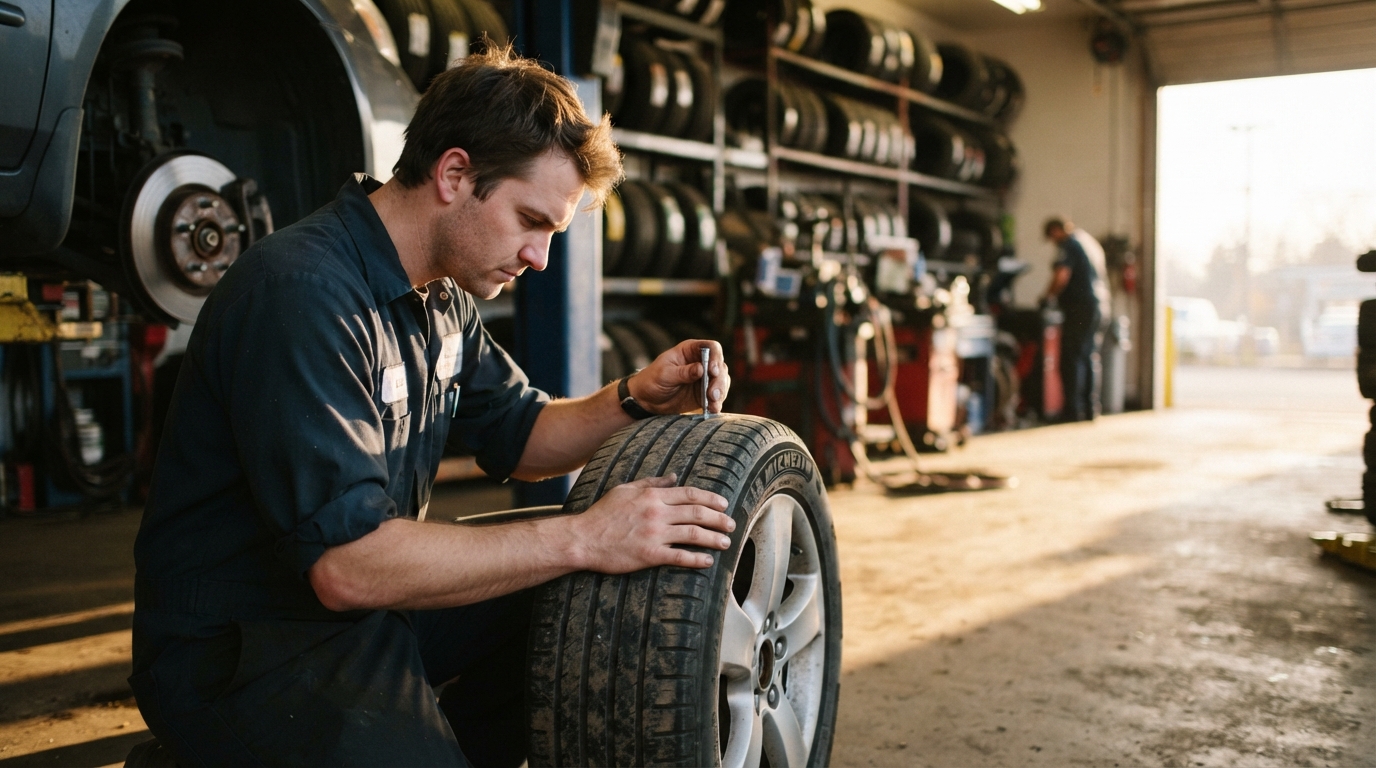
Tread depth is the clearest, most measurable safety indicator available to any driver. According to NHTSA’s tire safety guidance, tires are not safe and should be replaced once tread wears down to 2/32 of an inch, and tread depth should be checked monthly alongside tire pressure.
Load rating matters just as much as tread depth, particularly for trucks and SUVs common on Florida roads. A tire technician can confirm the correct load rating for a vehicle before installation, which helps the replacement fit both the rim and the vehicle’s rated weight capacity.
| Tread Depth | Condition | Recommended Action |
| 6/32 inch or more | Good | Continue normal monthly checks |
| 4/32 to 5/32 inch | Fair, reduced wet traction | Plan replacement soon |
| 2/32 inch or less | Unsafe per NHTSA | Replace immediately |
Why Local Driving Conditions Change the Calculus
Climate and road type influence which tire construction makes sense for a given area. Drivers face conditions many tire buyers underestimate, including intense heat, heavy rain, and a mix of interstate and local surface-street driving in Orange City, FL.
Heat accelerates rubber degradation, while sudden downpours demand tread patterns that channel water efficiently. A tire priced for a drier, cooler climate may not perform the same way once installed on a vehicle driven daily in Florida conditions.
Based in USA, Expert Car Care’s listed service locations across Central Florida extend coverage to drivers in Orange City, FL. The business also notes that every tire visit includes a complimentary multi-point inspection, which allows a technician to check tread wear patterns and pressure before confirming whether a tire is a safe match.
Installation Quality Is Part of the Price
Even a well-built, properly rated tire underperforms if it is installed incorrectly. Tires selected for a vehicle should be mounted with proper equipment and torqued to manufacturer specifications, since improper torque can lead to vibration, uneven wear, or wheel damage over time.
A wheel alignment check is often recommended immediately after new tire installation, since misalignment causes new tires to wear unevenly regardless of their original quality. Skipping this step can shorten the life of an otherwise well-chosen, reasonably priced tire.
Frequently Asked Questions
Does a lower price always mean lower tire quality? Not necessarily. Rebates, seasonal promotions, and closeout pricing on current tire lines can lower cost without changing the tire’s construction or rated performance.
How often should tread depth be checked? NHTSA guidance recommends checking tread depth monthly, at the same time tire pressure is checked, using a gauge or the penny test.
Why does load rating matter for SUVs and trucks? Installing a tire with a lower load rating than the vehicle requires can affect handling stability and create a safety risk, even if the tire appears to fit the rim.
Does alignment affect how long new tires last? Yes. Misalignment can cause uneven wear on new tires shortly after installation, which shortens tread life regardless of the tire’s original quality or price point.
Business Info
Expert Car Care operates across Central Florida, with tire-related services that include installation, rotation, balancing, and inspection as part of its listed offerings.
Matching tire price to actual tread quality, load rating, and proper installation remains the most reliable way to balance budget and safety, particularly for drivers navigating Florida’s heat and seasonal rain patterns.