In short:
• Lift station maintenance combines routine inspection, pump testing, and wet well cleaning to prevent sewage backups and equipment failure.
• Preventive schedules range from weekly checks to annual pump teardowns, each targeting different failure risks.
• Jacksonville, FL property managers and municipal operators rely on documented maintenance to stay compliant with wastewater regulations.
A lift station moves wastewater from lower to higher elevation when gravity alone cannot carry it to a treatment plant, and keeping one running efficiently depends on consistent inspection, pump testing, and wet well cleaning rather than waiting for a failure to occur. Skipping routine checks raises the risk of overflows, odor complaints, and costly emergency repairs.
Property managers, municipal operators, and facility teams in Jacksonville, FL depend on dependable lift station maintenance to avoid the kind of sudden pump failure that can shut down a system without warning. Regular servicing also extends equipment life and reduces the frequency of emergency service calls across commercial, industrial, and municipal properties.
What a Lift Station Does and Why Upkeep Matters
A lift station is built around a wet well, submersible pumps, control panels, and a force main that carries wastewater onward to treatment. Most stations use at least two pumps that alternate as lead and lag units, and an uneven run time between them often signals a developing problem with one pump or its alternation controls.
Wastewater left sitting too long in a wet well can turn septic, create deposits, and generate strong odors, which is why routine servicing focuses heavily on minimizing detention time. Left unaddressed, solids and grease buildup can coat valves and pump equipment, reducing holding capacity and accelerating wear.
Core Tasks in a Preventive Maintenance Program
Preventive maintenance on a lift station typically covers several recurring checks rather than a single annual visit. According to the EPA’s guidance on collection and lift station maintenance, documented inspection of manholes, lift stations, and air relief valves helps reduce the risk of sanitary sewer overflows.
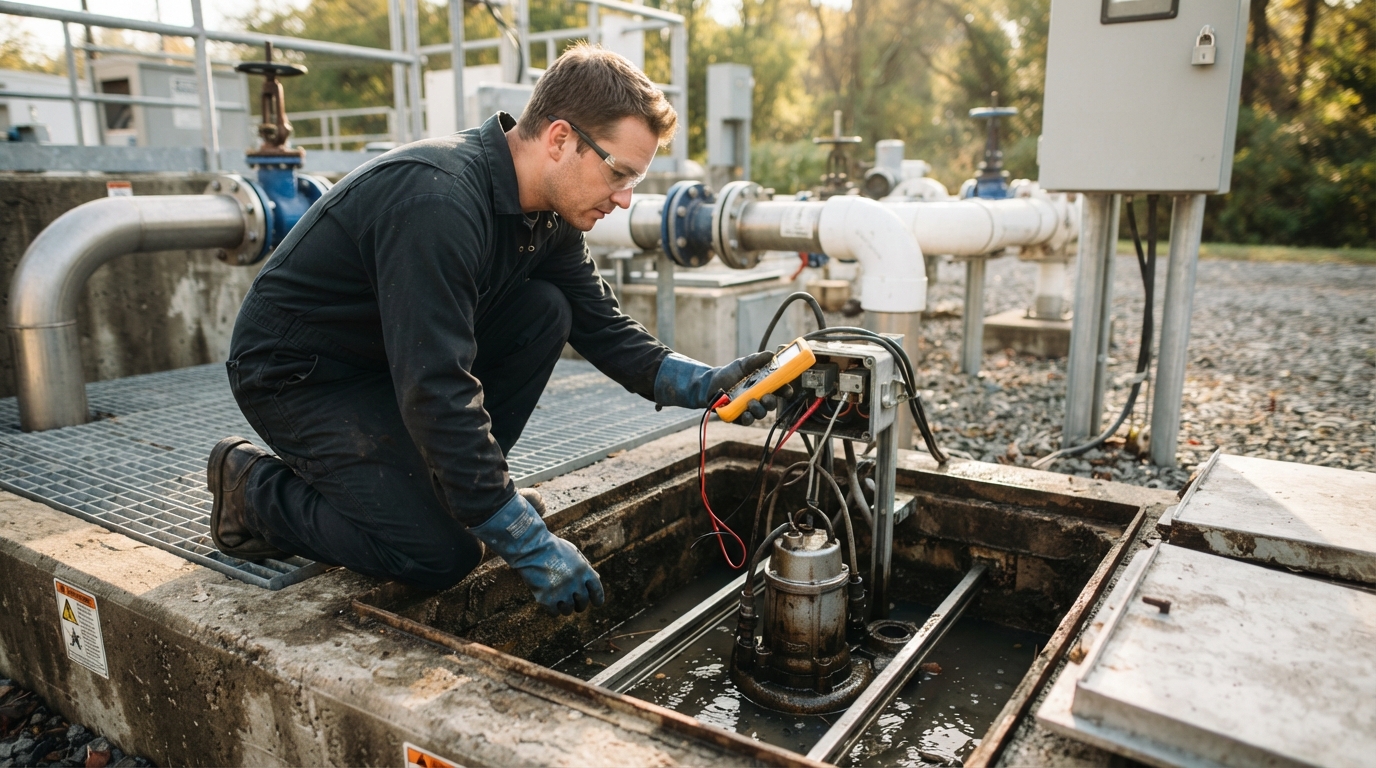
• Weekly or biweekly checks: Alarm testing, amperage and run-hour logging, and listening for unusual pump noise.
• Monthly checks: Pump alternation testing, high-level alarm verification, telemetry checks, and generator load testing.
• Quarterly checks: Guide rail and chain inspection, control panel scanning for hot spots, and float cleaning.
• Annual checks: Pulling pumps to inspect impellers, seals, and bearings, along with a wet well cleaning and drawdown test to confirm pump efficiency.
A drawdown test is a standard way to measure how quickly each pump empties a known volume of wastewater from the wet well, and comparing results over time helps identify pumps that are losing capacity.
Maintenance Frequency Comparison
| Maintenance Interval | Primary Focus | Typical Issues Caught |
| Weekly/Biweekly | Alarms, amperage, run hours | Early current or run-time drift |
| Monthly | Alternation, telemetry, generator | Dead standby pumps, alarm failures |
| Quarterly | Rails, chains, control panel | Corrosion, loose connections |
| Annual | Pump pull, wet well cleaning, drawdown test | Hidden wear, lost pumping capacity |
Regional Factors That Affect Service Needs
Heavy rainfall and high groundwater levels common to Jacksonville, FL can increase inflow and infiltration into collection systems, pushing lift stations to work harder during storm events. Humidity and heat also accelerate corrosion inside wet wells, making quarterly and annual inspections particularly relevant for coastal Northeast Florida properties.
Because sanitary sewer overflows are treated as Clean Water Act violations, documented maintenance records matter for commercial, industrial, and municipal operators alike. Facility teams that keep consistent logs of pump run times, alarm tests, and cleaning dates are better positioned to demonstrate compliance if a regulatory review occurs.
Frequently Asked Questions
How often should a lift station be inspected? Most programs combine weekly alarm and amperage checks with monthly, quarterly, and annual tasks that grow more detailed, culminating in a full annual pump pull and wet well cleaning.
What are early warning signs of lift station trouble? Uneven run times between lead and lag pumps, unusual noise, frequent alarms, and rising amperage readings often indicate a developing mechanical or electrical issue.
Why does wet well cleaning matter so much? Grease, solids, and scum that accumulate in a wet well can reduce holding capacity, clog pumps, and corrode walls if not removed through periodic cleaning.
Does weather affect lift station performance in Jacksonville, FL? Yes. Heavy rain and high groundwater can increase flow volumes and infiltration, while heat and humidity contribute to faster corrosion of equipment inside the wet well.
Service Area and Next Steps
Based in Ponte Vedra Beach, FL, Consolidated Utilities serves customers across Jacksonville, FL with wastewater lift station services for commercial, industrial, and municipal clients.
Readers researching service options can view our site at Consolidated Utilities for published details on maintenance scope and coverage area.