Motorcycle towing may be necessary when a bike cannot be safely ridden because of a mechanical problem, collision damage, tire issue, or another unexpected situation. Before requesting assistance, riders should provide accurate information about the motorcycle, its location, condition, and transportation needs so the appropriate towing equipment can be prepared.
A motorcycle presents different transportation considerations from a passenger car. Its smaller size does not mean it can be handled with the same equipment or methods used for every other vehicle. Proper positioning, securement, and handling are important when transporting a motorcycle that cannot be ridden.
For riders in Phoenix, understanding what information to provide before requesting assistance can make an unexpected breakdown or transportation problem easier to manage.
When Does a Motorcycle Need Towing?
A motorcycle may need professional towing when it cannot safely continue under its own power or when riding it would create an unnecessary safety concern.
Common situations include:
- A motorcycle will not start
- A tire is damaged or deflated
- The motorcycle has been involved in a collision
- Mechanical problems prevent normal operation
- The motorcycle has electrical problems
- The rider has experienced a breakdown away from a repair facility
- The motorcycle has sustained damage that affects its ability to be ridden
A motorcycle does not necessarily need to be completely disabled before transportation becomes appropriate. For example, a bike may still start but have damage affecting its steering, wheels, suspension, or other components. In such circumstances, continuing to ride may not be appropriate.
The important question is whether the motorcycle can be operated safely, not simply whether the engine still runs.
What Information Should You Give a Towing Company?
The first step when requesting motorcycle towing is to provide clear information about the situation. A towing company needs to know where the motorcycle is and what condition it is in before determining the appropriate response.
Useful information includes:
- Exact location
- Motorcycle make and model
- Whether the motorcycle starts
- Whether it can roll
- Tire condition
- Visible damage
- Whether the motorcycle was involved in a collision
- Desired destination, if known
Riders do not need to diagnose the exact mechanical problem. A straightforward description is generally more useful than attempting to identify a technical failure without the necessary knowledge.
For example, “the motorcycle suddenly lost power and will not restart” gives useful context. So does “the rear tire is flat and the bike cannot be ridden.”
Why Is the Motorcycle’s Condition Important?
The condition of the motorcycle can affect how it needs to be handled during transportation.
A motorcycle that rolls normally may be easier to position than one with a damaged wheel or steering component. A bike involved in a collision may also have damage that is not immediately obvious.
If the motorcycle has been dropped or struck, tell the towing provider what happened and describe any visible damage. This information can help the operator understand the circumstances before arriving.
Riders should not attempt to straighten damaged components, force a stuck wheel to turn, or make other repairs simply to make transportation easier.
Does Motorcycle Size or Type Matter?
Yes. Motorcycles vary considerably in size, weight, wheel configuration, and design.
A lightweight motorcycle, a large touring motorcycle, and another specialized bike may have different handling considerations. Features such as fairings, saddlebags, accessories, or other components can also affect how the motorcycle should be positioned.
When contacting a provider, giving the motorcycle’s make and model can help the operator understand what type of vehicle needs to be transported.
This is especially useful when the motorcycle has unusual dimensions or additional equipment attached to it.
What Should You Do Before the Motorcycle Is Towed?
Before assistance arrives, riders should focus on their own safety and avoid making the situation more complicated.
If the motorcycle is in a location where it can remain safely parked, leave it in a stable position when possible. If it is in or near moving traffic, the rider should prioritize getting to a safe location rather than attempting unnecessary repairs.
Riders should also gather information that may be useful to the towing provider without placing themselves in danger.
If the motorcycle is accessible, useful details may include:
- Whether the keys are available
- Whether the handlebars turn normally
- Whether the wheels roll
- Whether there is visible fluid leakage
- Whether there is collision damage
- Whether the motorcycle is carrying additional equipment
There is no need to inspect the motorcycle extensively if doing so would expose the rider to traffic or another hazard.
What If the Motorcycle Is Involved in a Collision?
A motorcycle involved in a collision should be assessed carefully before being ridden again.
Even when visible damage appears limited, a collision can affect components that are important to safe operation. Damage to wheels, tires, handlebars, controls, suspension, or other parts may make riding inappropriate.
When requesting towing services, explain that the motorcycle was involved in a collision and describe any visible damage. If emergency responders are present, follow their instructions regarding the vehicle and surrounding area.
The towing provider may need to know whether the motorcycle can roll, whether it can be moved, and whether any parts are damaged or obstructed.
Can a Motorcycle Be Towed if It Will Not Roll?
A motorcycle that cannot roll may require additional consideration because normal positioning and loading methods may not be appropriate.
The reason the motorcycle cannot roll matters. A locked wheel, damaged tire, bent component, or collision-related damage can create different handling requirements.
This is why riders should tell the dispatcher about the condition rather than simply saying that the motorcycle needs a tow.
For example:
“The motorcycle has a damaged front wheel and cannot roll.”
That information is more useful than simply saying:
“The bike is broken.”
The more accurately the situation is described, the easier it is for the towing provider to understand what may be required.
What Should Riders Know About Motorcycle Securement?
Motorcycles need to remain stable during transportation. Proper securement helps prevent unnecessary movement and reduces the risk of damage during transit.
The exact method used depends on the motorcycle, the transportation equipment, and its condition.
Riders should avoid attempting improvised transportation methods that were not designed for the motorcycle. A motorcycle is not simply a smaller version of a passenger vehicle, and transportation equipment needs to be appropriate for its configuration.
Professional tow truck service can provide equipment and handling appropriate for the vehicle being transported.
Where Can a Motorcycle Be Transported?
The destination should be communicated when requesting assistance if the rider already knows where the motorcycle needs to go.
Common destinations may include:
- A motorcycle repair facility
- A dealership
- A residence
- A business location
- Another designated location
Providing the destination in advance helps the towing provider understand the transportation request.
If the rider has not decided where the motorcycle should go, that information can be communicated to the provider. The immediate priority is understanding the condition and location of the motorcycle.
What If the Motorcycle Has a Flat Tire?
A flat tire is one of the more straightforward reasons a motorcycle may require transportation, but the circumstances still matter.
A rider should consider whether:
- There is a usable replacement tire or appropriate repair option
- The wheel is damaged
- The motorcycle can safely be moved
- The tire damage is severe
- The location is safe for roadside work
Riding on a severely damaged or deflated motorcycle tire can create handling problems. If the motorcycle cannot be safely repaired at the location, transportation may be the more appropriate option.
Does the Location Affect Motorcycle Towing?
The location of the motorcycle can significantly affect how assistance is coordinated.
A motorcycle parked at home presents different access considerations from one stopped on a major roadway. A bike in a parking structure may also require different planning from one located on an open roadside.
When requesting assistance, provide as much location information as possible, including:
- Street address
- Cross streets
- Parking area or lot name
- Highway or roadway
- Direction of travel
- Nearby landmarks
- Building or business name
If the motorcycle is in a parking structure or restricted-access location, mention that when requesting assistance.
What Should Riders Do With Personal Items?
Before the motorcycle is transported, riders should identify and secure personal belongings when it is safe to do so.
Items such as helmets, bags, electronics, documents, and other loose belongings should not be left unsecured if they can be safely removed.
Motorcycle accessories may also be worth mentioning if they could affect transportation or securement.
The rider should not delay professional assistance or put themselves at risk simply to retrieve an item, however. Personal safety remains the priority.
How Can Riders Make Motorcycle Towing Easier to Coordinate?
Preparation can reduce unnecessary communication during an unexpected breakdown.
Motorcycle owners can keep basic information readily available, including:
- Make and model
- Registration information
- Insurance information
- Preferred repair facility
- Emergency contact information
- Towing provider contact information
It can also help to know whether the motorcycle has roadside assistance coverage through an insurance policy, membership, or another service.
Having this information available does not prevent breakdowns, but it can make it easier to coordinate transportation when one occurs.
What Should You Look for When Requesting Motorcycle Towing?
The most important consideration is whether the provider can accommodate motorcycles and has appropriate equipment for the situation.
A rider can ask whether the provider handles motorcycles and explain the condition of the bike before assistance is dispatched.
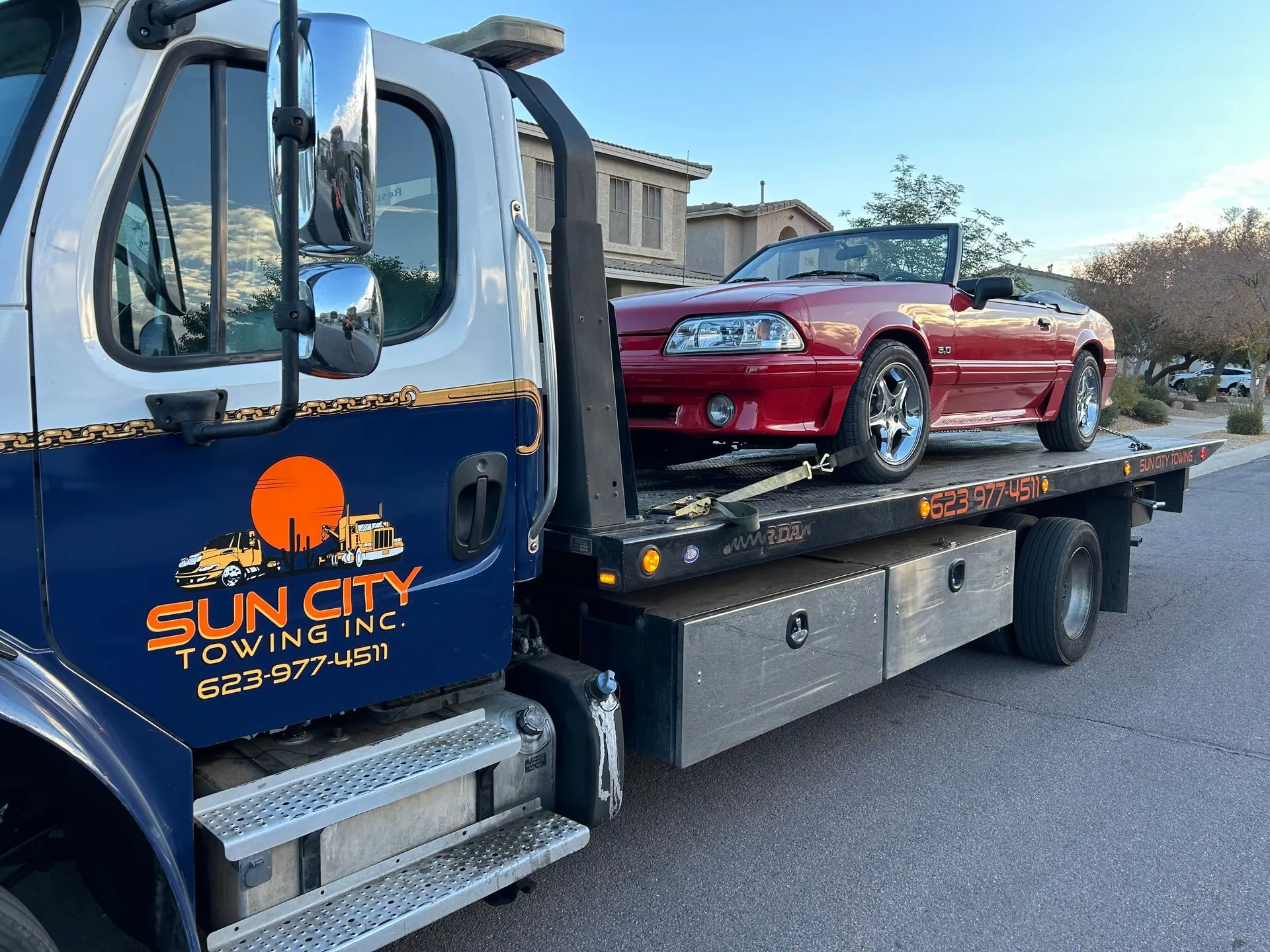
For Phoenix-area riders, Motorcycle towing is among the towing services offered by Sun City Towing, Inc. Their service information states that they handle motorcycles along with passenger vehicles, trucks, and larger commercial vehicles.
Providing accurate information about the motorcycle helps the provider understand what type of assistance may be needed.
What Information Should You Have Ready When Calling?
A simple checklist can make the request easier:
Vehicle Information
Have the motorcycle’s make, model, and general type available.
Location
Provide the exact location or the clearest description possible.
Condition
Explain whether the motorcycle starts, rolls, or has visible damage.
Situation
Describe whether the problem involves a flat tire, mechanical failure, collision, or another issue.
Destination
If transportation is needed, provide the preferred destination when known.
Access
Mention parking structures, restricted access, difficult terrain, or other conditions that could affect reaching the motorcycle.
These details allow the towing provider to understand the request before dispatch.
Why Is Professional Handling Important for Motorcycles?
Motorcycles have different dimensions and balance characteristics from passenger vehicles. Their two-wheel configuration means that transportation requires attention to positioning and stability.
A motorcycle that has already experienced a breakdown or collision may also have components that should not be placed under unnecessary stress.
Professional handling can help ensure that the motorcycle is transported using equipment appropriate for its condition and configuration.
The objective is not simply to move the motorcycle from one place to another. The vehicle needs to be handled in a way that accounts for its physical characteristics and current condition.
What Should You Remember Before Requesting Motorcycle Towing?
Before requesting assistance, focus on three things: location, condition, and transportation needs.
Tell the towing provider where the motorcycle is, what happened, whether it can move, and whether there is visible damage. If you know the destination, provide that information as well.
Avoid attempting repairs or transportation methods that could put you, the motorcycle, or other road users at unnecessary risk. When a motorcycle cannot safely continue, professional towing can provide a practical way to move it to an appropriate destination.
For riders in Phoenix, understanding what information to provide before requesting assistance can make the process more organized and help the towing provider prepare for the specific motorcycle involved.
About Sun City Towing, Inc.
Sun City Towing, Inc. is based at 7001 W Southern Ave in Laveen, Arizona, and provides towing, roadside assistance, and heavy wrecker services, including motorcycle transportation. Their listed credentials include ERSCA and Towing & Recovery Academy certified operators, with additional Bendix Air Brake and Crosby University training; readers can Find their office on Google Maps or call (623) 977-4511 for assistance.