Getting up from the floor can become harder with age because the movement requires several abilities at once, including leg strength, joint mobility, balance, coordination, and enough flexibility to move through different positions. Changes in any one of those areas can make a floor-to-stand movement feel slower, less comfortable, or more dependent on using the hands or nearby furniture.
It is an everyday ability that many people rarely think about until something changes.
Someone may notice it after sitting on the floor with grandchildren, gardening, organizing a low cabinet, doing an exercise, or reaching for something that has fallen. What once required little thought may suddenly involve rolling to one side, placing both hands on the floor, finding a stable piece of furniture, or pausing before standing.
That change does not automatically indicate that something is wrong. However, it can provide useful information about how the body is moving and functioning.
Why Is Getting Up From the Floor Such a Demanding Movement?
Standing from the floor is more complicated than standing from a chair.
A chair already places the hips several inches above the ground and positions the feet relatively close to a standing posture. From the floor, the body has to travel through a much larger range of motion and reorganize itself along the way.
Depending on the strategy used, the movement may require someone to:
• roll or sit upright,
• place one or both hands for support,
• bend deeply through the hips and knees,
• move onto the hands and knees,
• transition into kneeling or half-kneeling,
• shift body weight over the feet, and
• generate enough force to rise into standing.
Research examining floor-to-stand transfers in older adults has found that people use several different strategies rather than one universal technique. The physical demands also vary depending on how a person chooses to rise.
That helps explain why two people of the same age can experience the movement very differently.
Does Getting Older Automatically Mean Losing the Ability to Get Up Easily?
No.
Age is associated with changes in muscle strength, joint mobility, balance, and physical capacity, but chronological age alone does not determine how someone will move.
An active 75-year-old may get up from the floor comfortably, while someone decades younger may struggle because of an injury, reduced activity, pain, limited joint motion, or another health concern.
It is more useful to pay attention to changes in personal function than to assume a movement should become difficult simply because another birthday has passed.
Questions worth noticing include:
• Does standing from the floor take longer than it used to?
• Is more hand support necessary?
• Does one hip or knee feel noticeably more restricted?
• Is there pain during a particular part of the movement?
• Has kneeling become uncomfortable?
• Is there uncertainty or fear when moving from the floor to standing?
Those details provide more useful information than age alone.
How Does Muscle Strength Affect Floor-to-Stand Movement?
Getting upright requires muscles throughout the lower body and trunk to generate force.
The quadriceps help straighten the knees. The muscles around the hips help control and extend the hips. The calf and ankle muscles contribute as body weight shifts toward standing. The trunk also has to remain controlled as the body’s center of mass moves.
Muscle mass and strength can gradually decline with age, particularly when physical activity also decreases. That does not mean decline is unavoidable at the same rate for everyone. Regular resistance exercise and appropriate physical activity can help adults maintain strength as they age.
Floor-to-stand movement can make a strength change particularly noticeable because the starting position is so low.
A person may still be able to stand easily from a dining chair but struggle from the floor because the latter task requires greater ranges of motion and a different combination of muscular effort.
Why Do Hip, Knee, and Ankle Mobility Matter?
Strength is only part of the equation.
A person also needs enough available movement through several joints to transition comfortably between positions.
Hip Mobility
Many floor-transfer strategies involve significant hip bending. If hip movement is limited or uncomfortable, someone may need to alter how they position the legs or use more support from the arms.
Knee Mobility
Kneeling, half-kneeling, and deep bending can place the knees through ranges that are not normally required when walking or sitting in a chair.
Someone who rarely uses those positions may find them unfamiliar even without a significant joint problem.
Ankle Mobility
The ankle plays an important role when body weight shifts over the feet before standing.
Research on floor-to-stand transfers has found meaningful demands at both the hip and ankle, emphasizing that getting off the floor is a whole-lower-body task rather than simply a test of knee strength.
Limitations at one joint can lead a person to choose an entirely different movement strategy.
Is Using Your Hands to Get Up a Problem?
Not necessarily.
Using the hands can be an efficient and sensible way to create additional support.
People may push from the floor, place a hand on a knee, move toward a chair, or use another stable surface. The number of supports someone uses can also change depending on fatigue, flooring, footwear, pain, confidence, or what position they started in.
The more important consideration is whether there has been a meaningful change.
Someone who has always preferred using a hand for support may not have a new mobility concern. Someone who could previously stand without assistance but now cannot may have experienced a change worth discussing with an appropriate healthcare professional.
There is also no requirement that everyone use the same floor-transfer technique. Research has documented several successful strategies among independently mobile older adults.
How Common Are Mobility Difficulties as People Age?
Mobility limitations become more common with increasing age, although they vary widely between individuals.
According to 2025 National Health Interview Survey data reported by the U.S. Centers for Disease Control and Prevention, 18.9% of U.S. adults age 18 and older reported some difficulty walking or climbing steps.
That statistic does not specifically measure the ability to rise from the floor, but it illustrates how common broader physical-function challenges are across adulthood.
Floor transfers can reveal limitations that ordinary walking does not because getting up requires deeper joint positions and a more complicated sequence of movements.
Why Does Physical Activity Make a Difference?
The body adapts to the movements it performs regularly.
Someone who frequently gardens, exercises on a mat, plays with children on the floor, practices appropriate strength training, or regularly moves through kneeling positions may remain more familiar with floor-level movement.
Someone who spends most of the day sitting in chairs and rarely gets below chair height may have fewer opportunities to practice those ranges.
That does not mean people should repeatedly lower themselves to the floor if doing so is unsafe or painful.
Instead, it highlights the value of maintaining appropriate movement variety.
Walking is valuable, but walking alone does not require the same hip, knee, ankle, and trunk movements as rising from the ground.
Strength training, balance work, mobility exercises, and other activities may all play roles in maintaining physical function when they are appropriate for the individual.
Can Back or Joint Stiffness Make the Movement Feel Different?
Yes.
Floor transfers involve coordinated movement throughout the body, including the lower extremities, pelvis, and spine.
Stiffness or discomfort in the back, hips, knees, or ankles can change how someone chooses to move. Instead of smoothly transitioning through half-kneeling, for example, a person may turn toward one side, use both arms, or search for furniture.
The location where a person feels limited can also offer clues.
Someone who reaches the kneeling position easily but has difficulty rising from there may face a different challenge from someone who cannot comfortably bend the hips or knees enough to reach kneeling in the first place.
An assessment can help distinguish between limitations involving mobility, discomfort, strength, movement strategy, or another factor.
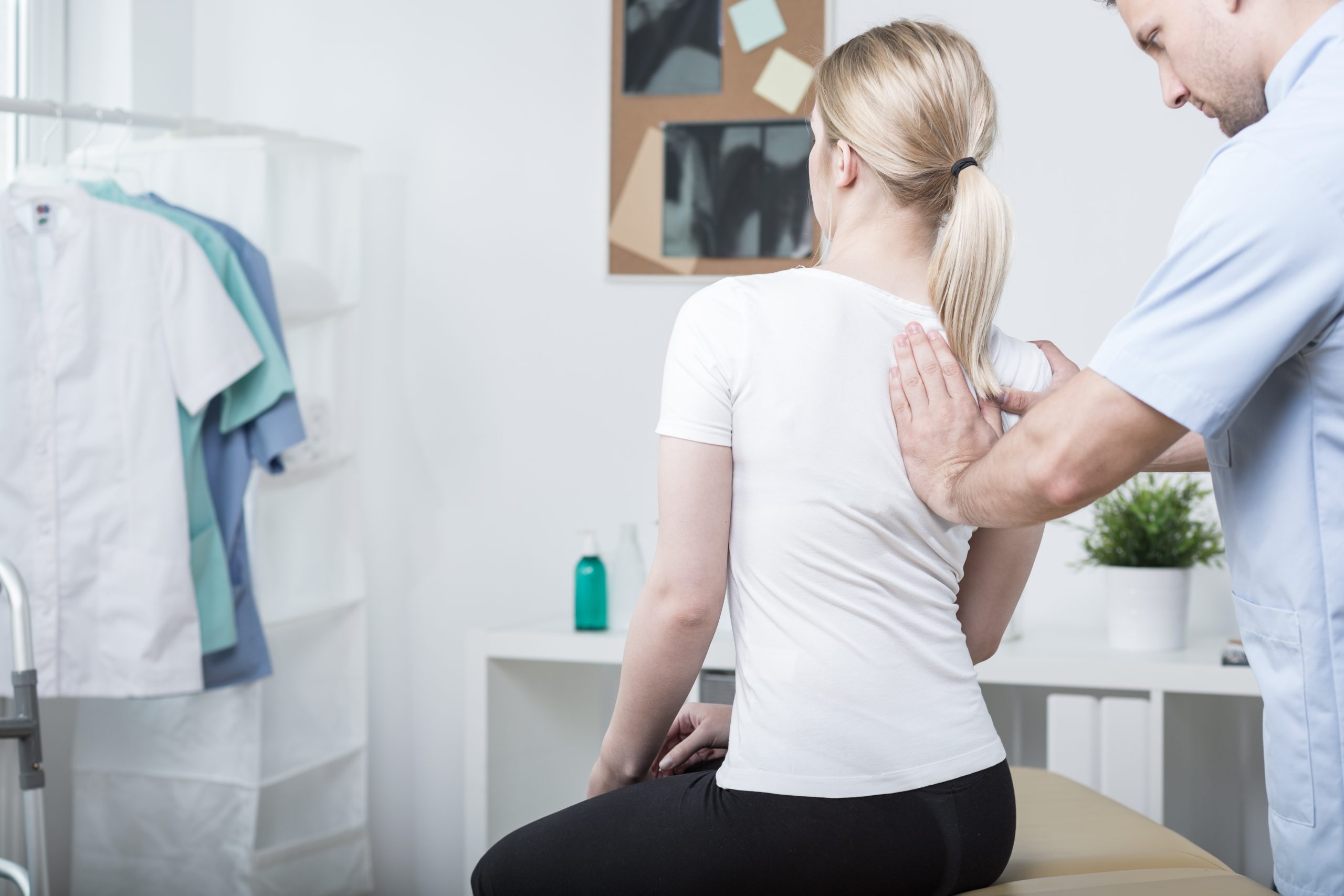
For people exploring musculoskeletal evaluation in Tucson, Chiropractic care may include assessment of spinal movement, posture, mobility concerns, health history, and individual functional goals. Chiropractic should be viewed as one possible part of evaluating musculoskeletal concerns rather than as a substitute for medical assessment when symptoms suggest another condition.
What Can a Chiropractor Evaluate When Movement Becomes Harder?
A Chiropractor evaluating a mobility complaint will generally need more information than simply knowing that someone has trouble rising from the floor.
Relevant considerations can include:
Where Is Movement Limited?
Is the main difficulty bending at the hips? Kneeling? Rotating the trunk? Moving through the lower back? Straightening into the final standing position?
The answer helps narrow the functional problem.
Is There Pain?
Difficulty caused by weakness or unfamiliarity is different from movement stopped by sharp or persistent pain.
The location, duration, and nature of discomfort matter.
Is the Change Equal on Both Sides?
Someone may naturally prefer one leg when transitioning through half-kneeling. A significant new difference between sides may provide additional information during an assessment.
Was There a Previous Injury?
Falls, vehicle accidents, sports injuries, surgeries, and longstanding musculoskeletal problems can influence movement patterns later.
What Other Activities Have Changed?
Floor transfers rarely exist in isolation.
A person may also notice difficulty climbing stairs, getting into a low vehicle, standing from a sofa, gardening, turning, or walking for longer periods.
A broader pattern can be more informative than one movement by itself.
Appropriate Chiropractic Therapy or other Chiropractic Services should be based on individual findings rather than assuming that every person with the same functional complaint needs identical care.
When Is Difficulty Getting Up From the Floor More Concerning?
A gradual change in mobility is different from suddenly being unable to stand.
Medical evaluation is particularly important when new movement difficulty occurs with symptoms such as:
- new or worsening leg weakness,
- numbness or significant loss of sensation,
- severe pain,
- loss of coordination,
- dizziness or fainting,
- a recent significant fall or injury,
- inability to bear weight,
- sudden changes in walking, or
- changes in bladder or bowel control.
Those symptoms should not simply be attributed to aging or routine stiffness.
Someone who falls and cannot get up should also focus first on safety rather than repeatedly trying to force themselves upright, especially if an injury may have occurred.
Should You Practice Getting Up From the Floor?
For people who can safely perform the movement, maintaining familiarity with floor transfers can be useful.
However, practice should match the person’s health, balance, strength, and mobility.
A healthy adult who already exercises regularly may be comfortable practicing different ways of rising from a mat. Someone with osteoporosis, recent surgery, significant balance problems, joint replacement precautions, dizziness, or an elevated risk of falling may need professional guidance before trying floor-level exercises.
The goal is not to prove that someone can stand without using their hands.
Functional movement is about completing an activity safely and effectively.
Using a stable support when needed can be a practical strategy, not a failure.
What Can Someone Do if the Movement Is Getting Harder?
Begin by observing what has changed.
Try to identify whether the challenge involves stiffness, strength, pain, balance, confidence, or a particular joint position.
Maintaining appropriate physical activity is also important. Depending on health status and professional guidance, this may include walking, resistance exercise, mobility work, and balance training.
For ongoing or unexplained changes, an individualized assessment may be helpful.
A healthcare professional can determine whether the limitation appears primarily musculoskeletal or whether another medical issue needs consideration.
The appropriate next step may differ from one person to another. One person may benefit from an exercise program, another may need physical therapy, another may seek a chiropractic evaluation, and someone with concerning symptoms may require medical assessment.
Getting Up From the Floor Is About Function, Not Age Alone
Difficulty rising from the floor can become more noticeable with age, but age itself does not provide the complete explanation.
The movement depends on lower-body strength, joint mobility, flexibility, coordination, balance, confidence, and the strategy someone uses. Previous injuries, activity habits, discomfort, and health conditions can also influence how easy or difficult it feels.
Most importantly, changes in everyday function deserve attention.
Being able to garden, spend time with grandchildren, exercise, reach low spaces, and move confidently through daily life often matters more than performing a particular movement perfectly.
When getting up from the floor becomes noticeably harder, the useful question is not simply, “Am I getting old?”
It is, “What has changed in the way my body moves, and is there something I should address?”
About Synergy Wellness
Synergy wellness is a chiropractic and wellness practice located at 6015 E. Grant Road in Tucson, Arizona, with care focused on personalized chiropractic and wellness services; its team includes Dr. Tim Harrigan, D.C., B.Sc. Readers who want directions can Find their office on Google Maps. The Tucson office can be reached at +15208188857.