Short version:
- Slow drains, gurgling pipes, and lingering odors near the tank or drain field often signal a septic system in distress.
- Standing water or unusually green grass over the drain field can indicate the tank is overfull or leaking.
- Routine inspection and pumping schedules help homeowners avoid costly backups and extend system lifespan.
A septic system that is struggling to process wastewater typically shows warning signs weeks before a full failure, including slow drains, foul odors, and soggy patches in the yard. Catching these symptoms early allows homeowners to schedule service before a minor issue becomes an expensive emergency.
Scheduling a Residential Septic Service at the first sign of trouble is often the difference between a routine pump-out and a full drain field replacement. Septic systems rely on a delicate balance of bacteria, soil absorption, and tank capacity, and even small disruptions can cascade into larger plumbing problems if ignored.
Common Signs of Septic System Trouble
Most septic failures do not happen overnight. They build gradually, and homeowners who know what to watch for can often intervene before a backup reaches the house.
- Slow-draining sinks, tubs, or toilets throughout the home, not just one fixture
- Gurgling sounds in pipes after flushing or running water
- Sewage odors near the tank, drain field, or inside the house
- Standing water or soggy soil over the drain field, even without recent rain
- Unusually lush or bright green grass concentrated over the tank or leach field
- Sewage backups in the lowest drains of the house
Any one of these signs on its own may not indicate an emergency, but a combination of two or more usually points to a system that needs evaluation. The EPA’s septic system homeowner guidance notes that a properly functioning system should not produce surface pooling, odors, or slow drainage under normal household use.
Why These Symptoms Appear
Understanding the mechanics behind these warning signs helps homeowners recognize how small problems escalate.
Tank Capacity and Solids Buildup
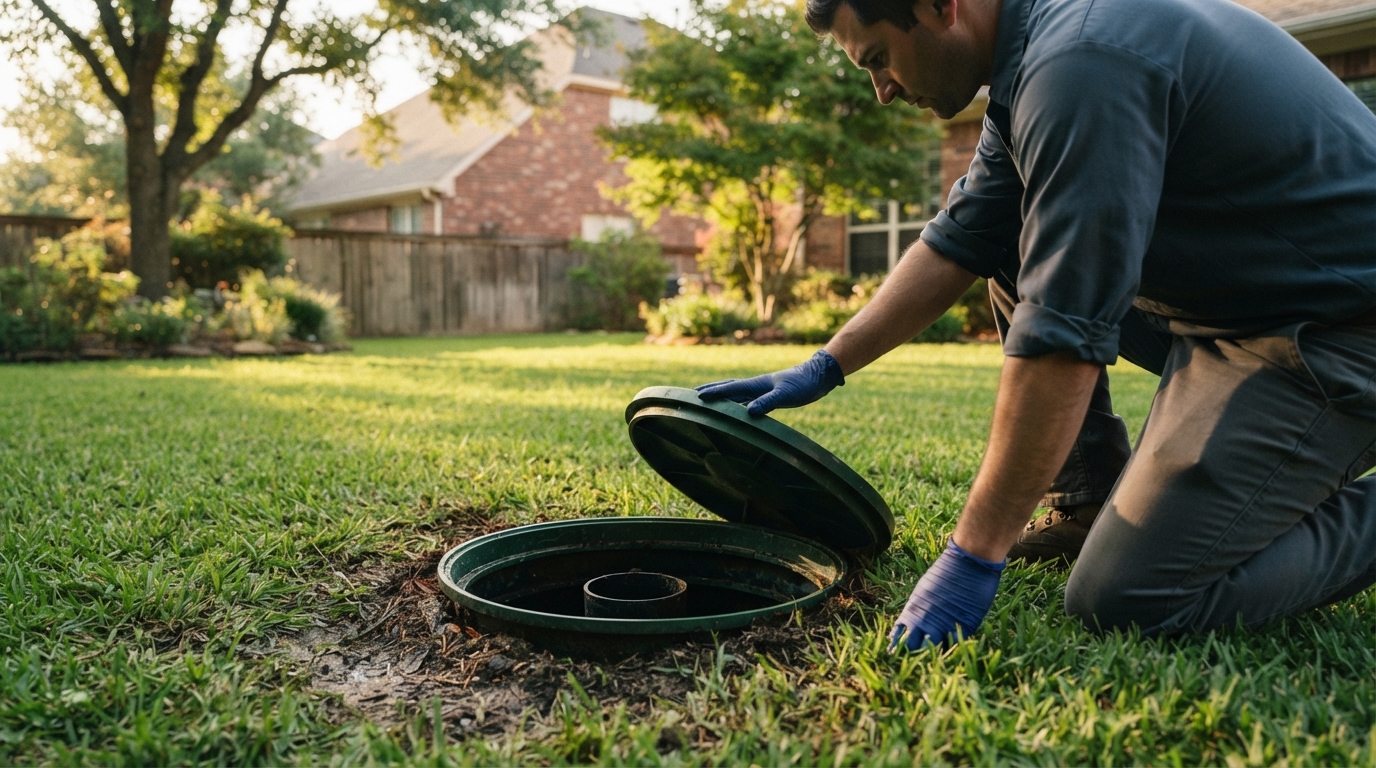
Septic tanks separate solids, scum, and liquid effluent. When solids accumulate beyond the tank’s capacity, they can flow into the drain field, clogging the soil and causing the backups and odors described above.
Drain Field Saturation
The drain field disperses treated wastewater into surrounding soil. If the field becomes saturated from excess water use, tree root intrusion, or an overloaded tank, effluent can surface instead of draining properly, which is why pooling water or overly green patches often appear directly above the field lines.
Aging or Damaged Components
Baffles, risers, and distribution boxes wear down over time. A cracked baffle or collapsed pipe can allow solids to escape the tank prematurely, accelerating drain field clogging even in a system that has been otherwise well maintained.
When to Call for Professional Evaluation
Not every slow drain requires a service call, but certain conditions warrant prompt attention rather than a wait-and-see approach.
| Symptom | Likely Cause | Urgency Level |
|---|---|---|
| Slow drains in multiple fixtures | Tank nearing capacity or partial clog | Moderate – schedule within days |
| Sewage odor indoors or outdoors | Vent blockage, tank overflow, or failing baffle | High – schedule promptly |
| Standing water over drain field | Saturated field or tank leak | High – schedule promptly |
| Gurgling pipes only | Minor venting issue | Low to moderate – monitor and schedule inspection |
Homeowners who notice high-urgency symptoms, particularly standing water or persistent odors, should avoid running additional water through the system until a technician can assess the tank and field condition. Continuing normal water use during a suspected failure can push more effluent into an already saturated drain field, worsening the damage.
Maintenance Habits That Reduce Future Problems
Prevention is less disruptive and generally less costly than emergency repair. A few consistent habits can extend the functional life of a residential system.
- Schedule tank pumping on the interval recommended for the household’s tank size and occupancy.
- Avoid flushing wipes, grease, or non-biodegradable items that accelerate solids buildup.
- Keep heavy vehicles, structures, and deep-rooted trees away from the drain field area.
- Space out laundry and dishwasher cycles rather than running multiple high-water appliances at once.
- Have the system inspected after any unusual water pooling, odor, or drainage change.
These habits do not eliminate the need for periodic professional service, but they reduce the frequency and severity of problems between inspections.
Frequently Asked Questions
How often should a residential septic tank be pumped? Pumping frequency depends on household size, tank capacity, and water usage, which is why a professional evaluation of the specific system is the most reliable way to set a schedule.
Can I use septic treatment additives instead of pumping? Additives are not a substitute for removing accumulated solids, and relying on them alone can allow solids to build up unnoticed until a backup occurs.
What causes a septic system to fail prematurely? Common causes include overloading the tank with non-biodegradable waste, excessive water use, root intrusion, and skipped pumping intervals that allow solids to migrate into the drain field.
Is a foul odor outside always a septic problem? Not always, but persistent sewage odor near the tank or drain field area is one of the more reliable indicators that the system needs inspection.
Keeping a Septic System Running Smoothly
Recognizing early warning signs and maintaining a consistent pumping schedule are the most practical ways homeowners protect their property value and avoid disruptive backups. Roberts Septic Inc provides residential septic evaluation and service support for households monitoring these warning signs. For scheduling details or to review service options, Visit Website or consult directly with Roberts Septic Inc regarding a specific system concern.