
Quick take:
- A dependable mobility equipment supplier offers wheelchair accessible vans, scooter and wheelchair lifts, custom conversions, and trained technicians who follow federal safety standards.
- Look for certified installation, nationwide inventory access, and after-sale parts and service support.
- Local, long-standing dealerships often provide more personalized fitting and faster service response than large online-only retailers.
A reliable mobility equipment supplier provides properly certified wheelchair vans, lifts, and adaptive driving equipment that meet federal safety standards while matching a person’s specific transportation needs. The right supplier does more than sell a vehicle; it confirms fit, function, and long-term support.
Choosing a Mobility Equipment Supplier Conyers GA involves considering more than just price, including product quality, reliability, comfort, and customer support. Buyers should ask about technician training, inventory variety, and whether the dealership stands behind its installations with ongoing parts and service. These factors often separate a short-term purchase from a vehicle that actually holds up to daily use.
What a Trustworthy Supplier Should Offer
Mobility equipment covers a wide category, from wheelchair lifts to full vehicle conversions. A supplier worth considering typically provides:
- Wheelchair accessible vans with side or rear entry ramp configurations
- Scooter and wheelchair lifts designed for personal or commercial vehicles
- Custom conversions and adaptive driving equipment installation
- New and pre-owned inventory options across multiple makes
Equipment should also meet recognized federal benchmarks. Platform lift systems installed on accessible vehicles are governed by Federal Motor Vehicle Safety Standards, and the National Highway Traffic Safety Administration sets performance tests covering platform deflection, wheelchair retention, and lift strength. A supplier that references these standards during a sales or installation conversation signals it understands the regulatory side of the equipment it sells.
Signs of Proper Installation and Technician Training
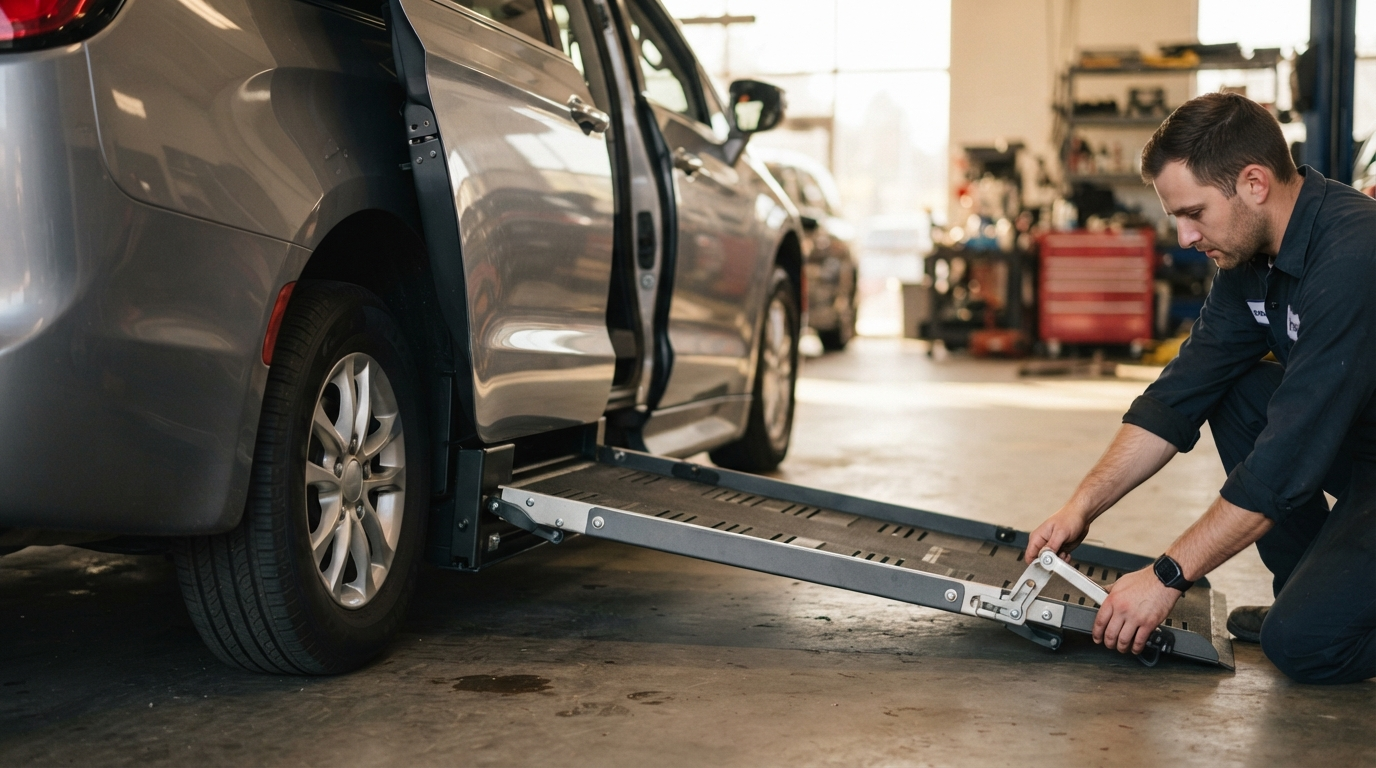
Installation quality matters as much as the equipment itself. A poorly fitted lift or ramp can create safety risks even if the hardware itself is compliant.
Buyers should confirm the following before finalizing a purchase:
- Technicians are factory trained on the specific lift or conversion brand being installed.
- The finished vehicle undergoes a documented inspection before delivery.
- Interlock and safety sensor features are tested and explained to the buyer.
- Written documentation on equipment operation and maintenance is provided.
Industry guidance on commercial wheelchair vans notes that companies modifying vehicles for wheelchair use must pass a detailed inspection before the vehicle is used with the public, and quality upfitters follow FMVSS and NHTSA requirements alongside standards from groups like NMEDA. Asking a supplier how they document this process is a reasonable step before committing to any purchase.
Comparing Supplier Types
Not every mobility equipment source offers the same level of service. The table below outlines general differences buyers commonly encounter.
| Supplier Type | Typical Inventory | Installation Support | Local Fit-and-Try Access |
|---|---|---|---|
| Local accessible vehicle dealership | New and used vans, lifts, conversions | Factory-trained technicians on-site | Often available |
| National online retailer | Wide catalog, ships nationwide | Varies, sometimes third-party | Limited |
| General auto dealership | Occasional accessible models | Rarely specialized | Rarely available |
Local dealerships that specialize in accessible vehicles tend to offer more hands-on fitting and faster follow-up service, since the technicians who install the equipment are often the same people available for future repairs.
Questions to Ask Before Choosing a Supplier
Buyers should treat the selection process like any major vehicle purchase, with safety and long-term usability as top priorities.
- Does the dealership offer trade-in or sell options for an existing mobility vehicle?
- Are replacement parts for lifts and conversions available locally?
- Can the supplier service vehicles purchased elsewhere?
- Is there a documented warranty on both the vehicle and the installed equipment?
These questions help confirm that a supplier can support the equipment well beyond the initial sale.
Frequently Asked Questions
What should I look for first when comparing mobility equipment suppliers? Confirm the supplier’s technicians are trained on the specific brand of lift or conversion being installed and that the finished vehicle passes a documented safety inspection.
Are wheelchair van lifts regulated by a federal agency? Yes. Platform lift systems used on accessible vehicles fall under Federal Motor Vehicle Safety Standards enforced through the National Highway Traffic Safety Administration.
Can a mobility equipment supplier service equipment it did not originally sell? This varies by dealership. Buyers should ask directly, since some suppliers limit service work to vehicles and equipment they installed themselves.
Is a used wheelchair van a reasonable alternative to a new one? Used accessible vans can be a practical option when they are thoroughly inspected and serviced before sale, which is a standard practice among established accessible vehicle dealerships.
Finding the Right Fit
Selecting mobility equipment is a practical decision that affects daily independence, so it helps to work with a supplier that explains its inspection process, technician training, and service options clearly. R & R Mobility Van & Lifts inc is a Georgia-based dealership offering wheelchair accessible vans, lifts, and custom mobility conversions for individuals seeking greater transportation independence. For details on available inventory and service options, View Site to review current listings and schedule a conversation with a mobility consultant.


