Key takeaway:
• Certified prosthetists design, fit, and adjust custom artificial limbs to restore function after amputation, trauma, or a congenital limb difference.
• Look for American Board for Certification (ABC) accreditation and an in-depth evaluation process before committing to a provider.
• Follow-up visits matter as much as the initial fitting, since sockets and components need periodic adjustment for comfort and mobility.
Finding qualified, certified prosthetists in Twin Falls, ID starts with confirming board accreditation, evaluating the fitting process, and understanding what ongoing care looks like after a device is delivered. Patients searching for this care are usually recovering from amputation, managing a chronic condition, or seeking a second opinion on a device that no longer fits well.
Choosing a provider is a decision with long-term consequences for mobility and daily comfort, which is why Certified Prosthetists Twin Falls ID searches often reflect a need for both technical expertise and a provider who listens closely to individual goals. A prosthetic limb is only as effective as the fit and follow-up care behind it, so the credentials and process a clinic uses matter as much as the device itself.
What Certified Prosthetists Actually Do
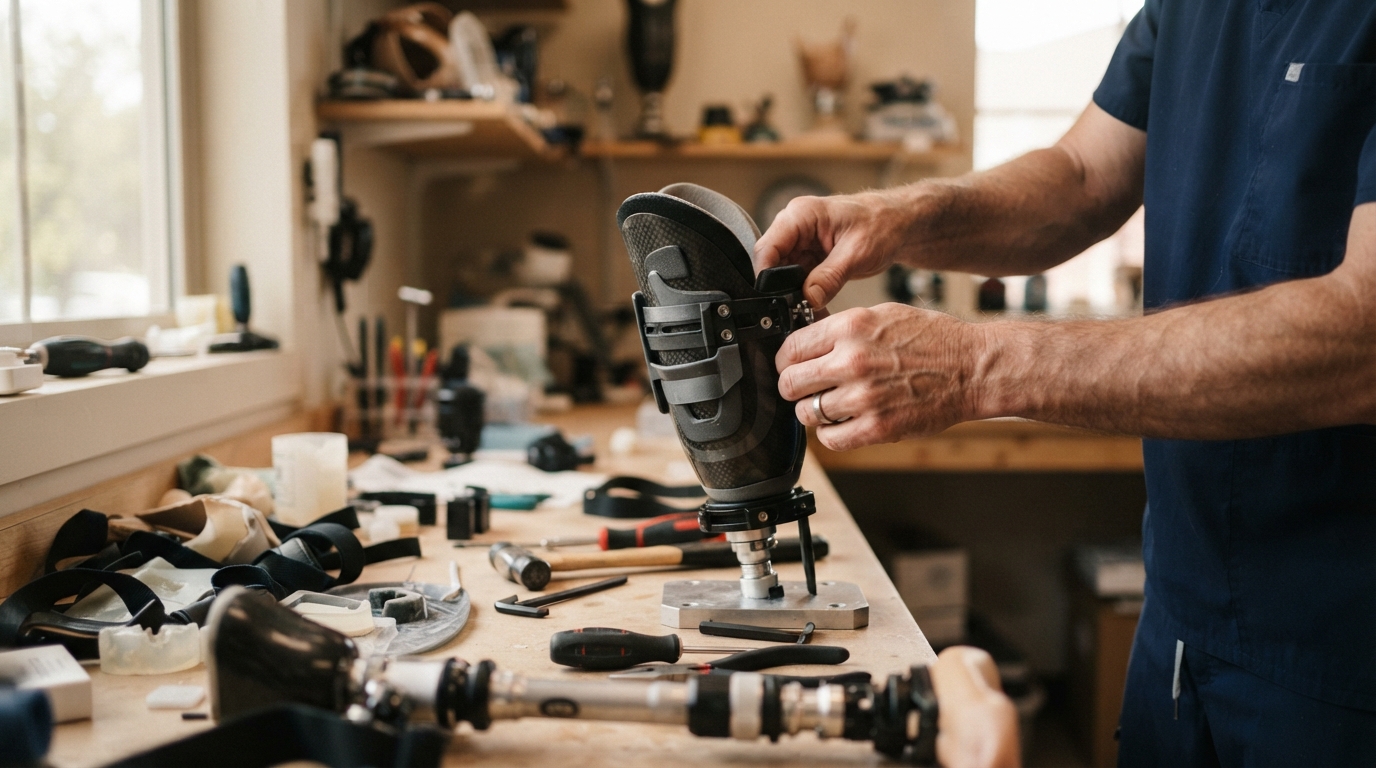
A prosthetist is a trained clinician who designs, measures, and fits artificial limbs for people who have lost a limb to amputation, trauma, disease, or a congenital condition. Locally, one provider describes this work directly: “When a limb is lost due to amputation, trauma, disease, or a birth condition, a prosthetic replacement can provide you with restored mobility and renewed confidence.”
The clinical process generally follows a consistent sequence:
1. An in-depth evaluation to assess the residual limb and mobility goals.
2. Custom device design based on that evaluation.
3. Fitting and socket adjustment for comfort and function.
4. Follow-up visits to fine-tune the fit as the limb changes or activity levels shift.
One Twin Falls provider explains its own version of this workflow: “we are the area authority on prosthetics, and our use of state-of-the-art equipment allows us to offer our patients the best prosthetic services available. To best help our patients, we begin by completing an in-depth evaluation to determine the best design with an accurate fit. We then create a custom prosthesis designed to help our patient achieve their physical goals.” This type of structured process is common among ABC-accredited facilities and reflects the clinical rigor patients should expect from any qualified provider.
Why Certification and Accreditation Matter
Credentials are not just paperwork. They indicate that a clinician has met standardized training, testing, and ethics requirements set by a national board. Local clinics often highlight this distinction directly: “Our American Board for Certification (ABC) accredited facility and certified Orthotists and Prosthetists listen to and focus on your specific needs.”
When researching a provider, ask about these three points:
• Whether the facility itself holds ABC accreditation, not just the individual clinician.
• How many years the prosthetist has practiced and how many patients they have treated.
• Whether they explain the range of prosthetic options, including pros and cons for each, before recommending one.
One local resource on choosing a provider notes that “Look for a professional who is certified by a recognized governing body, such as the American Board for Certification in Orthotics, Prosthetics, and Pedorthics (ABC).” This certification standard exists because limb loss affects a significant share of the population. According to the Amputee Coalition’s National Limb Loss Resource Center, over 5.6 million people are currently living with limb loss or limb difference in the United States, with nearly 2.3 million living with limb loss specifically. That scale of need underscores why credentialing and standardized evaluation protocols carry real weight for patient outcomes.
Comparing Prosthetic and Orthotic Care Options
Not every mobility issue requires a full prosthetic limb. Some patients need bracing or supportive devices instead, and understanding the distinction helps set expectations before a first appointment.
| Care Type | Who It Serves | What It Involves |
| Custom Prosthetics | Limb loss from amputation, trauma, or congenital condition | Custom-built artificial limb, socket fitting, follow-up adjustments |
| Custom Orthotics | Joint pain, weakness, or structural support needs | Custom-fit or off-the-shelf bracing, modified for individual fit |
| Pediatric Services | Children needing limb or bracing support | Specialized sizing and care as a child grows |
A local orthotics overview describes the bracing side of care this way: “we offer custom-made and custom-fit orthopedic bracing… In our Twin Falls office, we have a unique lab designed to help us build and modify orthoses.” Patients unsure which category applies to them should ask a clinic directly during an initial consultation rather than assuming based on symptoms alone.
Questions to Ask Before Your First Appointment
A short list of direct questions can clarify whether a provider is the right fit:
• What is your facility’s accreditation status, and is it current.
• How many follow-up visits are typically included after the initial fitting.
• What materials and components will be used, and why.
• How do you handle adjustments if the fit changes over time.
Asking these questions early prevents surprises later and helps set realistic expectations about timelines and comfort during the adjustment period.
What is the difference between a prosthetist and an orthotist? A prosthetist fits artificial limbs for people with amputations or congenital limb differences, while an orthotist fits braces and supportive devices for joint or structural issues. Many clinics employ professionals certified in both disciplines.
How long does it take to get a custom prosthetic limb? The timeline varies by patient and device complexity, since it depends on the evaluation, design, fitting, and adjustment stages. A provider should walk through expected timing during the initial consultation.
Do certified prosthetists work with children? Some clinics specialize in pediatric care, offering devices sized and adjusted as a child grows. Confirm pediatric experience directly with any provider before scheduling.
Will insurance cover a prosthetic limb? Coverage depends on the individual insurance plan and medical necessity documentation. Ask a provider’s billing team to review your specific policy before starting treatment.
Patients in the Magic Valley region who want to explore local prosthetic and orthotic care can review provider details and patient feedback through the OrthoPro of Twin Falls Google Business Profile. Comparing accreditation, evaluation process, and follow-up care across providers remains the most reliable way to find a good fit for long-term mobility needs.