Quick take:
- A qualified roofing contractor should carry an active state license, liability insurance, and workers’ compensation coverage before any work begins.
- Written estimates, documented inspection findings, and a clear scope of work help homeowners in Rancho Cucamonga, CA compare bids accurately.
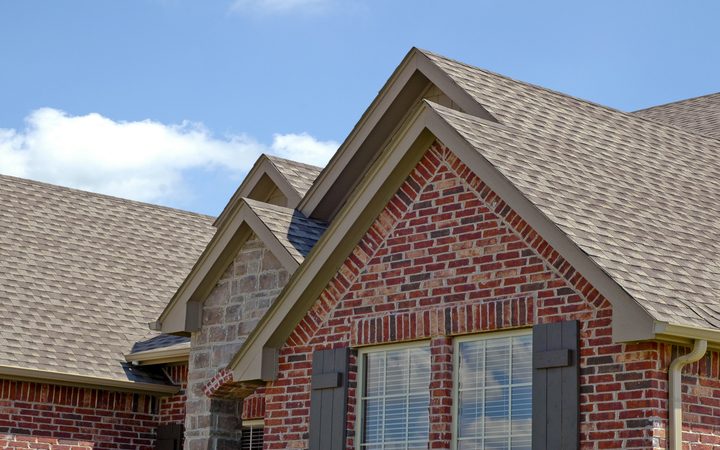
- Roofing systems commonly serviced in the region include asphalt shingle, tile, TPO/single-ply, and foam coatings, each with different maintenance needs.
A qualified roofing contractor is one who holds verifiable state licensing, carries liability and workers’ compensation insurance, and provides a documented inspection before quoting repair or replacement work. Confirming these credentials upfront protects homeowners from liability and helps avoid incomplete or substandard repairs.
Homeowners searching for a Roofing Contractor Rancho Cucamonga CA in the Inland Empire region typically want someone who can diagnose roof condition accurately, explain repair versus replacement tradeoffs, and stand behind the work with clear documentation. Roof problems in Southern California are often tied to sun exposure, seasonal wind events, and aging underlayment, so a contractor’s ability to identify root causes matters more than a quick patch job.
- Credentials That Separate Qualified Contractors From the Rest
Licensing and insurance are the baseline, but a few additional details indicate a contractor operates professionally rather than informally.
- An active contractor license number that can be verified through the state licensing board.
- Proof of general liability insurance and workers’ compensation coverage for all crew members.
- A written estimate that itemizes materials, labor, and project timeline rather than a single lump sum.
- References or a portfolio of completed projects in similar roofing systems.
Contractors who hesitate to share license numbers or insurance certificates are a warning sign worth taking seriously.
- Matching the Contractor to the Right Roofing System
Not every contractor services every roof type, so confirming experience with a specific system avoids mismatched expertise.
| Roofing System | Typical Use Case | Maintenance Frequency |
|---|---|---|
| Asphalt shingle | Standard residential sloped roofs | Annual inspection recommended |
| Tile (clay or concrete) | Residential homes seeking durability and classic style | Inspection every 1-2 years |
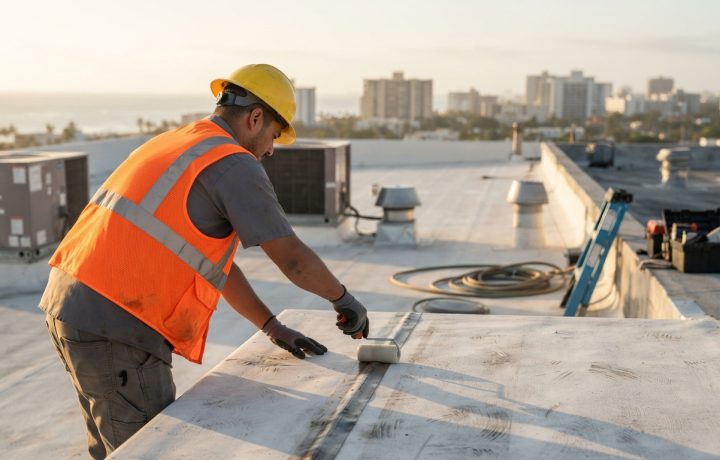
| TPO / single-ply | Flat or low-slope residential and commercial roofs | Semi-annual inspection |
| Foam coatings | Low-slope roofs needing cost-effective sealing | Annual recoat evaluation |
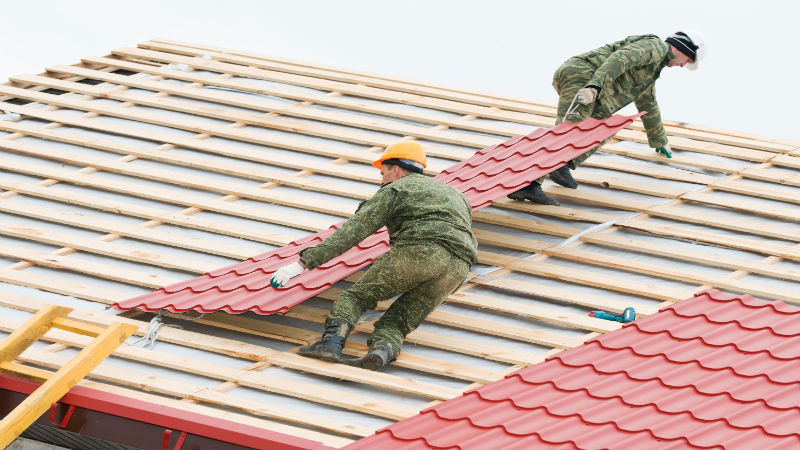
Roof work performed at height carries real safety obligations. Under OSHA’s fall protection standard, employers must protect workers from fall hazards when work occurs close to a roof edge, which is one reason licensed crews follow structured safety protocols rather than informal methods.
- Questions to Ask Before Signing a Contract
A short round of questions during the estimate phase can reveal how a contractor actually operates on the job.
- What is the expected timeline from inspection to project completion?
- Will the crew handle permitting requirements with the local building department?
- What warranty terms apply to materials versus labor?
- How are unexpected issues, such as hidden deck damage, communicated and priced?
Clear answers to these questions, documented in writing, reduce the chance of disputes once work is underway.
- Why Local Climate and Roof Age Matter
Rancho Cucamonga, CA experiences hot, dry summers and occasional Santa Ana wind events, both of which accelerate wear on aging shingles, tile underlayment, and flat roof membranes. A contractor familiar with these regional conditions is better positioned to recommend materials suited to long-term sun and wind exposure rather than generic solutions. Roof age, slope, and prior repair history should all factor into whether a repair or full replacement makes more financial sense.
- Business Info
Based in Bloomington, CA, CRT Roofing Co. serves customers across Rancho Cucamonga, CA and nearby communities, offering residential and commercial roofing services that include repairs, replacements, and maintenance for shingle, tile, and low-slope systems.
- Frequently Asked Questions
How long does a typical roof inspection take? Inspection length depends on roof size and system type, though most residential inspections can be completed within a single visit.
What is the difference between roof repair and roof replacement? Repair addresses isolated damage such as leaks or localized wear, while replacement involves removing and installing an entirely new roofing system when the existing one has reached the end of its service life.
Do roofing contractors handle permits? Many licensed contractors coordinate permitting with local building departments as part of the project scope, though homeowners should confirm this is included before work begins.
Can an existing roof be recoated instead of replaced? Some low-slope systems, particularly foam and certain single-ply membranes, can be recoated to extend service life if the underlying structure remains sound.
Current availability details for CRT Roofing Co. are published for the local service area.