Short Version:
- Grinding noises, uneven movement, and a door that reverses unexpectedly often indicate spring, cable, or sensor problems that require a trained technician.
- Broken springs and frayed cables pose serious injury risks and should not be treated as DIY repairs.
- Professional garage door repair services identify the underlying cause of a malfunction rather than simply addressing its symptoms, helping reduce the risk of repeat breakdowns.
A garage door that sticks, slams, or refuses to respond to its opener is rarely experiencing a random glitch. These symptoms often indicate a specific mechanical or electrical problem. Recognizing the warning signs early can prevent a minor issue from developing into a costly repair or complete door replacement.
Homeowners in Orangeburg, SC, who experience garage door problems can benefit from understanding the most common causes of malfunction. People searching for Garage Door Repair Services are often dealing with worn springs, misaligned tracks, failing openers, or damaged panels. Each problem has distinct warning signs and different safety implications if left unresolved. Understanding the cause of unusual noises or a stuck door helps homeowners determine when basic troubleshooting is appropriate and when professional assistance is necessary.
Warning Signs That Point to a Bigger Problem
Garage doors rarely fail without providing some indication that something is wrong. Many problems develop gradually, with changes in sound, speed, or balance appearing before the door stops working completely.
Watch for these common warning signs:
- Loud grinding or popping noises: Unusual sounds during opening or closing may indicate worn rollers, loose hardware, or a failing spring.
- Uneven movement: If one side of the door lags or tilts, the problem may involve a damaged cable or misaligned track.
- Slow or unresponsive operation: A door that responds slowly or fails to move may have a remote synchronization issue, damaged circuit board, or strained motor.
- Unexpected reversing: A door that reverses before closing completely may have obstructed or misaligned safety sensors.
Any of these symptoms deserves attention before the door is used again, particularly if its movement becomes unpredictable. Continuing to operate a malfunctioning door can worsen the damage and create additional safety risks.
Spring and Cable Failures: Why DIY Repairs Are Risky
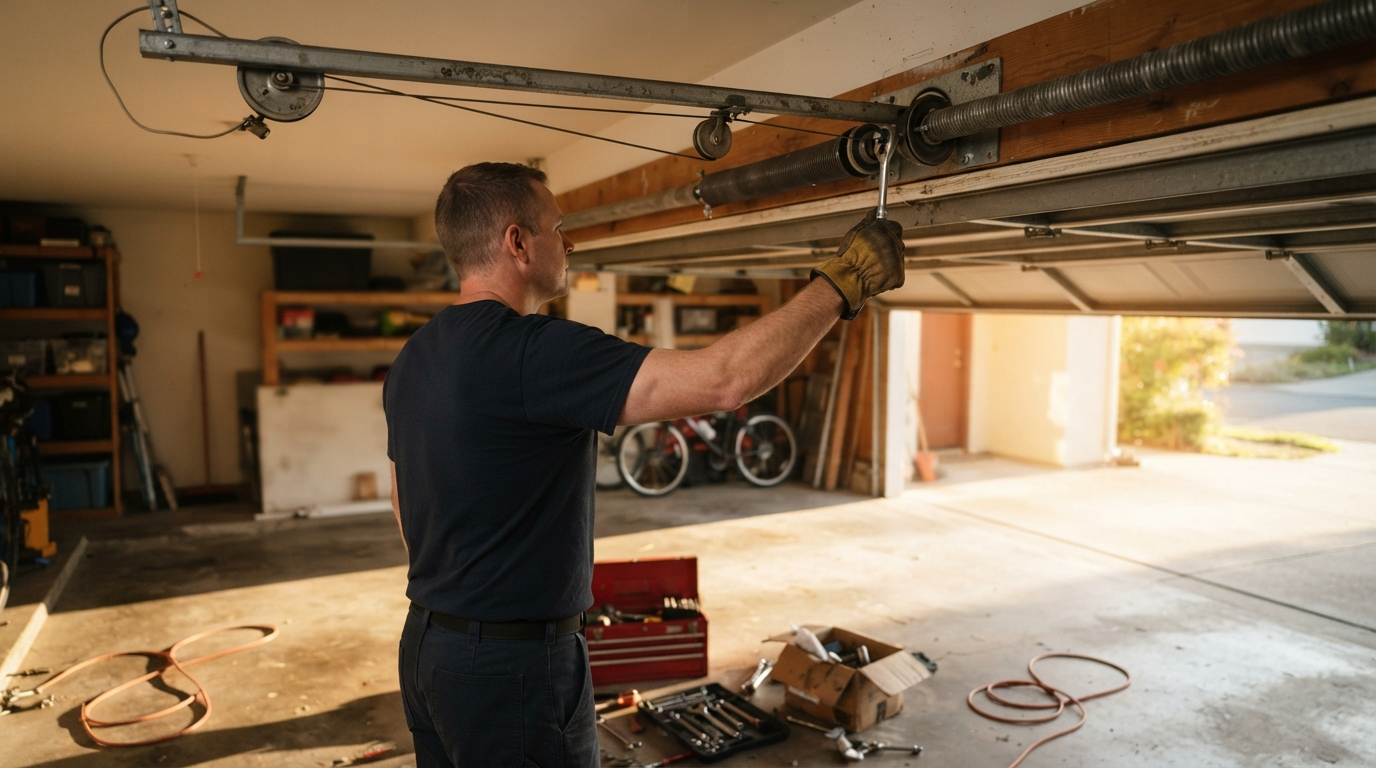
Torsion and extension springs store substantial mechanical energy to counterbalance the weight of a garage door. When a spring breaks or a cable becomes frayed, that balance can be lost suddenly, creating a risk of falling doors and serious injuries.
The Consumer Product Safety Commission warns about hazards associated with automatic garage door openers that lack proper reversing protection. Properly functioning safety systems are essential for reducing the risk of entrapment and injury.
Spring and cable repairs also require specialized knowledge because the components operate under significant tension. Professional technicians use appropriate tools, replacement parts, and manufacturer-specific procedures to restore the door’s balance and safe operation.
Homeowners should never attempt to remove a spring, adjust its tension, or replace a damaged lifting cable without the necessary professional training. If a spring breaks or a cable snaps, stop using the door and arrange an inspection by a qualified technician.
Opener and Sensor Malfunctions
Modern garage door openers commonly use photoelectric safety sensors positioned near the floor. These sensors detect obstructions and signal the door to stop or reverse before it closes on a person, pet, or object.
When sensors become dirty, misaligned, or disconnected from their power source, the door may refuse to close or reverse unexpectedly. Similar symptoms can also result from problems within the opener itself.
Common opener issues include:
- Misaligned or dirty photoelectric sensors: Obstructions or incorrect alignment can interrupt the sensor beam.
- Worn drive gears: Damaged internal components can prevent the motor from moving the door properly.
- Remote or keypad programming problems: Incorrect settings or depleted batteries can prevent the opener from responding.
- Circuit board damage: Electrical surges or component deterioration can interfere with opener operation.
A technician experienced with different garage door brands can test these components and determine whether a repair is sufficient or a replacement is necessary. Accurate diagnosis helps prevent homeowners from paying for an entirely new opener when a smaller repair may resolve the issue.
DIY Fixes vs. Professional Repairs
Some garage door maintenance tasks are suitable for homeowners, while others require specialized tools and training.
| Issue | Safe for DIY? | Professional Recommended? |
|---|---|---|
| Lubricating hinges and rollers | Yes, following manufacturer instructions | Not usually necessary |
| Replacing weather seals | Yes, if the door is stable and accessible | If the installation is complicated |
| Broken torsion or extension springs | No | Yes |
| Frayed or snapped cables | No | Yes |
| Opener circuit board failure | Generally no | Yes |
| Bent or off-track door panels | No | Yes |
Routine lubrication, basic visual inspections, and replacing accessible weather seals are reasonable homeowner maintenance tasks when performed according to the manufacturer’s instructions.
However, repairs involving spring tension, lifting cables, structural track alignment, or damaged door panels should be left to qualified professionals. These components directly affect the door’s stability and safe operation.
Frequently Asked Questions
How often should a garage door be inspected?
Periodically checking the door’s movement, visible hardware, balance, and safety reversal function can help identify developing problems. Follow the manufacturer’s maintenance recommendations and arrange professional inspections when unusual noises, uneven movement, or other warning signs appear.
Can a damaged garage door panel be repaired instead of replaced?
Minor dents or cosmetic damage may sometimes be repaired. However, structural damage, significant warping, or damage that affects the door’s alignment may require panel replacement. A technician can determine the safest and most practical option.
Is it normal for a garage door to make noise?
Some operational noise is normal, but grinding, popping, or scraping sounds may indicate worn rollers, loose hardware, track problems, or spring damage. Persistent or sudden changes in sound warrant further inspection.
What should a homeowner do if the garage door will not close?
If the door is stable and operating normally apart from the closing issue, check for visible obstructions near the safety sensors and ensure the sensor lenses are clean. If the door continues to malfunction, stop operating it and arrange professional assistance. Avoid adjusting cables, springs, or other high-tension components.
When should I call a garage door repair professional?
Contact a professional if the door becomes crooked, drops suddenly, comes off its tracks, has a broken spring or cable, or repeatedly fails to open or close. Prompt assessment can help prevent further damage and reduce the risk of injury.
Keeping Your Garage Door Safe and Reliable
Garage doors combine heavy moving parts with high-tension components, making proper maintenance and timely repairs essential for household safety. Recognizing unusual noises, uneven movement, and sensor problems can help homeowners address developing issues before they lead to more extensive damage.
For property owners in Orangeburg, SC, professional garage door repair services can help identify the cause of a malfunction and restore safe, reliable operation. Empire Overhead Garage Door Service works on residential and commercial overhead doors and openers, providing repair, installation, and maintenance services throughout the Central Savannah River Area.
By addressing warning signs promptly, avoiding unsafe DIY repairs, and arranging professional inspections when needed, homeowners can help extend their garage door’s service life and maintain dependable everyday operation.
Next Steps for a Reliable Garage Door
A garage door that sticks, grinds, or reverses unexpectedly is sending a clear signal that something mechanical needs attention. Addressing these issues early, rather than waiting for a full failure, tends to be less disruptive and safer for everyone using the garage.
Empire Overhead Garage Door Service provides repair and installation support for residential and commercial garage doors and openers, including emergency and system upgrade work. For homeowners weighing a repair against a replacement, or anyone noticing one of the warning signs above, reaching out to Empire Overhead Garage Door Service is a practical starting point for a professional assessment. Those who want more detail on offerings and service areas can Empire Overhead Garage Door Service before scheduling an inspection.