• Commercial tree removal in Franklin, TN requires a permit for all commercial, industrial, and multi-family lots regardless of tree size.
• Hiring a licensed, insured contractor protects your business from liability and ensures compliance with local and federal safety standards.
• A proper site assessment, clear drop zones, and certified equipment are the foundation of every safe removal.
Safe commercial tree removal starts long before a chainsaw is switched on. Property managers and business owners who understand the permitting rules, contractor qualifications, and on-site safety protocols make better decisions and avoid costly surprises.
Permits and Local Requirements for Commercial Properties
Franklin’s permitting rules draw a clear line for commercial work. A tree removal permit is required for trees being cut on any commercial, industrial, or multi-family lot of any size. That requirement applies across the board, regardless of the tree’s diameter or condition.
Franklin separately publishes permits for tree removal, pools, signs, driveways, and floodplain work, so those categories should not be assumed exempt. Submit your application to the City of Franklin’s Building and Neighborhood Services Department before scheduling any work.
A few additional considerations for commercial sites:
• Properties in or near Historic Downtown Franklin may face additional review before removal is approved.
• Work that encroaches on a public right-of-way requires a separate obstruction permit.
• Confirm permit status with your contractor before mobilizing equipment, since violations can halt a project mid-job.
What Safe Commercial Tree Removal Actually Looks Like
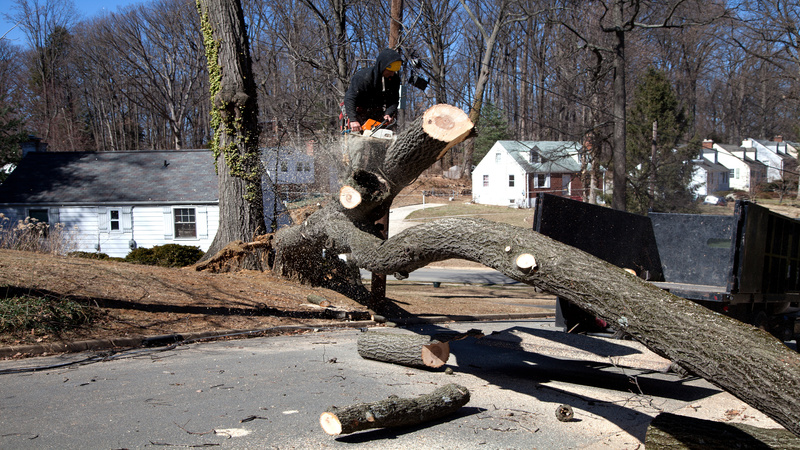
Commercial removals differ from residential work in scale, equipment, and risk exposure. Tree trimmers encounter heights, slippery conditions, falling limbs, sharp equipment, and electrical wires, and each year tree care injuries account for about 80 worker deaths and at least 23,000 chainsaw injuries across the U.S. That risk profile makes contractor vetting non-negotiable.
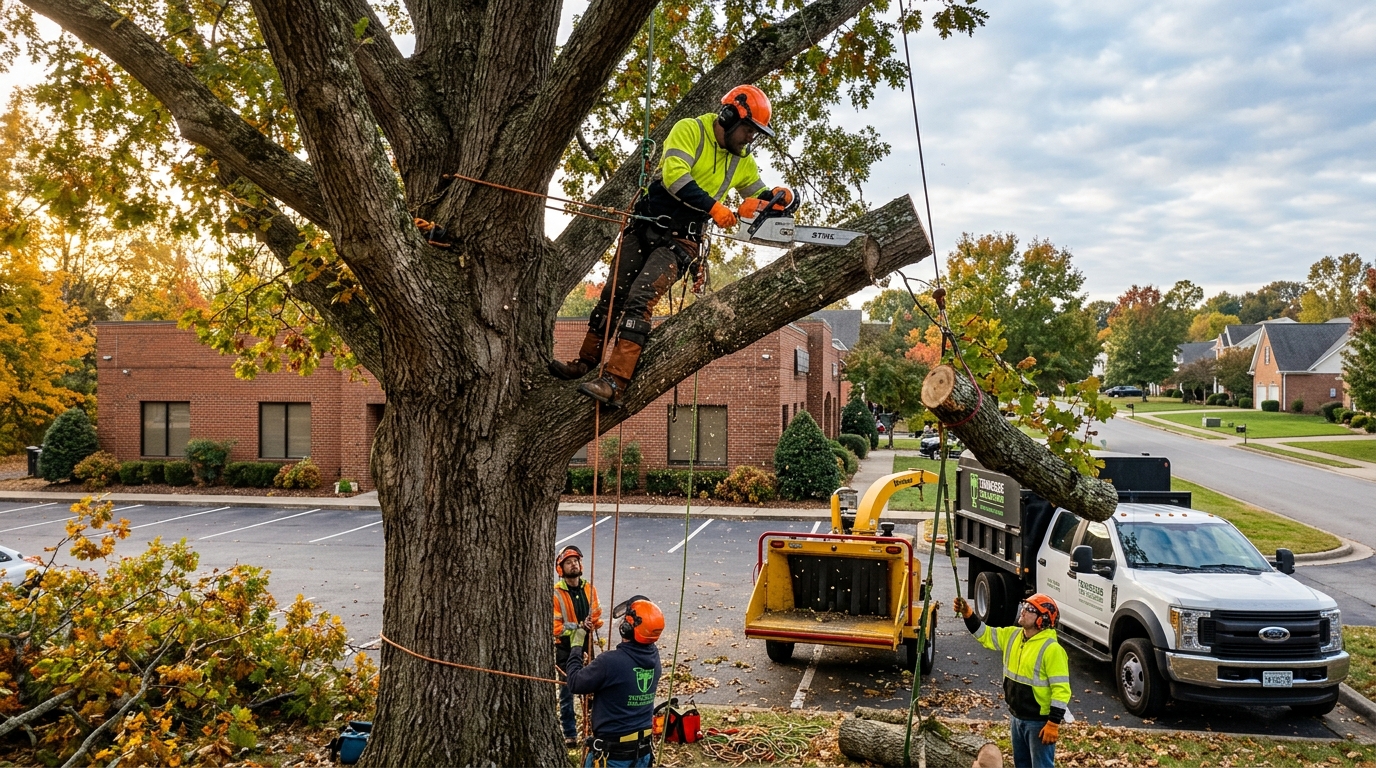
A professional crew follows a structured sequence on every job:
1. Site assessment — Identify structural hazards, proximity to utilities, and equipment access points before any cutting begins.
2. Drop zone establishment — Mark an area on the ground at least two times the tree’s height to avoid working where trimmings or tree removal may fall.
3. Utility coordination — Working near power lines increases the risk of electrocution; maintain a minimum safe distance of 10 feet and use non-conductive tools and protective gear.
4. Equipment and cleanup — Crews use specialized equipment such as cranes, chippers, and heavy-duty trucks to remove trees safely and efficiently.
On the contractor side, verify that any company you hire carries general liability insurance and workers’ compensation. Adequate liability and workers’ compensation insurance protect against financial losses resulting from accidents. Ask for a certificate of insurance before work begins.
The Texas Department of Insurance tree trimming safety guidelines offer a useful baseline checklist that applies to commercial tree work nationwide.
Choosing a Qualified Contractor in Williamson County
Franklin’s rapid commercial growth means mature hardwoods are common on developed lots. Fieldstone Farms, Sullivan Farms, and other Williamson County subdivisions were carved out of forested land, leaving mature oaks, tulip poplars, and hickories at close quarters with homes, driveways, and utility lines. That density demands experienced, locally knowledgeable crews.
When evaluating contractors, prioritize:
• Active Tennessee licensure, bonding, and insurance
• Demonstrated experience with commercial-scale removals
• Written, itemized quotes provided before work starts
• Transparent stump management and debris removal included in scope
Kailys Tree Services is fully licensed, bonded, and insured in the State of Tennessee, with coverage that meets all requirements for tree removal work on residential and commercial properties throughout Williamson County and its municipalities.
Frequently Asked Questions
Do I need a permit to remove a tree from my commercial property in Franklin? Yes. A tree removal permit is required for trees being cut on any commercial, industrial, or multi-family lot of any size. Submit the application to the City of Franklin’s Building and Neighborhood Services Department before scheduling any work. Your contractor should be able to advise on the process.
What should I ask a tree removal contractor before hiring them? Request proof of Tennessee licensure, a current certificate of insurance covering both general liability and workers’ compensation, and a written quote before any work begins. Hiring a licensed and insured tree removal contractor helps protect property owners from potential liability, and professional crews follow safety procedures and industry standards during complex removals.
How long does a commercial tree removal typically take? Scope and access drive the timeline. Single trees in open areas are often completed in a day, while large specimens near structures or utility lines may require staged work over multiple days. Equipment access, permitting lead times, and stump grinding add to the overall schedule.
For a free on-site estimate on your commercial property, contact Kailys Tree Services at 615-496-1542 or submit a request through their website.