Short version:
• Laser skin resurfacing uses focused light energy to reduce fine lines, scarring, and uneven texture by prompting new collagen production.
• Recovery ranges from a few days for lighter treatments to two weeks or more for deeper resurfacing, depending on the laser type used.
• Results depend on skin type, treatment depth, and aftercare, so a consultation with a qualified provider helps set realistic expectations.
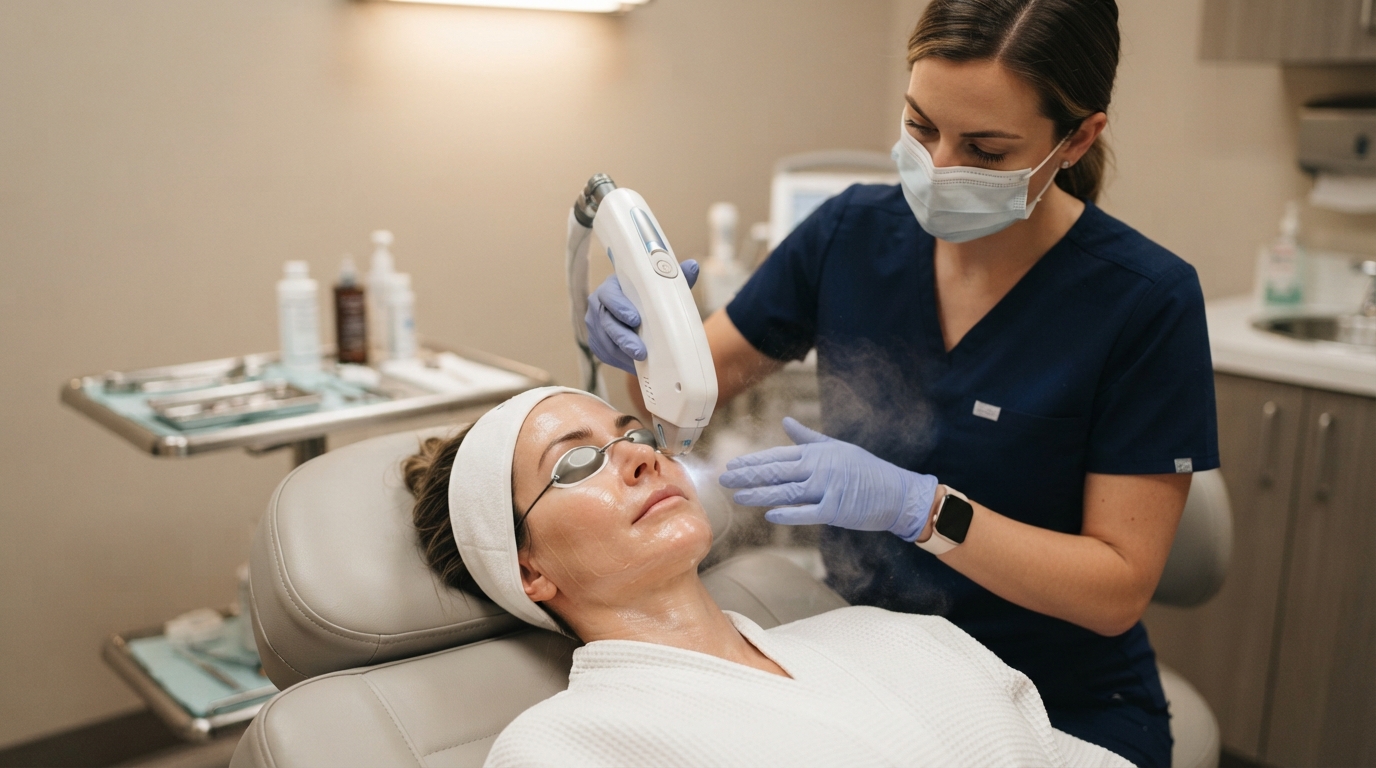
Laser skin resurfacing is a cosmetic treatment that removes damaged outer skin layers or heats deeper tissue to stimulate collagen, improving the appearance of wrinkles, scars, and sun damage. It is one of the more established options in professional skin rejuvenation because the technology allows providers to control depth and intensity based on individual skin concerns.
Anyone researching laser skin resurfacing is usually weighing two things: how much visible improvement to expect and how long downtime will last. Those two factors are directly connected, since more aggressive treatments typically produce stronger results but require longer healing windows.
How Laser Skin Resurfacing Works
Resurfacing lasers fall into two broad categories, each suited to different skin concerns.
• Ablative lasers remove thin layers of skin, encouraging fresh skin to regenerate. These are often used for deeper wrinkles or significant scarring.
• Non-ablative lasers heat underlying tissue without removing the surface, triggering collagen renewal with less visible disruption.
• Fractional lasers treat a grid of microscopic columns rather than the entire surface, which can shorten recovery compared to fully ablative treatments.
The choice between these approaches depends on skin type, the specific concern being addressed, and how much downtime a person can accommodate.
Benefits Worth Understanding
People consider resurfacing for a range of cosmetic concerns rather than a single issue.
1. Smoother texture from reduced fine lines and surface irregularities.
2. Softer appearance of acne scarring or other textural scarring.
3. More even tone where sun damage or age spots have accumulated.
4. Tighter-looking skin as new collagen forms over following weeks.
Improvements typically continue to develop for several weeks after treatment as collagen remodeling progresses, rather than appearing immediately.
Recovery Timeline and Aftercare
Recovery length varies significantly based on the laser type and treatment depth.
| Treatment Type | Typical Downtime | Common Aftercare Focus |
| Non-ablative/fractional | 1 to 3 days | Moisturizing, sun avoidance |
| Moderate ablative fractional | 5 to 7 days | Gentle cleansing, swelling care |
| Fully ablative | 10 to 14 days or more | Wound care, strict sun protection |
During healing, skin may appear red, swollen, or flaky as it sheds treated layers. The American Academy of Dermatology notes that sun protection after resurfacing is important because new skin is more vulnerable to UV damage during recovery.
Nashville, TN summers bring high UV exposure and humidity, both of which can affect healing skin, so aftercare guidance for the target location often emphasizes diligent sunscreen use and avoiding direct midday sun. Providers typically recommend broad-spectrum sunscreen, avoiding harsh exfoliants, and following any prescribed ointments until the skin fully re-epithelializes.
Who Tends to Be a Good Candidate
Not everyone with skin concerns is an ideal candidate for every laser type.
• Lighter skin tones generally have a lower risk of pigment changes with ablative lasers.
• Darker skin tones may be better suited to certain fractional or non-ablative options to limit pigmentation risk.
• Active acne, certain skin infections, or recent isotretinoin use typically require delaying treatment.
• Realistic goals matter, since resurfacing improves texture and tone but does not replace surgical procedures for sagging skin.
A consultation allows a provider to match laser type and settings to individual skin characteristics rather than applying a one-size approach.
Frequently Asked Questions
Is laser skin resurfacing painful? Most people describe sensations ranging from mild warmth to a snapping feeling, often manageable with topical numbing cream applied before treatment.
How many sessions are typically needed? Non-ablative and lighter fractional treatments often involve a series of sessions, while deeper ablative treatments may produce visible results in a single session.
When do results become visible? Initial smoothing can appear within days for lighter treatments, while full collagen-driven improvement generally continues over several weeks to months.
Does insurance cover this treatment? Laser skin resurfacing performed for cosmetic improvement is generally considered elective and is not typically covered by health insurance.
Business Info
Based in USA, The Erasure serves customers across Nashville, TN, offering a point of reference for individuals researching laser-based skin treatments in the area.
Current service area information for The Erasure is available for review by those planning a consultation.