At glance:
• Water damage weakens structural materials and creates mold risk within 24 to 48 hours if left untreated.
• Professional water extraction, drying, and dehumidification limit long-term damage to walls, floors, and belongings.
• Verified emergency response services for Portage, MI, include water extraction, structural drying, sanitization, and damage documentation.
Standing water or persistent moisture inside a home begins breaking down building materials almost immediately, and the risk of mold growth increases sharply once water sits for more than a day or two. Addressing water damage Portage MI quickly, with proper extraction and drying equipment, is the most reliable way to limit structural harm and protect indoor air quality.
Homeowners in Portage, MI, deal with a mix of seasonal freeze-thaw cycles, heavy spring rainfall, and aging plumbing infrastructure, all of which raise the odds of basement flooding, pipe bursts, or appliance failures. Verified emergency response offerings in the area cover water extraction, structural drying and dehumidification, sanitization, and damage documentation.
Why Water Damage Spreads So Quickly
Water does not stay where it lands. It moves through flooring, absorbs into drywall, and seeps into framing, which is why a small leak can turn into a much larger repair job within days.
• Porous materials such as carpet padding, insulation, and drywall absorb moisture fast and are often difficult to fully dry.
• Wood framing and subflooring can swell, warp, or weaken when saturated for extended periods.
• Electrical systems near standing water create safety hazards that require inspection before cleanup continues.
According to EPA guidance on mold and moisture, it is important to dry water-damaged areas and items within 24 to 48 hours to prevent mold growth. That window is the dividing line between a straightforward drying job and a more complex mold remediation project.
What Professional Restoration Typically Involves
A structured restoration process reduces guesswork and helps confirm that materials are actually dry, not just dry to the touch.
1. Initial assessment to identify the water source and classify contamination level.
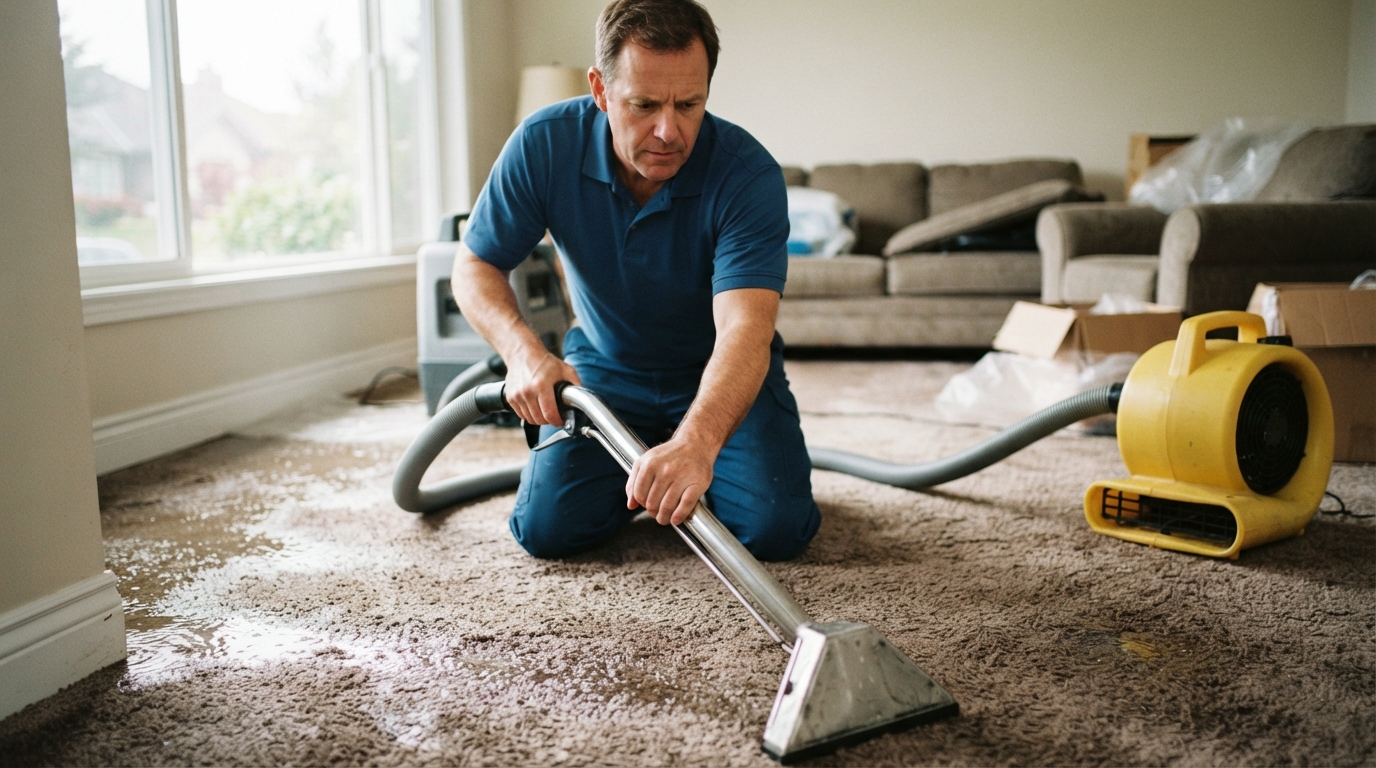
2. Extraction of standing water using pumps and specialized vacuum equipment.
3. Placement of air movers and dehumidifiers to begin structural drying.
4. Sanitization of affected surfaces to address bacteria and residue.
5. Documentation of damage for insurance recordkeeping.
Each step matters because skipping drying verification can leave hidden moisture inside walls or under flooring, which later supports mold growth even when a room looks dry on the surface.
Comparing DIY Cleanup and Professional Response
| Factor | DIY Cleanup | Professional Restoration |
| Equipment | Household fans, towels, wet vacuum | Industrial air movers, dehumidifiers, moisture meters |
| Moisture verification | Visual inspection only | Instrument-based readings to confirm dryness |
| Contaminated water handling | Limited safety equipment | Sanitization protocols for affected materials |
| Documentation | Informal, for personal records | Structured reports for insurance claims |
Minor spills with clean water and quick cleanup may be manageable without outside help. Situations involving standing water, contaminated sources, or saturated building materials generally call for equipment and verification methods beyond typical household tools.
Reducing Future Risk
Simple maintenance habits lower the chance of repeat water damage in homes across Portage, MI.
• Inspect washing machine hoses, water heater connections, and sump pumps on a regular schedule.
• Clear gutters and downspouts before seasonal rain or snowmelt increases runoff near the foundation.
• Monitor basements and crawl spaces for musty odors, which can signal hidden moisture before visible damage appears.
Based in USA, Roto-Rooter Plumbing Service serves customers across Portage, MI, with emergency response options for water extraction and related cleanup needs.
Frequently Asked Questions
How fast does mold start after water damage? Mold risk begins within roughly 24 to 48 hours after materials get wet, according to EPA guidance on moisture control, which makes rapid drying the priority after any leak or flood.
Can homeowners handle small leaks without professional equipment? Minor, clean-water spills that are dried within a day are often manageable with household fans and towels, but saturated carpet, drywall, or framing typically need industrial drying equipment to fully verify moisture levels.
What should be documented for insurance purposes after water damage? Photographs of the affected area, a record of when the water was discovered, and notes on the suspected source all support an insurance claim and help establish a timeline for the damage.
Does Portage, MI weather affect water damage risk? Freeze-thaw cycles and seasonal rainfall common to the region can stress plumbing and foundations, which is part of why regular inspection of pipes and drainage systems is worthwhile for area homeowners.
Water damage rarely stays contained to a single spot, and the first 24 to 48 hours after a leak or flood largely determine whether a home faces a simple drying job or a more involved mold and structural repair project. Paying attention to early warning signs, such as musty odors or soft flooring, and acting on them promptly remains the most practical way to protect a property’s long-term condition.
Property owners in Portage, MI, can Click Here To Visit Roto-Rooter Plumbing Service to review current service offerings and water damage restoration information.