Essentially:
- Flickering lights, tripped breakers, and warm outlets are among the most common signs a home needs electrical attention.
- Licensed electricians diagnose the root cause before making repairs, since surface symptoms often point to deeper wiring issues.
- Homeowners in Middletown, DE can expect older housing stock and seasonal weather swings to contribute to recurring electrical problems.
Flickering lights, warm outlets, and breakers that trip without warning are usually the first signs something in a home’s electrical system needs attention. Addressing these issues through professional Electrical Repair rather than DIY fixes reduces the risk of fire, shock, and repeat failures tied to the same underlying wiring problem.
Many of these symptoms look minor on the surface but trace back to deeper issues such as loose connections, outdated panels, or wiring that was never sized for modern electrical loads. A qualified electrician traces the problem to its source instead of simply replacing the visible component.
Recognizing Common Electrical Warning Signs
Most electrical problems announce themselves before they become dangerous. Knowing what to watch for helps homeowners decide when a licensed professional, rather than a quick fix, is the right call.
- Lights that flicker or dim when appliances turn on
- Outlets or switch plates that feel warm or discolored
- Breakers that trip repeatedly under normal use
- A persistent burning smell near outlets or the panel
- Buzzing or crackling sounds from switches or fixtures
Any of these symptoms can indicate a loose connection, an overloaded circuit, or aging wiring that no longer meets current safety margins. According to OSHA guidance on electrical hazards, worn insulation and exposed wires are common contributors to shock and fire risk in both homes and workplaces.
Why These Problems Develop in Older and Newer Homes
Housing stock in Middletown, DE spans decades of construction, which means wiring standards, panel capacity, and grounding methods vary widely from one property to the next. Homes built before modern code updates often carry electrical panels that were never designed for today’s appliance loads, air conditioning units, and home electronics.
Newer homes are not immune either. Loose connections from original construction, DIY modifications, or undersized circuits added for convenience can all create the same warning signs seen in older properties. Seasonal humidity and storm activity in the region can also accelerate corrosion at outdoor outlets, panels, and junction boxes.
Professional Repair vs. DIY Fixes
Replacing a switch or outlet cover is a reasonable DIY task. Diagnosing why a circuit keeps tripping or why a panel runs hot requires testing equipment, code knowledge, and experience that most homeowners do not have.
| Issue Type | DIY Appropriate | Professional Needed |
|---|---|---|
| Replacing a cover plate | Yes | No |
| Repeated breaker trips | No | Yes |
| Flickering lights across rooms | No | Yes |
| Warm or discolored outlets | No | Yes |
| Panel upgrades or rewiring | No | Yes |
A licensed electrician working in the area can also confirm that repairs meet Delaware’s current electrical code, which matters for insurance claims, home sales, and future inspections. Permits are often required for panel work and rewiring, and skipping that step can create problems later even if the repair itself was done correctly.
What to Expect From a Licensed Electrical Repair Visit
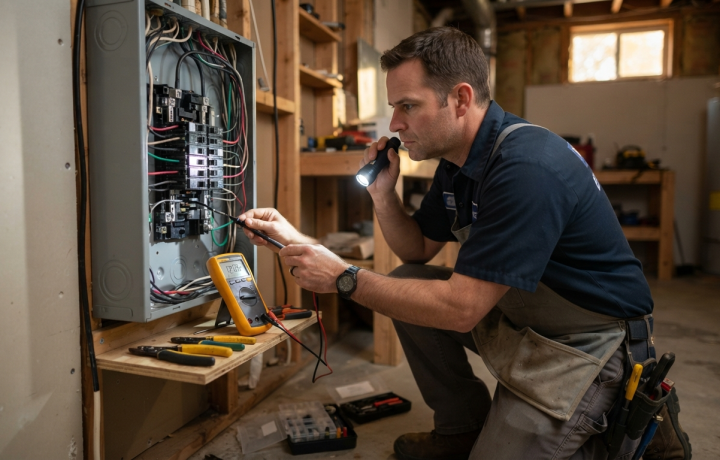
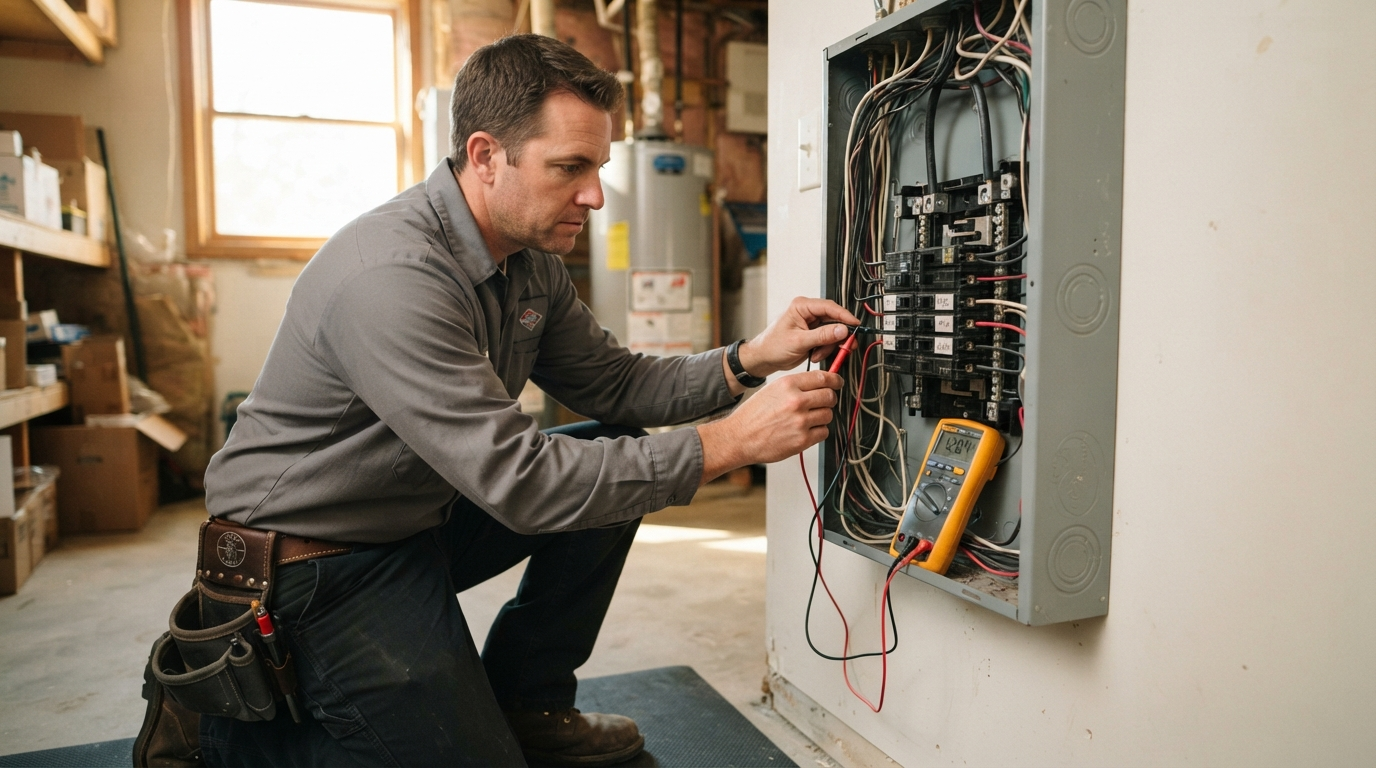
A typical service call starts with a walkthrough of the reported issue, followed by testing at the panel, outlets, or fixtures involved. The electrician explains what caused the problem, what repair options exist, and whether the issue points to a larger concern such as panel capacity or outdated wiring.
Steps commonly included in a repair visit:
- Initial diagnostic testing of the affected circuit or fixture
- Identification of the root cause, not just the symptom
- A clear explanation of repair options and code requirements
- Completion of the repair using parts rated for the circuit’s load
- A final safety check before the job is closed out
This approach protects against recurring failures and keeps the home’s wiring consistent with current safety standards rather than patched together over time.
Frequently Asked Questions
How do I know if a tripped breaker is an emergency? A breaker that trips once after an appliance overload is usually not urgent, but one that trips repeatedly within a short period signals a circuit problem that needs professional diagnosis.
Can I replace an outlet myself? Replacing a single outlet with the power off is within reach for many homeowners, but warm, discolored, or non-functioning outlets often indicate wiring issues behind the wall that require a licensed electrician.
Why do older homes need more frequent electrical repairs? Older wiring, panels, and grounding systems were not built for the electrical demand of modern appliances and electronics, which increases wear and the likelihood of recurring issues.
Is it normal for a panel to feel warm? A panel that feels warm to the touch is not normal and should be inspected promptly, since it can indicate loose connections or overloaded circuits.
Scheduling Electrical Repair Service
Based in Wilmington, DE, B&B Electrical Services, Inc. serves customers across Middletown, DE.
Current availability details for Click Here are published for the local service area.