
Summary first:
• Hardscape elements such as retaining walls, paver patios, and graded walkways redirect stormwater and reduce soil loss on sloped or poorly drained properties.
• Columbus, OH yards commonly face drainage challenges due to clay-heavy soils, making proper grading and material selection central to long-term performance.
• Material choice, slope planning, and drainage integration determine whether a hardscape installation lasts for years or requires early repair.
Hardscape services address drainage and erosion problems by combining durable materials, such as pavers and retaining walls, with grading techniques that redirect water away from vulnerable soil. For homeowners researching Hardscapes Contractors in Columbus, OH, the practical goal is usually twofold: stop water from pooling near the foundation and prevent topsoil from washing away during heavy rain. These outcomes depend on correct slope calculation, base preparation, and material selection rather than surface aesthetics alone.
Clay-dominant soils across central Ohio drain slowly, which increases runoff volume during storms. Adequate soil drainage is considered the largest soil management problem in Ohio agriculture, with approximately 57 percent of the soils used for cropland in Ohio having a natural drainage limitation. That same drainage limitation affects residential lots, particularly those with minimal slope or compacted subsoil left behind by construction.
How Hardscaping Reduces Erosion on Sloped or Wet Yards
Erosion control on residential property usually relies on structural features rather than vegetation alone, especially where slopes exceed a gentle grade. According to guidance on erosion control methods for Ohio properties, structures such as retaining walls, pavers, and gravel paths can divert water flow and help manage stormwater runoff more effectively. Strategic placement of these elements also improves usability of the yard while addressing the underlying water problem.
Common hardscape solutions for erosion-prone yards include:
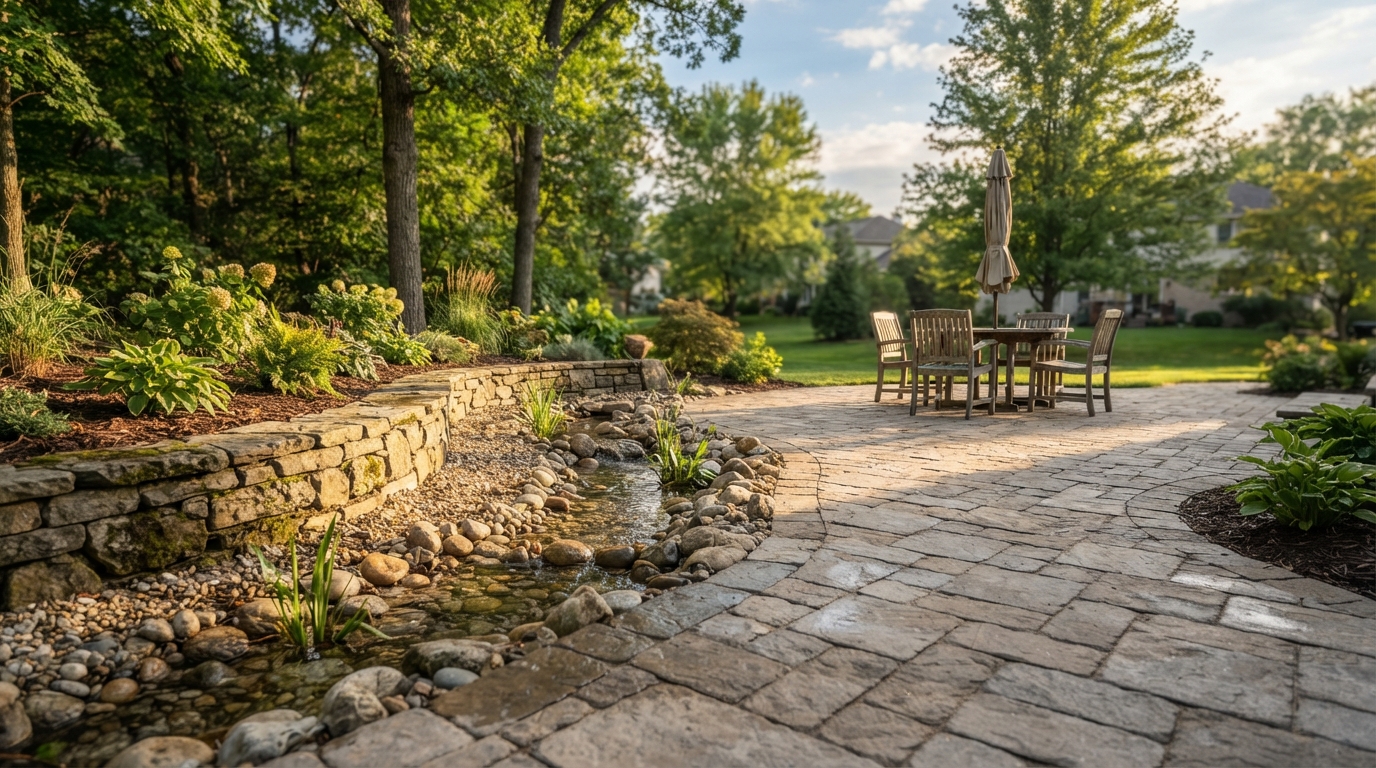
• Retaining walls – these structures serve as barriers that hold back soil and prevent it from sliding away, and can be made from natural stone, bricks, or concrete blocks.
• Rock swales – a shallow, vegetated channel designed to manage stormwater, allowing water to flow slowly through the yard while filtering sediment and contaminants.
• Paved walkways – well-placed pathways can guide water where it is needed, reducing erosion by controlling water flow on the property.
Drainage Planning Before Installation
Before any patio, walkway, or retaining wall is installed, drainage patterns on the site need to be identified. Ohio EPA guidance on stormwater management states that identifying the area’s natural drainage patterns before construction and routing stormwater around disturbed areas helps make sediment control practices more effective and less expensive. The same source notes that temporary measures such as rock check dams, diversions, and slope drains can protect vulnerable disturbed areas until permanent stabilization is in place. This sequencing matters for any hardscape project, since installing pavers or walls without first mapping water flow can shift a drainage problem elsewhere on the property. Readers researching standards in more detail can review the Ohio EPA’s Rainwater and Land Development manual for additional technical background on runoff conveyance.
Material Options for Drainage-Conscious Hardscape Projects
Material selection affects how well a hardscape feature performs under repeated freeze-thaw cycles and heavy rainfall, both common in central Ohio.
| Material | Drainage Performance | Typical Use |
| Permeable pavers | Allows water to filter through joints into base | Patios, walkways |
| Poured concrete | Low permeability, requires sloped grading | Driveways, pool decks |
| Natural stone retaining wall | Holds back soil, needs weep holes or drainage pipe | Sloped yards, raised beds |
| Gravel or rock swale | High permeability, channels surface flow | Low-lying or wet areas |
Each option carries trade-offs between cost, maintenance, and water handling capacity, which is why site conditions typically guide the final material choice more than style preference alone.
Does hardscaping actually prevent erosion, or just redirect it? Hardscape features such as retaining walls and swales are designed to slow or redirect water flow rather than eliminate runoff entirely, which reduces the speed and volume of water reaching vulnerable soil.
Why does drainage planning matter more in Columbus, OH than in other regions? Clay-heavy soils common to the area drain slowly, so grading and material choices have an outsized effect on whether water pools near structures or moves safely away from them.
Can permeable pavers replace a drainage system? Permeable pavers reduce surface runoff by allowing water to pass through the base layer, but they typically work alongside, not instead of, broader site grading and drainage planning.
Final Notes on Choosing Hardscape Solutions
Durable hardscape work depends on matching material and layout decisions to the specific drainage and slope conditions of a property rather than applying a one-size-fits-all design. Simes Landscape and Patios is a landscape and hardscape contractor based in Powell, OH, serving Franklin and Delaware Counties, including the Columbus area.
Property owners can review additional service details through Simes Landscape and Patios’ listed service area pages.


