In brief:
- Material choice affects long-term maintenance, heat resistance, and how long a countertop lasts in daily kitchen use.
- Measuring, slab selection, and installation scheduling typically take longer than homeowners expect.
- Quartz has become a leading choice because it does not require sealing and resists stains better than many natural stones.
New kitchen countertops involve more than picking a color. Material selection, measuring accuracy, and installation timing all affect the final cost and how the surface performs over years of daily use.
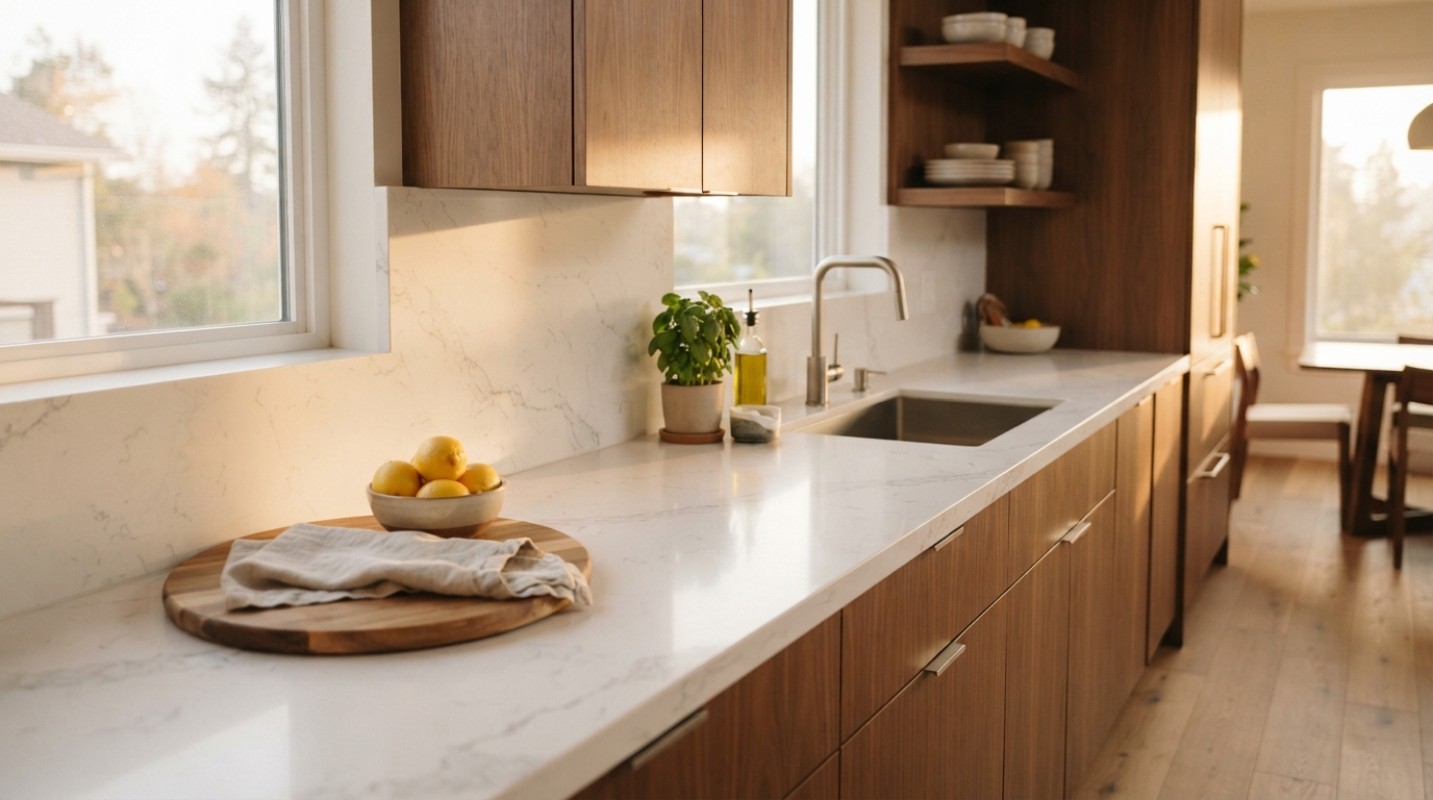
Homeowners researching Kitchen Countertops often start with material comparisons before moving to layout and budget questions. Engineered quartz has gained ground over natural stone in many kitchens because of its consistent appearance and lower upkeep demands. Granite and other natural stones remain popular for their one-of-a-kind veining, though they come with different maintenance obligations.
- Comparing Common Countertop Materials
Material choice is the first decision that shapes every later step, from edge profiles to sink cutouts. Each option carries tradeoffs in durability, cost, and care.
| Material | Sealing Required | Heat Resistance | Typical Lifespan |
|---|---|---|---|
| Quartz | Never | Moderate (resin can scorch above 300°F) | 15 to 25+ years with care |
| Granite | Annual | High | 25+ years with proper sealing |
| Marble | Frequent | Low (etches and stains easily) | Varies, shorter with heavy use |
A recent industry comparison noted that granite countertops can last 25 years or more with annual sealing and proper care, while quartz countertops typically last 15 to 25 years or longer. The tradeoff is upkeep: quartz has lower lifetime maintenance costs because it never needs sealing, while granite depends on a consistent resealing schedule to avoid staining.
- What Affects Durability and Maintenance
Daily habits influence how long any countertop surface holds up, regardless of material.
- Quartz is non-porous, so it resists stains without sealing, but the resin can scorch or discolor at temperatures above 300F, making trivets or hot pads the single most important care instruction.
- Granite requires periodic resealing to maintain stain resistance, since the stone itself is porous.
- Marble is more vulnerable to etching from acidic foods and should be wiped quickly after spills.
- Abrasive cleaners and bleach-based products can dull polished surfaces on most stone and engineered materials over time.
Climate plays a role too. In Orange County, CA, kitchens exposed to coastal humidity or inland heat swings benefit from materials that resist moisture absorption and temperature stress, which is part of why non-porous engineered surfaces continue to gain favor in Southern California remodels. The National Kitchen and Bath Association tracks material trends and publishes guidance on selecting surfaces suited to different kitchen environments.
- Planning the Installation Process
Countertop installation involves several sequential steps that affect project timing.
- Template and measure the existing cabinetry, since slab cuts depend on precise dimensions, including sink and cooktop cutouts.
- Select the slab in person when possible, since natural variation in stone and engineered quartz can differ from sample chips.
- Confirm cabinet support, because older cabinet boxes may need reinforcement before a heavy stone slab is installed.
- Schedule fabrication and delivery, which can take one to several weeks depending on material availability and edge detailing.
- Coordinate plumbing disconnection and reconnection for sink and faucet fixtures during installation day.
Older homes in Orange County, CA sometimes have cabinetry that was not built to current slab-weight standards, so a contractor assessment before ordering material can prevent delays.
- Business Info
Based in Chino, CA, Mayfair Cabinet and Stone serves customers across Orange County, CA.
- Frequently Asked Questions
How long does a countertop installation typically take? Installation day itself often takes a few hours for a standard kitchen, though the full process, from template to final set, usually spans one to several weeks depending on fabrication scheduling.
Does quartz need sealing like granite? No. Quartz is engineered to be non-porous, so it does not require sealing, unlike granite, which needs periodic resealing to stay stain-resistant.
Can old cabinets support a new stone countertop? Not always. Cabinet boxes should be checked for structural soundness before installation, since stone slabs are considerably heavier than laminate or wood surfaces.
What is the most durable countertop material for daily cooking? Quartz and granite both resist scratches and daily wear well, though quartz offers more consistent stain resistance without the sealing maintenance that granite requires.
- A Final Note on Planning Ahead
Material selection, cabinet readiness, and installation scheduling each affect how a countertop project turns out, and addressing them early reduces delays once fabrication begins. Current scheduling and material availability for Mayfair Cabinet and Stone are reflected in its published business listing.