
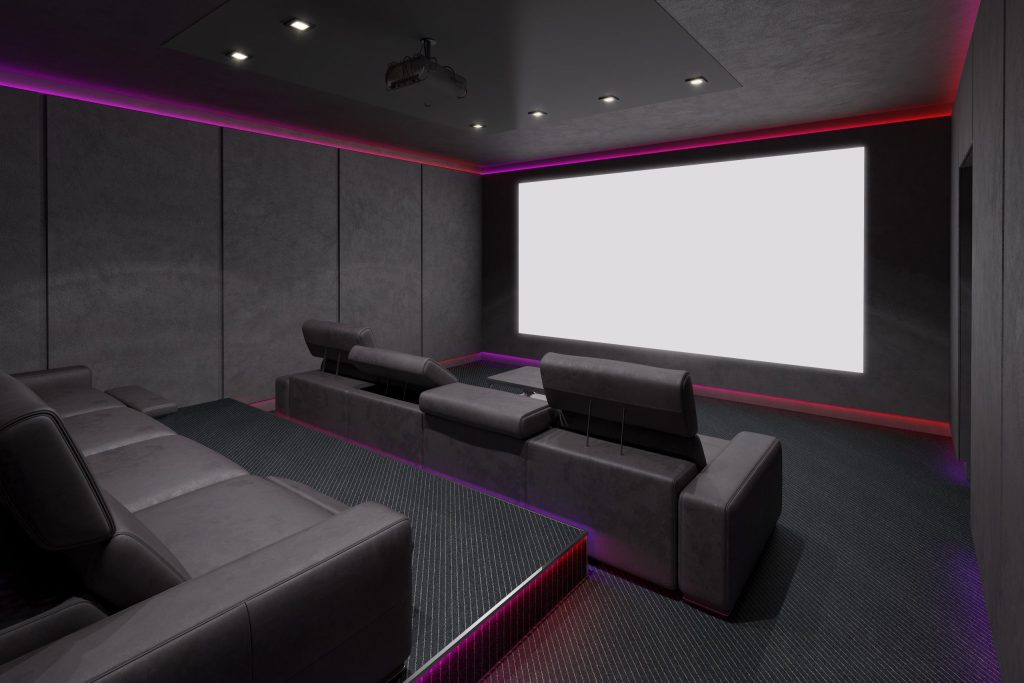
A home theater is easier to upgrade when its wiring, equipment locations, connections, and physical layout are planned with reasonable flexibility from the beginning. Rather than trying to predict every future technology, a well-planned home theater system should provide practical access and infrastructure that can accommodate normal equipment changes over time.
Technology changes faster than the rooms in which it is installed. A display may eventually be replaced, a receiver may need an update, a gaming system may be added, or a homeowner may want to incorporate a new source into an existing entertainment space. The goal of an adaptable home theater setup is not to anticipate a specific product years in advance. It is to avoid creating unnecessary physical limitations that make ordinary changes difficult.
For homeowners in Scottsdale, AZ, this consideration can be particularly relevant when a theater is incorporated into a custom home, major renovation, or purpose-built entertainment room. Decisions about walls, cabinetry, wiring, equipment storage, and architectural finishes can remain in place long after individual electronics have been replaced.
Why Should Upgradeability Be Considered During Home Theater Planning?
Most homeowners understandably focus on what they want their entertainment space to do today. However, the infrastructure supporting the system can remain in place for many years.
A television, projector, receiver, streaming device, or gaming console can be replaced without rebuilding the room. The challenge arises when the original design leaves no practical way to accommodate a different component or connection.
For example, an equipment cabinet may be precisely sized for the components selected during construction. If those components are replaced with larger or differently configured equipment later, the cabinet could become a limitation.
Similarly, wiring installed without considering access may work perfectly at first but become difficult to modify when a new device is introduced.
Planning for reasonable adaptability does not mean installing every possible connection or leaving large amounts of unused space. It means considering where changes are most likely and avoiding decisions that unnecessarily restrict future options.
What Parts of a Home Theater Are Most Likely to Change?
Individual electronics generally change more frequently than the room itself. This makes certain parts of the system particularly important to consider when planning for future upgrades.
Common examples include:
- Displays
- Receivers and processors
- Streaming devices
- Gaming consoles
- Media players
- Control equipment
- Network-connected entertainment components
- Speakers or related audio equipment
The exact components depend on how the room is used.
A household that primarily watches streaming content may have different upgrade priorities from one that uses the room for gaming, physical media, sports, and music. The system should therefore be planned around the homeowner’s actual entertainment habits.
A flexible home theater system setup gives future equipment a reasonable place to go without requiring major changes to the room.
How Can Wiring Make Future Upgrades Easier?
Wiring is one of the most important infrastructure considerations because much of it can become difficult to reach after construction is complete.
During a new build or major renovation, wiring pathways can be considered before walls and ceilings are closed. This creates an opportunity to coordinate connections with the planned locations of displays, speakers, equipment, and controls.
The specific wiring requirements depend on the equipment and system design. There is no universal cable arrangement that is appropriate for every home theater.
Instead, the wiring plan should correspond with the actual system while allowing reasonable flexibility where practical.
This is especially important when equipment is positioned away from the display. If a homeowner later replaces a component, accessible pathways can make it easier to change connections without disturbing finished surfaces.
Imagine Audio Video’s residential process includes developing a structural wiring plan and working with builders and other professionals during system planning. Their approach is relevant to projects where the entertainment infrastructure needs to be coordinated with the construction process.
Why Does Equipment Accessibility Matter for Future Changes?
An upgrade can be difficult even when the wiring is adequate if the equipment itself is difficult to reach.
Components may eventually need to be disconnected, replaced, adjusted, or inspected. Equipment located in an inaccessible cabinet, behind permanent construction, or in a cramped space can make those tasks more complicated.
A practical equipment location should consider both appearance and access.
This does not mean every receiver, media device, or gaming console needs to remain visible. Equipment can be organized within cabinetry or a dedicated equipment area while still providing appropriate access for normal service and replacement.
When planning a home theater installation, accessibility should therefore be considered part of the system design rather than something addressed after the equipment has been installed.
How Can Custom Cabinetry Be Designed for Future Equipment?
Custom cabinetry can provide an attractive way to organize entertainment technology, but it should not be designed exclusively around today’s equipment.
Component dimensions, ventilation, cable access, power connections, and service access should all be considered. A cabinet that fits the current equipment perfectly may become restrictive if a future component requires different dimensions or connections.
Reasonable flexibility can be created by coordinating the cabinet design with the overall entertainment system before fabrication.
For example, equipment areas can be designed with appropriate access rather than creating tightly enclosed compartments that only accommodate one specific device configuration.
The objective is not to make cabinetry unnecessarily large. It is to make sure the room’s architectural elements do not prevent normal equipment changes later.
Should a Home Theater Have Extra Wiring?
There is no single answer that applies to every project.
Adding unnecessary wiring simply for the sake of having more cables does not automatically make a system better. Technology requirements change, and not every potential future connection can be predicted accurately.
Instead, the wiring strategy should be based on the system being planned, the room’s construction, and reasonable future needs.
In a custom home, it may also be useful to consider accessible pathways or infrastructure that can support future changes without requiring walls to be opened. The exact approach depends on the construction and system design.
The principle is simple: plan for flexibility where it provides practical value rather than trying to predict every future product.
How Does Room Layout Affect Future Upgrades?
A room’s physical layout can either support or restrict future changes.
A display mounted in a location dictated solely by today’s furniture arrangement may become difficult to reposition later. Similarly, a dedicated equipment cabinet may work well until the homeowner changes the seating arrangement or adds another source.
A thoughtful home theater setup considers the relationship between:
- Seating
- Display position
- Speaker locations
- Equipment storage
- Wiring pathways
- Cabinetry
- Room entrances and circulation
- Architectural features
These elements do not need to remain unchanged forever. Instead, they should be arranged so that normal changes do not immediately create a conflict between the technology and the room.
What Does a Flexible Home Theater Look Like?
Flexibility does not necessarily mean that a theater should look unfinished or temporary.
A well-designed room can have a highly polished appearance while still providing practical access to its technology. Equipment can be concealed, speakers can be integrated with the architecture, and wiring can remain out of sight while the infrastructure supports future changes.
This balance is especially relevant in luxury residential projects.
A custom entertainment room may be designed around specific cabinetry, wall finishes, lighting, furniture, and architectural details. Those features can remain visually consistent even as individual electronic components are replaced.
The important distinction is between designing for permanence and making the technology permanent.
The room can be designed to last while the equipment remains replaceable.
How Can a Home Theater Accommodate Changing Entertainment Habits?
Upgradeability is not limited to replacing older equipment with newer versions.
Homeowners may also change how they use the room.
A space originally designed primarily for movies may later become a combination of movies, gaming, sports, music, and streaming. A family may add a gaming console, introduce another source device, or begin using the room differently as household needs change.
A flexible system can accommodate these changes without requiring the entire room to be redesigned.
This is another reason to consider the room’s intended uses during the original planning process. Understanding how the space might function beyond movie nights can influence equipment locations, connectivity, controls, and seating.
What Role Does Network Connectivity Play?
Modern entertainment systems can depend on network connectivity for streaming, connected devices, system control, and other functions.
The network requirements will vary depending on the equipment being used, so they should be considered as part of the overall system rather than treated as an unrelated technology.
A home theater can contain several devices that communicate with one another or depend on a home’s network infrastructure. If the system expands later, network requirements may also change.
Planning the entertainment system alongside the home’s broader technology infrastructure can make future changes more manageable.
This does not mean every home theater needs an elaborate network design. The appropriate infrastructure depends on the home’s technology and how the entertainment space will be used.
How Should Audio Be Planned for Future Changes?
Audio systems can also evolve.
A homeowner may eventually change speakers, add equipment, modify the listening area, or alter how the room is used. Speaker placement should therefore be considered in relation to the room’s physical characteristics and seating rather than being treated as a permanent arrangement that can never change.
A properly planned surround sound installation can account for the room’s dimensions and intended listening positions while allowing the system to be maintained or modified when appropriate.
Speaker wiring should also be coordinated with construction and architectural features when speakers are being incorporated into walls or ceilings.
The goal is to establish a sound system that works for the current room while avoiding unnecessary restrictions on reasonable future changes.
Does Future Upgradeability Mean Choosing Technology Differently?
Not necessarily.
Upgradeability is more about how the system is planned and installed than about selecting equipment based on hypothetical future products.
A homeowner does not need to purchase the most advanced equipment available simply because it may remain relevant longer. Instead, equipment should match the room’s actual needs.
Infrastructure can then be planned around the selected system while allowing practical flexibility.
This distinction helps keep the project focused. Rather than chasing every emerging technology, homeowners can invest in a coherent system that works today and has a sensible path for future modifications.
When Should Future Upgrades Be Discussed?
The best time to discuss upgradeability is before construction or major renovation work is complete.
At that point, equipment locations, wiring pathways, cabinetry, display placement, speaker positions, and access can still be coordinated.
For homeowners considering a Home theater system in Scottsdale, this planning stage can help establish an entertainment environment that is practical today without unnecessarily restricting future changes.
The conversation can be particularly useful when a project involves custom construction because architectural elements may be difficult to alter once finished.
What Questions Should Homeowners Ask Before Installation?
Before finalizing a theater, homeowners can ask:
Can the main equipment be reached easily?
Consider whether components can be accessed without moving major furniture or dismantling finished construction.
Are the wiring pathways practical?
Determine whether connections can be maintained or changed without unnecessary disruption.
Will the equipment fit if components change?
Cabinetry and equipment areas should not be designed so tightly that ordinary replacements become difficult.
Can the system support additional sources?
Consider whether future entertainment needs may require additional devices.
Has the room’s architecture been coordinated with the technology?
Displays, speakers, cabinetry, and wiring should work with the finished room.
Is the system designed around actual household use?
Think about movies, sports, gaming, music, streaming, and other activities that may take place in the room.
These questions can help identify limitations before they become expensive or inconvenient to correct.
What Is the Best Approach to a Future-Ready Home Theater?
The most practical approach is to design the room around today’s needs while allowing reasonable flexibility for tomorrow.
That means coordinating wiring before construction is complete, keeping important equipment accessible, considering ventilation and cabinetry requirements, and avoiding architectural decisions that unnecessarily restrict future equipment changes.
It also means accepting that no system can predict every technological development. A good home theater system does not need to anticipate every future device. It needs to provide a sound foundation for the types of changes a homeowner is reasonably likely to make.
For Scottsdale homeowners, this can be especially valuable when entertainment technology is incorporated into a custom home or substantial renovation. Thoughtful planning can allow the room itself to remain cohesive even as individual components evolve.
A successful entertainment space should not only work well on the day it is completed. It should also remain practical as equipment, household preferences, and entertainment habits change.
About Imagine Audio Video
Imagine Audio Video is based in Phoenix and serves Scottsdale and the greater Phoenix area, focusing on residential and commercial audio/video integration, including home theater, home audio, distributed audio and video, and structured wiring. The company has operated in Arizona since 1999, works with professionally trained technicians, and provides a one-year residential warranty. Homeowners can Find their office on Google Maps, and the business can be reached at 480-497-6734.


